
THE ARCHITECTURE OF PEACE
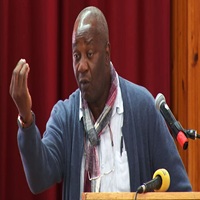
severino Ngoenha"
From foundations, columns, and light – What the art of building has to teach reconstruction.theMozambique's politicstheMozambique There are texts we write because we choose them. And there are others that life, through unforeseen paths, imposes upon us. This one belongs to the second category, and its genealogy matters, because it already foreshadows the thesis I want to defend. NodePhilosophical Workshop of BeiraMaria Sá Pinto opened a perspective that, I confess, altered the course of our reflections. For the first time, art emerged among us not as a simple cultural expression, but as a philosophical and political problem. Her thesis was simultaneously simple and fruitful: fighting for Mozambique today implies summoning the arts – literature, music, painting, sculpture, theatre, poetry, dance – to participate in the reconstruction of the nation. Not as places of entertainment or ornament, but as decisive structures in the formation of critical reason and adult citizenship. And above all, because of a rare quality that artistic creation possesses: that of being able to imagine the country before it fully exists in reality. First come the words, then consciousness, only later does political organization emerge. Our independence had a profound artistic prehistory – Craveirinha, Malangatana, Noémia de Sousa – and perhaps we have never recognized the arts in this foundational role. I wrote about it. And then I received a letter. David Melar, a Spanish architect who has lived in the city of Beira for fourteen years, where he coordinated Architecture courses and remains involved in university life, wrote to me. His letter was long, erudite, and generous – but it contained a reservation. He rejoiced at the inclusion of the arts at the table of thought, but lamented that one was missing: architecture. And he defended it with arguments that impressed me. Architecture, he told me, is almost always left out when we think about art, perhaps precisely because it is useful – and precisely for that reason we forget it. However, without it, it would be impossible to understand Prehistory or the ancient world: the intentional transformation of space is a gesture inherent to humanity, and humankind has never taken a step in its process of humanization without being accompanied by a reflection on the transformation of space and time. The other arts can become museum pieces; architecture doesn't belong in a museum because it is inseparable from the place and the life that traverses it. And it ended with a phrase that stuck with me: architecture is not just beauty, nor a play of shapes and colors – architecture is thought. I answered him. And I said to himWhat I've been saying for a long timeOf all the classical arts, architecture is, for me, the foremost. When we arrive in a city, before seeking out museums, galleries, or theaters, what first impresses us are its buildings. There are contemporary buildings that are true works of art – consider the Guggenheim in Bilbao, whose architecture moves us more than many of the exhibitions it houses. I don't, of course, have the technical knowledge of an architect; but I was fortunate to have a friend who introduced me to contemporary architecture, and I learned from him to discover the grandeur of certain constructions that completely change the way we see the city where we live. David Melar insisted, in a second letter, taking the debate to the concrete terrain of Mozambique. The dialogue was launched. It was then, shortly afterwards, when I was invited to participate in a meeting dedicated to peace issues, that I decided to take architecture seriously – not as a subject, but as a method. If architecture is thought, as David Melar argues, then perhaps it can think with us about what our politics, on its own, can no longer name. That is the hypothesis of this text: that the art of building structures has something decisive to teach the reconstruction of our national edifice. I. What modernity has learned Let's leave politics aside for a moment and look at the history of construction. Antiquity bequeathed to us works that still challenge us today. The pyramids of Egypt. The Colosseum and the Pantheon of Rome. The amphitheaters of North Africa. Some of these buildings hold technical secrets that contemporary engineering is still studying – and all of them reveal that those builders knew one fundamental thing: before the visible part, the part that everyone passes by and admires, it is necessary to dig. The foundations must be deep so that no wind can shake the building. The greatness of a construction is measured by what cannot be seen. Gothic cathedrals confirm this in another way. Cologne Cathedral, Lausanne Cathedral, Vienna Cathedral – they still stand, eight centuries later, and continue to gather thousands of people. But it was precisely with them that one of the first great revolutions in the art of building took place. The Romanesque churches that preceded them were supported by thick walls and heavy interior columns: the weight of the stone demanded it. These columns fulfilled their engineering function, but they came at a price – they cut off space, interrupted the view, fragmented the assembly. The celebrant at the altar could not see all the faithful; stone obstacles stood between him and the community. It was necessary to descend, move around, and find the place where the word could finally reach everyone. The Gothic response was ingenious: remove the supports from the inside and place them outside. The flying buttresses – those exterior arches that seem to embrace the naves of Notre-Dame – transferred the weight from the interior to the exterior of the building. Modern architecture completed this gesture: with steel and reinforced concrete, the structure definitively became the skeleton of the building, and the interior space was freed up. In Maputo, we have two examples that any of us can compare. In our Cathedral, the interior columns continue to complicate communication between those who preside and those who participate. In the Church of Santo António da Polana – that remarkable concrete work that we all recognize from a distance – the nave opens up without obstacles: the structure has moved outwards, and common space has been gained. This was the first great gain: the space for communication. The second was light. Old buildings were mostly dark inside: the walls that supported the weight couldn't be opened into windows. Modernity invented structural glass and glazed facades, and with that, daylight entered workplaces and meeting places. The environment benefited, no longer depending on electric light during the day; our eyes benefited, made for sunlight. And there is a third element, which brings us back to the beginning: the foundations. Our era builds ever higher – we have a thirty-three-story building in Maputo, the Burj Khalifa rises above the desert, Saudi Arabia is preparing an even taller tower, South Africa boasts the tallest African building. There is an excess in this competition that deserves its own reflection, as if the greatness of a country were measured by the height of its buildings. But what is of interest here is the technical paradox: building higher does not mean, as we sometimes think, that modernity has learned to climb. It means that it has learned to descend – deep piles, foundations that reach the rock, structural cores that concentrate the forces. The height of a building is always proportional to the depth of its foundations. When we see a tower, we should not think that the modern era has built higher; we should think that it has discovered a way to go deeper. Three lessons, therefore: profound foundations, pillars moved outside the common space, and the entry of light. It was with these in mind that I arrived at the meeting about peace. And it was there that the metaphor imposed itself. II. The foundations: peace is not decreed, it is built on consensus. The question that preoccupied us was that of peace. And the first temptation, when faced with it, is to treat it as a state that is proclaimed: peace is declared, peace is signed, peace is decreed. But architecture teaches us otherwise. No building begins with the roof. And no peace begins with a signature. The foundation of a common political life is not peace - it is...a structure that makes consensus necessaryLet's look at the constitutions of the countries we call democratic. What we find in them, behind the differences in regime and tradition, is a common effort: to ensure that no power is absolute, that the balance lies in the separation of powers, and that each power necessarily depends on the others. In the United States, the President does not vote on the budget alone: he needs Congress – and that is why, so often, the American administration is paralyzed, as we have seen in the successive impasses between Trump and Capitol Hill. In French constitutions, from the Revolution to the Fifth Republic, the same obsession is present: that no party, no government, no president governs alone; that they are obliged to dialogue, to listen to the positions of others, to find a point of convergence. This dependence may seem like weakness. It's the opposite: it's the foundation. A building that rests on the will of a single man is a building without supports – the first wind will knock it down. A building that rests on the institutional obligation of consensus has foundations: no one can govern without others, and it is this impossibility that holds the construction together. Consensus is not, it should be noted, unanimity – and the American paralysis shows what happens when the blockade of a minority replaces the deliberation of all. The consensus I speak of is procedural: the rule according to which no fundamental decision is made without going through the confrontation of positions and the search for common ground. The peace that arises from this rule is not a feeling; it is a consequence. As in architecture: stability is not decreed, it is built. III. The columns: representatives must answer to those who elected them, not to the parties. The second lesson comes from the columns. We said that architecture has learned to remove supports from the center of common space and project them outwards, freeing communication. What are, in our political cathedral, the columns that obstruct the nave? They are the parties understood as closed worlds, and the bench discipline that protects them. We are witnessing a phenomenon among us that, because it is so commonplace, seems natural: parliamentary groups correspond to political parties, and no deputy votes against their party – even when the interests of the populations that elected them are directly at stake. At no point in our parliamentary history have we seen a deputy cross the room, join another party, and vote according to the conscience of the mandate they received. The party line is in the middle of the assembly, and between the representative and the represented stands the wall of the apparatus. There are systems where this isn't the case. When Barack Obama introduced healthcare reform, Republicans opposed it en masse; but when certain congressmen were pressured by their constituents—who told them that this protection was vital—they had to choose between loyalty to the party and loyalty to those who elected them. And several chose the constituents. This doesn't happen out of personal virtue: it happens because the architecture of the system obliges them to be accountable to the people, not to the apparatus. That's the pillar that needs to be shifted. Let's conduct a thought experiment. If the members of parliament from Cabo Delgado were accountable to Cabo Delgado, what would they say about the decisions made regarding the province? If the parliamentarians from Nampula, Gaza, and Inhambane had to answer to their populations for the extraction of critical minerals and the riches of their soils, would they sign the same agreements? Hardly. The populations would say what they already say in private: that they do not agree with extraction that impoverishes them, pollutes their rivers and fields, and forces them to abandon the lands where they were born. But since accountability is given to the parties and not to the people, the agreements are signed in Maputo offices, and the people's representatives never have to answer to the people for what they signed. Removing the columns from the center of the political cathedral means this: creating the institutional conditions for debate to transcend parties and for the people's interests to prevail. It's not about abolishing parties – they are as necessary to democracy as the structure is to the building. It's about putting them in the right place: outside the space of communication between the people and their representatives, supporting the building without obstructing the nave. IV. Light: Transparency as a condition for trust The third lesson is about light. Dark buildings are not merely uncomfortable; they are places where one cannot see what is happening. Our public life has been, in too many areas, a dark building. And darkness, in politics as in architecture, is not an accident of design: it is a choice. Let's start with the simplest things. We have a law that obliges public office holders to declare their assets before taking office. It's not being respected – and we all know it, and nothing happens. The agreements the country makes, the contracts the State signs, the appointments that are made, the fundamental decisions that affect us all: who knows about them? Who discussed them? Who is responsible for them? The lack of transparency in agreements and contracts has already cost us what we know: the hidden debts, contracted outside of parliament and public knowledge, the weight of which will continue to be paid by generations who were not consulted. Opacity has also brought us presences that no one has fully explained – we know that Rwandan forces operate in national territory, but no citizen has been informed of the terms of that presence. And regarding the war in Cabo Delgado, which has been killing people for so many years, what the country knows continues to be scandalously less than what the country suffers. Light is not an aesthetic luxury. In architecture, sunlight has transformed buildings into healthy spaces; in politics, transparency is the hygienic condition of common life. A people who do not know what goes on inside a building cannot monitor it, cannot correct it, cannot trust it. And a government that decides in darkness will always end up confusing the State with itself. V. The issue is architecture. This brings me to the point that motivated this text. Mozambique is currently undergoing an inclusive national dialogue process that touches on important aspects of the Constitution. And I have been following this debate with growing unease. I continue to think about what I've already written: the way this dialogue process is being conducted.It's not the best.But I still believe that it is an opportunity that we have a duty to seize – provided we seize it for what truly matters. Therefore, my appeal, especially to civil society and non-governmental organizations, is this: let us not be content with parallel meetings, with declarations of principle, with the generic proclamation that we want peace. Let us participate in this moment of architectural change. Let us bring to the center of the debate the three structural questions: is consensus mandatory? are representatives accountable to voters? are decisions transparent? David Melar wrote to me that architecture is thought, and that he regrets that society has dispensed with architectural thought. I would add: our politics has dispensed with it too – and it is time to call it back. A building is not inhabited by its facade; it is inhabited by its structure. And a nation is not built by proclaiming peace; it is built by digging the foundations of consensus, removing the columns that separate power from the people, and opening the windows to the light. Our national structure can be democratic, peaceful, and capable of creating a better common life than the one we have now. But only if we have the courage to ask, before anything else, how its architecture is designed.2025/12/3
Copyright Jornal Preto e Branco All rights reserved . 2025
Copyright Jornal Preto e Branco Todos Direitos Resevados . 2025
Website Feito Por Déleo Cambula