
Something rotten: from Denmark to Mozambique
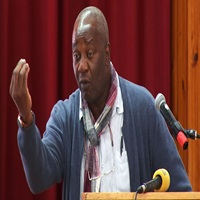
Severino Ngoenha"
How long will we continue to live against what we claim to defend?
"There is something rotten in the state of Denmark," says Marcelo in Shakespeare's Hamlet.
I read the sentence and I can no longer leave it in that kingdom. My Denmark is called Mozambique.
But I fear the reader will immediately think of the rulers and prepare for an accusation that will leave them out of it.
Let's consider a mother who is demanded money for her child's treatment at a public hospital. She protests, pays, and the child receives care. The blame for the extortion is not shared with the victim. But, next time, perhaps she will bring the money separately and advise someone else to do the same. She condemns the abuse; she already plans her life counting on it.
It's the normalization of the abnormal. Those who demand their rights seem not to understand life. We still distinguish between good and evil, but we've learned to call the attempt to live according to that distinction naiveté.
In Hamlet, the prince speaks to his mother about the power of habit to alter what seems natural. This is how the play enters our daily lives. What we adapt to can end up teaching us how to live. And we can pass on to our children as wisdom what we still feel as humiliation. What kind of education do we give them when we teach them honesty and, immediately afterwards, the necessary precautions so that they don't take it too seriously?
I can leave a counter humiliated and then decide on someone else's opportunity. Do I spare them the humiliation, or do I show them that they too will have to go through me? Having suffered an injustice doesn't make me righteous.
In "We Killed the Mangy Dog!", Luís Bernardo Honwana shows Ginho wanting to spare the dog, pressured by his companions to participate in its death. The story is rooted in colonial domination. The question I ask you today is this: who suffers what we do to be accepted? The dog suffers no less because the boy is afraid of being alone.
Those who control the State or concentrate economic power have an increased responsibility. We need justice, dialogue, recognition of the adversary as a legitimate participant, and the effective possibility of alternation, decided by the citizens. But changing rulers can only change the beneficiaries of the same privilege. What kind of democracy will we build if the citizen continues to need a protector to exercise a right?
Claudius acknowledges the crime and tries to pray, but he still holds onto the reason for his murder. He wants to be forgiven without losing the privileges that bind him to guilt. This scene from Hamlet doesn't allow for a tranquil reading: how far does our desire to change go when change ceases to threaten only the advantages of others? Perhaps some of our indignations end precisely at the point where we would begin to renounce them.
Not everything is pretense. There are those who no longer believe in the values they proclaim, those who believe but doubt they can live by them, and those who reserve an exception for themselves. Responsibilities differ. The norm remains alive enough to judge us, but not strong enough to organize our common life.
Corruption also corrodes ethos: the learned way of living with others, of admiring, tolerating, and rewarding. It is not enough to observe that abuse pays to approve of it. Ethos changes when we begin to admire those who benefit from it and despise those who refuse it. A contest that favors the protected teaches this inversion. Thus, common life unravels. Institutions form habits; these habits can reproduce their vices. Let us not wait for virtue in all to demand just institutions.
In The Ambiguous Adventure, Cheikh Hamidou Kane has the Grande Royale defending the conquerors' school for the children of the Diallobé: learning "the art of winning without being right." He acknowledges defeat, not the justice of the conquest. He knows that the children may fail to recognize what the people seek to preserve. The decision stems from domination, not from cowardice.
We too can teach what is right and fear that our children will take us literally. In *On the Genealogy of Morality*, Nietzsche questions the value of values. This questioning compels us to examine our own loyalty when it demands complicity, our respect when it demands silence. But I do not adopt his critique of moral equality: it is through the equal dignity of each person that I believe the necessary transformation is achieved.
Violence against children and sexual exploitation expose this choice. When a victim reports someone we depend on, do we protect the injured person or the reputation of the group? The perpetrator is held accountable for their actions; those who cover up or discredit the victim are not innocent.
“These words pierce my ears like daggers,” Gertrude says to her son. Shortly before, Hamlet killed Polonius. The man who forces his mother to look inside herself is not outside the violence of that house. Neither is the professor, the philosopher, the citizen, outside this fracture, describing it from afar. What is the value of the honesty I teach if, when it contradicts me, the first thing I look for is an exception? I need to know what my words still prevent me from doing.
Cynicism would not resolve the contradiction; it would only teach us to endure it without shame. The reconstruction of ethos does not seek a pure past nor a single model of Mozambican identity. It demands that power and wealth answer to the common good and accept limits. Those who are vulnerable must be able to participate and claim rights, without depending on a benefactor. There are those who refuse, protect, and care; their existence prevents us from declaring the moral defeat of a people. To those who risk their livelihood to refuse, we owe protection, not just admiration.
I leave this question to the Mozambican people, without withdrawing from their midst: what are we willing to change, starting now, in our decisions and our institutions, so that the dignity we demand for ourselves is not still lacking for those who depend on us?
2025/12/3
Copyright Jornal Preto e Branco All rights reserved . 2025
Copyright Jornal Preto e Branco Todos Direitos Resevados . 2025
Website Feito Por Déleo Cambula