
October 4th: memory compels
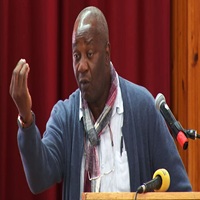
Severino Ngoenha"
The duty to prevent the next violation̂ncia começNow.
October 4th didn't just bequeath us the end of a war. It bequeathed us an obligation: to recognize that the country also belongs to those against whom we fought.
What have we done with this word? And what are we willing to change before another political dispute costs lives again?
In 1992, in Rome, the Government of Mozambique and Renamo signed an agreement that paved the way for the end of the war. Joaquim Chissano and Afonso Dhlakama, along with negotiators and mediators, made possible the meeting between those who had been fighting. It would be unfair to diminish this achievement. However, we failed to make it a lasting guarantee of security for all. To receive it as an inheritance means being held accountable for this inadequacy. The signatories could not fulfill, in our place, the duties of future generations.
It is in this sense that I propose moving from commemoration to remembrance. Returning to the act of signing requires also returning to the suffering that made it necessary: dispersed families, deaths, interrupted childhoods, a country where so many have lost their homes. Remembrance compels us to question the causes and transform the practices that allow repetition. The "never again" commits us before the next victim.
Cabo Delgado prevents us from speaking of peace as a completed task. Our duty is to stop the existing violence and prevent it from recurring or spreading. The populations that continue to flee belong to the same country that celebrates. The complexity of the causes of the war does not exempt us from being responsible for protecting these lives and providing the necessary conditions for their safe return. Nor do we need to announce a territorial division as inevitable to recognize the danger of fragmentation: a country can retain its borders and cease to be a common home.
Hannah Arendt, in "The Human Condition," conceived of promises as a way to establish some security in an unpredictable future. To promise is to bind our actions to others. The 4th of October can be interpreted in light of this requirement: we accepted that our will would find limits in the rights of those we had fought against. If a commitment is only valid as long as it benefits us, we have retained the arbitrary power that a given word should limit.
Fabien Eboussi Boulaga, in “Les conférences nationales en Afrique noire. Une affaire à suivre”, analyzes the perversion of a State that begins to function against its own people. His reflection compels us to examine the ease with which we proclaim ourselves representatives of all and treat those who disagree as someone who no longer belongs. The people then cease to be heard: they become the name we give to our will. An electoral victory authorizes one to govern; it does not authorize one to appropriate the country.
A diabolização do adversário alimenta essa apropriação. Criticar actos, demonstrar irregularidades e exigir responsabilidade por crimes pertence à democracia. Outra coisa é negar ao outro a possibilidade de ter razões, de agir de boa-fé, de querer o bem de Moçambique. Quando reservamos todo o bem para nós e atribuímos todo o mal aos outros, a sua exclusão pode começar a parecer um dever patriótico. O perigo extremo surge quando a violência contra o adversário já não é apenas tolerada: passa a ser apresentada como um serviço ao país.
Não há uma passagem automática das palavras à eliminação física: há decisões, meios e responsabilidades. Mas a diabolização pode enfraquecer as resistências morais à violência. É aí que devemos reconhecer o perigo de práticas fascizantes também em nós. O que condenámos no salazarismo e na sua polícia política não se torna aceitável quando muda a identidade de quem o pratica. Uma história de libertação não concede imunidade moral. A imputação de crimes exige provas; denúncias credíveis exigem investigação independente e protecção das pessoas ameaçadas, não silêncio.
Reconhecer o adversário exige mais do que tolerá-lo. Quem tolera pode ainda julgar-se dono da permissão que concede. Quem reconhece admite que o direito do outro ao país não depende da sua autorização. Esse direito inclui falar, manifestar-se pacificamente, organizar um partido, mobilizar apoiantes e tornar-se alternativa de governo. Não se reconhece uma oposição quando se procura destruir as condições da sua existência.
As mesmas exigências obrigam quem disputa o poder. Governar não autoriza apropriar-se do Estado nem tratar a dissidência como traição; disputar o poder não autoriza procurar fora do país a punição de um governo, fazendo recair sobre a população o preço de um conflito interno. A procura de solidariedade internacional é legítima, sobretudo quando se denunciam violações de direitos. Mas pedir sanções que atinjam o conjunto dos moçambicanos transforma a causa da democracia em instrumento de agravamento do sofrimento colectivo. Quem pretende governar para todos não pode procurar primeiro empobrecer todos. E quem dispõe da força pública tem o dever acrescido de proteger também quem o contesta.
A vigilância contra ingerências externas não dispensa esta vigilância sobre nós. Uma interferência precisa de ser demonstrada; a divergência não a prova. Corrupção, privilégios e exclusão não deixam de ser responsabilidades nossas porque existem interesses estrangeiros. A defesa da soberania perde o seu sentido quando serve para tornar os governantes intocáveis e os cidadãos suspeitos.
Therefore, we need foundations that support coexistence even when the will of a leader or group threatens it. The pursuit of consensus requires effective participation, fair rules for decision-making, and the right to continue to disagree. It does not require unanimity. Credible institutions must guarantee electoral transparency, fearless contestation, and accountability for abuses. National dialogue must be measured by fulfilled commitments, with publicly held accountable individuals and deadlines, and not merely by the document it produces.
These principles also have a material dimension. For young people, belonging to the country should mean being able to study, work, participate in decisions, and benefit from the wealth produced. Poverty is not the same thing as war; exclusion, however, weakens confidence in a shared future. We cannot demand fidelity to the history of liberation while preserving privileges that close that future off to so many.
This is what worries me when I think about the next election cycle. If we maintain hostility and fail to correct the conditions that make the contest dangerous, we will increase the risk of renewed violence. This is not about announcing a fatality, but about assuming responsibility while we can still act. Arriving at the elections with credible guarantees of participation and security requires work now. Memory removes the excuse of not having recognized the danger.
Desmond Tutu insisted that reconciliation cannot be based on lies nor last without improving the lives of those who have suffered. Reconciliation requires listening to the victims, clarifying the facts, determining responsibility, and repairing what can be repaired. We cannot ask those who have lost someone to remain silent so that others may feel at peace. This is where a change of conscience becomes crucial: recognizing in our own actions what we condemn in the actions of others and accepting to correct it, even when it is difficult for us to do so.
October 4th calls for this courage from us. Those who fought each other managed to sit at the same table; it is up to us to make lasting the recognition that this encounter made possible. Our tribute will be to ensure that the other organizes itself without fear, that dissent does not cost a life, and that our children receive a country where they can belong without submitting. Let us not wait for the next violence to discover what we already have a duty to change today.
2025/12/3
Copyright Jornal Preto e Branco All rights reserved . 2025
Copyright Jornal Preto e Branco Todos Direitos Resevados . 2025
Website Feito Por Déleo Cambula