
Love the people, spare the people
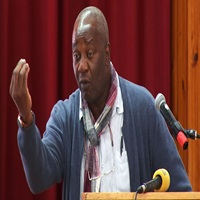
Severino Ngoenha"
Care beginşwhere we exercise power.
In Dostoevsky's "The Brothers Karamazov," Zosima recalls a doctor confessing to him:
❝
The more I love humanity in general, the less I love man in particular.
He imagined himself capable of facing crucifixion for humanity, but he couldn't bear to share a room with someone for two days. He was irritated by the habits of those who came near him. Humanity allowed him to dream of sacrifice; his neighbor demanded a patience he didn't possess.
I don't read this passage only thinking about others. We philosophers can defend human dignity and impatiently welcome those who interrupt our reasoning. I can celebrate freedom of thought and become irritated when a student exercises it against one of my ideas. In religion, we can proclaim love for our neighbor and demand that they become like us in order to welcome them. The other begins to bother us when they cease to confirm what we think of them.
Universal love is not a lie. We need it to recognize the rights of people we will never see. There have been those who risked privileges so that others could enjoy the same rights. We should not reduce all generosity to disguised self-interest. But the good we do does not make us owners of other people's lives. Gratitude cannot be demanded in the form of obedience.
To ensure that care does not depend solely on the willingness of each individual, we create institutions. Churches have hierarchies, councils, and synods; universities, boards, colloquia, and journals; politics, parties and representative bodies; international cooperation, organizations like the United Nations. They do not have the same function nor the same legitimacy. However, all can face a difficulty: the organization created to serve people begins to protect itself from the word of those people.
Within their governing bodies, participants discuss how close they have come to the people and how much they need to return to them. Reports circulate, resolutions are approved, speeches receive applause. However, those being discussed may have no way of questioning what is decided there. We are accountable to each other and believe that, by doing so, we have already been accountable to the people. The approval of our peers becomes proof of the good we do.
A private meeting, specialized language, or a career path do not, in themselves, demonstrate any usurpation. Mediation is necessary and can limit the arbitrary power of superiors. The danger arises when climbing the corporate ladder primarily requires pleasing those above, while those who suffer the consequences are unable to make their judgments heard. Even sincere dedication can learn to confuse defending the organization with defending one's own cause.
Let's imagine an institution celebrating the construction of a school. Residents say there's a shortage of teachers and that some children are still unable to attend. If this feedback leads to a review of the project, then mediation works. If it's received as ingratitude, the report begins to be valued more than the actual school experience. Inviting people for consultation isn't enough if no response can change the decision.
The institution needs to constantly confront its pronouncements, perceptions, and even beliefs with the lives and desires of the people. This may require correcting its direction, not just better executing the program. Someone who knows a problem doesn't necessarily have the solution; but those in leadership cannot transform their knowledge into a dispensation for listening. Thinking together requires reasoning from both sides and the freedom to formulate questions that were not initially considered.
In politics, the deviation becomes more serious when we stop saying that we represent the people and start saying that we are the people. If you agree, you confirm us; if you protest, you have been manipulated. External interference, when it exists, must be demonstrated and confronted without suppressing rights. This does not allow us to conclude that all internal disagreement is fabricated. Those who only recognize as the people those who applaud them deprive the governed of the right to judge those who govern.
But who are the people? It is not a single person with a single will. It is a community of different men and women, linked by a common life. It includes those who vote for us, those who vote against us, and those who do not vote. Even children, who do not yet vote, belong to this community. The attention given to the poorest does not authorize any group to become the owner of that word. The majority allows us to decide; it does not expel the vanquished from the community, nor can it dispose of the rights of a minority.
Speaking as a citizen, defending a cause, and representing others are distinct things. A philosopher can denounce hunger without having been elected by the hungry. He cannot presume to know all their desires. Representation requires authorization or recognition that can be verified, with limits and accountability. To govern in the name of all, free choice, real alternatives, and the effective possibility of replacement are indispensable. An election does not deliver a people to the winner.
It is not enough to proclaim that the people have ceased to recognize someone. They must be able to express this freely. A disagreement does not automatically extinguish a mandate. But, when the refusal of representation becomes effective, retaining a position does not, in itself, restore the moral legitimacy of claiming the right to speak on behalf of the people. We can continue to argue in our own name. We cannot put our will into the mouths of others and prevent them from refuting it.
The heroic epic of liberation deserves recognition, but it does not constitute a title of ownership over the future. Those who fought for freedom must admit that people will use it in ways they did not foresee. "My people" can mean that I belong to them or that they belong to me. In this transition from belonging to ownership, representation becomes usurpation. I would call it political ventriloquism to pass our voice off as the voice of those we prevent from responding. Not even the opposition is exempt from this test.
Dostoevsky deepens the unease in the episode of the Grand Inquisitor, the story Ivan tells Alyosha. Christ returns to Seville and is arrested on the cardinal's orders. The Inquisitor accuses him of disrupting the work done in his name. He justifies the suppression of freedom by the happiness of men and threatens to burn him. After receiving a silent kiss from Christ, he opens the door and orders him to leave and not return. The one in whose name authority speaks has become an unwelcome visitor.
The people are not Christ, nor are they infallible. The approximation concerns substitution: we invoke someone whose presence already bothers us. The Inquisitor may sincerely believe that he protects men from the weight of freedom. The conviction of doing good does not prevent domination; it may justify it in the eyes of those who dominate. That is why it is not enough to demand better feelings from representatives. We need to retain the power to contradict them, even when they believe they love us.
Loving Mozambique cannot, therefore, be limited to loving the vastness of its lands, the beauty of its landscapes, or an idea of Mozambican identity. The land matters because it sustains lives and relationships, memories and possibilities. Mozambique is also the men, women, children, and elderly who cannot be contained on a map. Caring for the country means being accountable for the conditions in which these people live, including those whose names we will never know.
This care begins where we exercise power. In the fair and timely payment of wages to those who work for us. In the way we treat an employee, a student, or someone who depends on our decisions. In respecting the rights of those under our responsibility. We cannot claim dignity for Mozambicans in general and refuse consideration to the Mozambican we encounter every day. Those who depend on us do not receive dignity as a favor.
The same criteria should guide economic contracts, political agreements, and foreign relations. We need to ask who benefits, who bears the costs, and what opportunities remain for those who come after. Prioritizing Mozambicans does not mean disregarding other peoples. It requires that the prestige of an agreement or the advantage for those who sign it does not replace the improvement of the lives of those who will have to live with its consequences.
In the Groundwork of the Metaphysics of Morals, Kant demands that we treat humanity, in each person, as an end and never merely as a means. This requirement prevents us from making others mere instruments of a project, even when we call it our homeland. It is not enough to wish for them what we wish for ourselves; it is necessary to recognize that they too may desire a life different from the one we have destined for them.
The CONCP, Conference of Nationalist Organizations of the Portuguese Colonies, created in 1961, helped to coordinate the liberation struggles. Within this context, Amílcar Cabral spoke of peace as a means to build progress and happiness for the people. He also insisted on the need for an organization that would allow the people to prevent leaders from diverting gains for their own interests. The achievement of freedom could not depend solely on the virtue of those in power.
Peace, progress, and happiness continue to challenge us. Peace needs to lead to the possibility of living without fear; progress, to food, education, health, and work. Happiness cannot be decreed, but we can combat the conditions that make it inaccessible. No institution guarantees that everyone will be happy. It can, however, cease adding humiliation to poverty and create conditions so that each person can strive to fulfill their life.
Not all deprivation results from neglect. There are scarce resources, difficult choices, and unequal responsibilities. This requires discussing priorities and distributing sacrifices fairly. It does not absolve indifference. The responsibility of someone who manages a budget is not the same as that of someone trying to feed their children. But each of us must question what we can do and what we have become accustomed to not wanting to see.
It must disturb us that someone goes hungry, that a child learns sitting on the floor, that a family lives with only water inside their home. It must disturb us to see the distress of those who arrive home at night with nothing to give their children. This unease cannot end with a fleeting emotion. It needs to permeate our decisions, our work, and the way we demand accountability. As long as these lives are merely examples in speeches, we will continue to love a Mozambique that spares us the encounter with Mozambicans.
The active love that Zósima speaks of demands work and perseverance alongside those who may be inconvenient, ungrateful, or different from what we expected. It doesn't require us to know everyone, but that no one be treated as dispensable. It is not only proven by the willingness to die for the homeland. It is also proven in the daily effort so that others may live in it with dignity and freedom. When we say we love Mozambique, are we willing to care for Mozambicans without demanding that they belong to us?
2025/12/3
Copyright Jornal Preto e Branco All rights reserved . 2025
Copyright Jornal Preto e Branco Todos Direitos Resevados . 2025
Website Feito Por Déleo Cambula