
Independent, but still dependent?
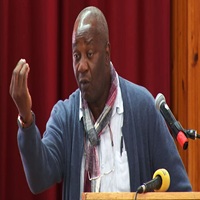
Severino Ngoenha"
ProduçNational sovereignty and capacity in dialogue with Onório Manuel Boane, Vice-President of the CTA.
I. Fighting for Mozambique: from independence to capacity
The theme chosen for the 2026 Philosophical Workshops – Fighting for Mozambique Today – deliberately stems from Eduardo Mondlane. Mondlane and his generation faced a precise historical task: to fight against colonial domination and achieve independence. They did their part. Other generations later had to fight for peace, democratization, and the construction of political institutions. Today we are, at least formally, a democratic Republic, with parties, elections, institutions, and a constitutional order. But no independence ends history. Each generation must discover what, in its own time, prevents Mozambique from achieving its full potential.
We are right to discuss democracy, justice, the rule of law, elections, political consensus, and the societal project in which Mozambicans can identify. But there is another question, perhaps more fundamental, because it conditions many of the others: what sovereignty can a country have that depends on others to satisfy a large part of its most basic needs? No contemporary country is self-sufficient. We live in a world of interdependencies. But interdependence only avoids becoming dependence when those who interact possess sufficiently strong capacities to negotiate with each other. Between unequal parties, interdependence always runs the risk of becoming subordination.
In the previous workshop, Edson Cortez raised four issues that we decided to take as a true agenda: the need for a collective project; institutions capable of guaranteeing merit and equal opportunities; a productive economy; and a society open to debate. It is especially the third point that we wanted to explore further. After so many debates of a political and legal nature, it seemed necessary to question what materially sustains a society: work, production, and our capacity to transform resources into a better life.
II. The voice of Onório Boane: liberating the capacity to produce
Onório Boane framed the problem from the perspective of the business sector. In his view, the private sector should be an essential partner of the State in building development, but it faces obstacles that seriously limit its capacity to invest, produce and compete: scarce and expensive credit, restrictive monetary policies, high tax burden, sometimes overlapping inspections, bureaucracy, corruption, unpredictable procedures and a shortage of qualified personnel.
Furthermore, there is an ambiguity in the relationship between the State and the economy. The State is a legislator, regulator, and supervisor, but it sometimes tends to also want to be an economic actor, making the responsibilities of each less clear. For Boane, the challenge is not to diminish the State, but to define it better: to create stable rules, combat corruption, facilitate productive activity, negotiate competently with large investors, and ensure that national wealth serves national objectives.
This is where mineral and energy resources become particularly important. Mozambique has extraordinary potential. But possessing gas, coal, minerals, or energy does not mean possessing development. Everything depends on the capacity to transform the revenue from these resources into economic diversification, agriculture, industry, infrastructure, and training.
The example of the Pande gas field in Inhambane made this issue particularly concrete: a resource can leave one region and produce far more transformation in the place where it arrives than in the place from which it was extracted. This means that the essential thing is not just having resources, but possessing institutions, skills, contracts, and policies capable of converting them into national capabilities.
Therefore, Boane also insisted on training. Companies need technically prepared people, capable of meeting the real demands of production. Schools and universities cannot limit themselves to handing out diplomas to the market; they must participate in building the country's productive capacity.
III. From independence to co-authorship of the world
Onório Boane's intervention compels me to begin with an essential distinction: the private sector does not necessarily mean the productive sector. There can be a great deal of private initiative and yet little transformation, if import, intermediation, distribution, and resale predominate. Our fundamental problem is not simply increasing the number of companies. It is increasing our capacity to produce.
This doesn't mean that Mozambicans don't work. Our mothers work very hard. Farmers work. Vendors, factory workers, and small producers work. The philosophical question isn't the amount of effort, but how the work is organized, what knowledge accompanies it, and what transformative capacity it produces.
Filomeno Lopes, a Guinean philosopher, cruelly formulates one of the great African contradictions: "we eat what we don't produce and we produce what we don't eat." Perhaps it is precisely here that a new struggle for Mozambique should begin: to progressively produce what we need, starting with the most basic – our food – and moving on to processing, industry, equipment, and technology.
Amartya Sen, both an economist and a philosopher, taught us to understand development not simply as the growth of wealth, but as the expansion of capabilities. The crucial question then ceases to be how much a country possesses and becomes: what are people capable of doing with what they possess? We can have land and import food; mineral resources and import almost everything that transforms them; educated young people and lack the technical skills corresponding to the country's needs. Wealth exists, but it does not automatically translate into freedom.
This is also why Samora Machel so often insisted on the need to rely, first and foremost, on our own strength. This formula does not mean isolation. It means that the relationship with others is only truly sovereign when we have something of our own to bring to the relationship.
Education should not simply mean teaching someone how to occupy a position. It should mean empowering them to look at the land, the water, the energy, the mineral resources, the health, housing or food problems and ask: what can we do with this?
This issue becomes even more urgent because a new revolution is already underway. We historically failed the Industrial Revolution, while Africa endured slavery, occupation, and colonialism. We cannot fail the digital revolution either.
And not failing it means much more than importing computers, using platforms, or consuming artificial intelligence produced elsewhere. Technical education must allow for progression: using, understanding, adapting, designing, and finally, manufacturing. The distance between those who use a technology and those who design it is also a distance of power.
The goal is not an impossible economic autarky. It is to achieve true interdependence. To move from being mere consumers of the world to co-creators of the world: to participate in the conception of the knowledge, technologies, and goods that organize contemporary life.
It is at this price that political independence transforms into real sovereignty.
Perhaps one of the greatest struggles for Mozambique today is, therefore, to do less waiting and more doing; less asking and more empowering; less importing answers and more building capacity.
Independence made us the architects of our own state. The challenge now is to become co-creators of the world we want to be a part of.
2025/12/3
Copyright Jornal Preto e Branco All rights reserved . 2025
Copyright Jornal Preto e Branco Todos Direitos Resevados . 2025
Website Feito Por Déleo Cambula