
Get out of our sunlight! Diogenes, Macron, and the new African servitude
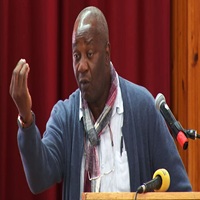
Severino Ngoenha"
There are times when the philosopher can no longer speak calmly. There are times when thinking becomes almost a form of physical suffering. The more one understands history, the harder it becomes to endure the endless repetition of the same humiliations. Kierkegaard said that anguish is the fate of those who see the abyss of freedom before them. Perhaps this is the true contemporary African anguish: to know, to understand, to recognize the mechanisms of domination and, despite this, to continue to walk voluntarily towards them. I am writing this text consumed by this indignation. While African peoples continue to be crushed by poverty, debt, dependency, and war, yet another summit between France and Africa is taking place in Kenya. Another diplomatic procession. Another parade of African presidents chasing after the new shepherd of the moment. A few months ago, in Addis Ababa, Giorgia Meloni was received at the African Union as an indispensable partner for the continent's future. Yesterday it was Africa-France. Tomorrow it will be Africa-Turkey, Africa-China, Africa-Russia, Africa-European Union, Africa-United States. Africa with everyone. But Africa is almost never alone. And when Africa comes together with itself, the others are always sitting at the center of the table, distributing promises, funding, strategies, projects, and illusions. This is what revolts me. Because it's no longer simply a matter of diplomacy. It's a civilizational tragedy. It's about Africa's inability to truly believe in itself. We continue to wait for external saviors. We continue to expect others to bring us development, stability, wealth, and modernity. We remain convinced that our sunshine comes from outside. But what African history demonstrates is exactly the opposite. They never brought us the sun. They always positioned themselves in front of him. Perhaps the fairest image of the relationship between Africa and the West is no longer even that of colonizer and colonized. It is that of shepherd and sheep. The West continues to behave as the world's shepherd, and we continue to chase after the first staff that appears, believing it will lead us to salvation. We rushed to Paris. We rushed to Washington. We rushed to Brussels. We rushed to Beijing. We rushed to Moscow. We run for everyone. And while we're running, we forget about ourselves. The African Union was created precisely to prevent this. After the anti-colonial struggles, after centuries of slavery and colonization, the great African objective was simple: unity and resistance. Resistance so that we would not fall into new forms of dependency. Unity so that Africa could finally exist as the subject of its own history. That is what Du Bois understood. That's what George Padmore understood. This is what Henry Sylvester Williams understood from the Pan-African Congress of 1900. That's what Nkrumah repeated obsessively. That is what Nyerere tried to build. This is what Amílcar Cabral carried with him until his death. This is what Agostinho Neto dreamed of. That is what Samora Machel tried to defend. This is what Marcelino dos Santos constantly repeated: African freedom would be continental or it would once again be dependence. Nkrumah was right when he insisted: "Unite or perish." Today we tragically realize the depth of that phrase. Because what we see today is exactly the opposite of African unity. We see a fragmented, vulnerable continent, permanently summoned to meetings organized by the very powers that continue to control the central mechanisms of the world economy. And the most painful thing is that we know all of this. We know what Berlin was like. We know what the Congo was like. We know what Biafra was. We know what structural adjustment programs were. We know what the IMF means. We know what debt means. We know what monetary dependence means. We know what a denounced Françafrique means. We know. We also know what is happening in the Sahel today. We know that a segment of African youth has finally decided to rise up against the new forms of trusteeship. We know that Mali, Burkina Faso, and Niger represent today, for millions of young Africans, a desperate attempt to regain sovereignty. One can discuss the methods, one can discuss the regimes, but one cannot ignore the fundamental historical truth: the Sahel has become a symbol of the African rejection of permanent trusteeship. So what do we do? While these peoples face sanctions, pressure, isolation, and attacks, we joyfully gather with those very people who are doing everything they can to prevent this rupture from becoming entrenched. It's impossible not to feel ashamed. It's impossible not to feel outraged. At a time when young Africans are dying trying to liberate the continent from new forms of dependency, our leaders continue to sit in conferences where they talk about "partnership" between unequal countries, as if fifty-four African nations should eternally present themselves before world powers like students before a teacher. This is where Diogenes returns with extraordinary strength. When Alexander, ruler of the empire, asked the philosopher what he could do for him, Diogenes replied: "Get out of my sun's way." Perhaps Africa needs this philosophical courage today. Do not request guardianship anymore. No more asking for permission to exist. Stop asking for diplomatic crumbs. No more chasing after the world's new Alexanders. Macron, get out of the way of our sunshine. IMF, get out of the way of our sunshine. World Bank, get out of our way. But the phrase must now become even harsher. Because it is no longer just external Alexanders who prevent the light from reaching us. Many of our own leaders have also faced the African sun. Leaders lacking historical imagination. Leaders lacking continental courage. Leaders who confuse diplomacy with submission. Leaders incapable of envisioning Africa outside of dependency. Leaders who make a living managing African poverty. Leaders integrated into international wealth mechanisms while their own people survive in poverty. Many years ago I wrote that Africa's weakness lay not in its territory or colonial borders. Its true weakness lay in the quality of its people: capable of defending all the interests of the world, except the deepest interests of the continent itself. Today, that phrase has become even more painful. Perhaps that is why so many young Africans no longer expect anything from these weary elites. Perhaps that is why African youth are once again searching for radical language, radical sovereignty, radical rupture. And perhaps it is precisely here that philosophy still has some use. Not to manage the existing world. Not for decorating diplomatic conferences. Not to legitimize dependencies. But to encourage a new African generation to rediscover the courage to say no. No to the shepherds of the world. Not to obedient sheep. No to dependency transformed into a system. No to elites who have already lost the ability to imagine freedom. And to say finally, before all external and internal empires: Get out of the way of our sunbeams.2025/12/3
Copyright Jornal Preto e Branco All rights reserved . 2025
Copyright Jornal Preto e Branco Todos Direitos Resevados . 2025
Website Feito Por Déleo Cambula