
Dialogue with Bóia Efraime Júnior
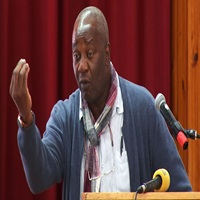
Severino Ngoenha"
A violâThe legacy we inherited continues to live among us.
I. Fighting for Mozambique: when we are also the problem.
How can we rebuild a human community when violence has ceased to be merely an event and has become a way of life, a way of exercising power, and a way of looking at one another?
This was the question that guided our last Philosophical Workshop, part of the "Fighting for Mozambique Today" cycle. After discussing institutions, democracy, and the capacity to produce, we wanted to shift our focus to a more unsettling dimension: what happens within us and in the relationships we establish with one another.
Because violence is not limited to wars, shootings, assaults, or repression. There is the violence of hunger and inequality, domestic violence, the rape of girls and women, daily humiliations, and politically motivated assassinations. There is also the violence that manifests itself when, in the name of a cause, schools, hospitals, and homes are destroyed, barricades are erected, or someone is prevented from working. These are forms of violence of different natures and responsibilities, but all affect human dignity and erode the possibility of living together.
We therefore invited Bóia Efraime Júnior, psychologist and psychoanalyst, to help us understand a question that is simultaneously historical, psychological, and philosophical: how can a society marked by successive experiences of violence recognize itself again as a human community?
We did not intend to replace politics with psychology, nor to confuse victims and perpetrators. We wanted to understand why we continue to reproduce, in our daily relationships, mechanisms of fear, humiliation, and domination that we so often denounce in institutions.
Perhaps fighting for Mozambique today also requires the courage to question what we ourselves have become.
II. The voice of Bóia Efraime Júnior: the violence that remains within us
Bóia Efraime Júnior presented us with a disturbing reality: violence is not merely a succession of traumatic events. It can transform into an internalized social experience, reproduced across generations, institutions, and individuals.
The colonial experience was decisive in this process. It was not just about dominating territories, but about denying the humanity of entire populations. Independence broke with the colonial order, but did not automatically erase its effects. Colonial violence was followed by other traumatic experiences: war, repression, collective insecurities, and new forms of political and social violence.
From Efraime's perspective, unresolved traumas continue to manifest in human relationships. Fear transforms into distrust; insecurity can fuel the need for control; unrecognized suffering can turn into aggression directed against others. Violence is thus reproduced in families, schools, businesses, transportation, and neighborly relations.
When a society lives in a state of permanent alert, the other begins to be perceived as a threat. Empathy weakens, distrust sets in, and aggression risks becoming a habitual response to insecurity.
But Efraime refused to turn this diagnosis into a definitive condemnation. He insisted on the need to truly understand Mozambique, including the experiences of suffering that remain silenced and that political or legal explanations do not always manage to capture.
Their proposal was to create safe spaces for speaking and listening, where people can talk about their pain, acknowledge the pain of others, and rebuild relationships of trust.
She recounted experiences of psychological support and community gatherings during periods of violence, in which people divided by their political affiliations discovered shared responsibilities by recognizing themselves as parents concerned about their children, neighbors exposed to the same dangers, and equally vulnerable human beings.
Reconstruction therefore begins with a seemingly elementary, yet profoundly compromised, capacity: recognizing the suffering of others as human suffering.
III. From inherited violence to reconciliation with ourselves.
I left this meeting with a philosophically crucial question: what if the greatest obstacle to building Mozambique lies not only in the institutions we have created, but also in the way we have learned to look at each other?
Frantz Fanon showed us that colonialism does not only occupy territories. It also occupies consciousness, wounds the image that the colonized constructs of themselves, and disrupts their relationship with others. Political decolonization, therefore, does not necessarily coincide with the decolonization of our subjectivities.
But it would be too convenient to explain all our violence through the past. History helps us understand what we have inherited; it cannot justify what we continue to do. We are not necessarily guilty of the wounds we receive, but we are responsible for how we deal with them and for what we pass on to future generations.
Erich Fromm, in *Fear of Freedom*, showed how insecurity in the face of freedom can lead to submission to authority or the desire to dominate. Gilles Deleuze and Félix Guattari, in *Anti-Oedipus*, help us understand that desire does not exist separately from social and political relations. Domination is not reproduced simply because it is imposed on us; it can become ingrained in our habits, our desires, and the way we conceive of power.
Yesterday's victim may become tomorrow's dominator, not because violence is their destiny, but because we have not found ways to stop its reproduction.
It is precisely here that Bóia Efraime Júnior's intervention made me return to the hope I placed in the Inclusive National Dialogue. I hoped it would be much more than a negotiation between parties, a distribution of positions, or the search for institutional compromises. I hoped it would become a great moment of national catharsis, in which Mozambique could find itself, confront the violence suffered and perpetrated, recognize its wounds, and decide that it did not want to continue reproducing them.
I didn't imagine a gigantic group therapy session, nor a ceremony intended to absolve the guilty. I imagined a process of reunion between communities, generations, regions, and political affiliations; between those who suffered and those who caused suffering; between those who stopped speaking to each other and those who never had the opportunity to listen to each other.
The South African experience of the Truth and Reconciliation Commission, despite its shortcomings, demonstrated the importance of creating a public space for witnessing, acknowledging, and confronting the memory of violence. In Rwanda, the gacaca community courts sought, through other means and amidst much controversy, to address the destruction of social bonds. Neither of these experiences resolved all conflicts. But both raised a question that also concerns us: how can a society return to living with itself after its members have learned to fear and destroy each other?
In Mozambique, I fear we are squandering a historic opportunity on political negotiation and the legalization of conflicts. Justice is indispensable, especially in the face of serious crimes and human rights violations. But a sentence does not necessarily rebuild trust, just as an agreement between leaders does not automatically reconcile citizens.
Justice seeks to establish responsibility for what happened; reconciliation also seeks to make possible what has not yet happened: to live together again in a different way. One does not replace the other.
And we need to tell our young people clearly that killing, raping, stealing, burning schools or hospitals, destroying homes, and violently hindering the freedom of others are not acceptable ways of living together, even when there is a legitimate cause to defend. Similarly, no authority can invoke public order to justify abuses against citizens. Recognizing social and political injustices does not absolve anyone of responsibility for their actions.
But this collective learning will not only take place in the courts. It requires a moral space where we can acknowledge mistakes, listen to victims, assume responsibility, and discover that forgiveness, when freely granted, can open paths that punishment alone cannot.
This is the meaning of the national catharsis that I continue to consider necessary: not to forget the past, but to prevent it from continuing to govern our relations. Not to erase the differences, but to remove their power to transform us into enemies.
Our humanity, so often veiled by fear and violence, has not disappeared. What has been compromised is also the possibility of building a more authentic Mozambican identity, one that is not exhausted by party, regional, ethnic or racial affiliations, but makes them expressions of a broader community.
Therefore, I leave you with this challenge: that the Inclusive National Dialogue, while still a process underway, recovers the ethical and moral dimension that we so desperately need. That it not only brings leaders closer together, but seeks to reunite the nation with itself. And, if this space cannot fulfill such a mission, may we have the courage to create another, truly open to communities, to victims, to memories, and to the responsibilities of all.
We need a national commitment that rejects violence in all its forms – political, social, economic, domestic and everyday – and makes respect for human dignity the foundation of our common life.
Reconciliation is not merely an agreement between adversaries. It is the possibility for a society to rediscover itself, acknowledge its wounds, and decide that it does not want to continue reproducing them.
The challenge I pose is this: let us make this reunion the beginning of a new Mozambican identity. Not just a country where we stop attacking each other, but a community where we no longer need to deny the humanity of others to affirm our own.
2025/12/3
Copyright Jornal Preto e Branco All rights reserved . 2025
Copyright Jornal Preto e Branco Todos Direitos Resevados . 2025
Website Feito Por Déleo Cambula