
Vilankulo: historical, cultural and identity nickname for a paradisiacal "ethnopolis"
Paulo Vilanculo"
In classical sociology, Max Weber, in his work Economy and Society, was a pioneer in arguing that ethnicity does not derive from purely genetic data, but rather from the subjective belief in a common ancestry. Ethnicity refers to a human group that shares ancestry, history, language, religion, and common cultural habits. It is a social and relational construct, based on a feeling of belonging, and not on biological characteristics. It differs from race, an obsolete biological concept. For Weber, this belief is independent of real or verifiable blood ties, where the ethnic group is formed by community unity based on the shared feeling of belonging to the same people, which facilitates joint actions and the development of a sense of solidarity.In his work *Politics*, Aristotle presents the most celebrated definition of the relationship between the individual and the city. The polis is the perfect community because it is self-sufficient. It does not exist merely to guarantee survival (like the family or the village), but to allow for the "good life" (a virtuous and happy life).The persistence of the names of local rulers and clans as place names for cities and towns in southern Mozambique, and the continuity of traditional power structures and strong historical-cultural ties to the land, reflects a combination of historical and socio-cultural factors: The traditional toponymy of the south was based on references to local sovereignties identified by clans and their chiefs of hereditary descent. The surname (nickname) of the founding or reigning family in a specific region is used simultaneously to identify the person's lineage and the territory under the control of that clan. For example, Tembe from "Katembe" meaning (from Tembe), Matola which derives from the Matsolo clan, Machava, a surname of the lineage that dominated the lands of the Infulene valley, followed by settlements in areas such as Magul, Chissano, among others that take the names of their regions as surnames.
In the Inhambane Province, the surnames and administrative regulations of Magul, Murrure, Massinga, Vilanculos, and, for the central region, Machanga, which secularizes the surname Muchanga, persist. Historically, the ethno-cultural history of the surname Vilankulo—the word originates from the surname of a lineage of the Mhandia group, a branch of the southern Bantu peoples, the Bilankulo, lineage of the Bila, who migrated and established their sovereignty in the northern region of Inhambane—is directly intertwined with the turmoil of migrations and wars that shaped the Southern African region in the 19th century. The historical trajectory of this people and their surname developed through the landmarks of the Migratory Wars. In the first quarter of the 19th century, Southern Africa was swept by the Mfecane (or Difaqane). This period of violent political and military conflicts was triggered by the expansion of the Zulu Kingdom under the command of Shaka Zulu. Several generals and tribal chiefs who refused to submit to Shaka fled north. Among them was Soshangane, who advanced towards southern and central Mozambique, founding the powerful Gaza Empire. This invasion provoked a huge wave of "migratory wars" and forced displacements of local populations. After the fall and disintegration of the Gaza Empire (with the defeat of Ngungunhane by the Portuguese in 1895), the movement reversed. Many families who had settled and reorganized in the Transvaal, or who were part of the forced migration and mining routes in South Africa, returned or moved towards northern Mozambique to escape oppression. In this ebb and flow of populations pushed by the Nguni subjugation wars and colonial pressure, the group carrying the Vilankulo lineage eventually found its definitive settlement further north, on the coast of Inhambane.
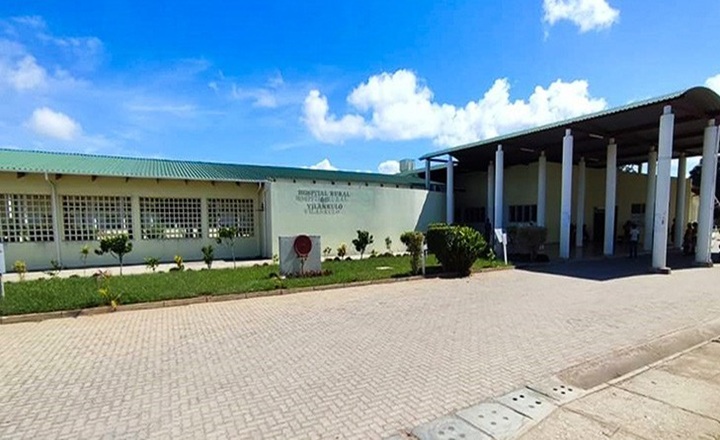
The Gamela Vilankulo clan settled in the coastal bay opposite the Bazaruto Archipelago. Under the leadership of a prominent tribal chief, Gamela Vilankulo Mukoke, they consolidated their power and established a stable settlement. To organize the territory, they distributed the surrounding lands among their children, giving rise to the first neighborhoods and suburbs of the region. When the Portuguese colonizers officially mapped the area in the early 20th century (creating the settlement in 1913), they named the place after the local ruler. The Founding Ruler of the Portuguese colonial administration registered and officially named the settlement in 1913 after the local ruler, Gamela Vilankulo Mukoke. The richness of this people lies in the fact that they are not a homogeneous group, but rather a confederation of clans sharing the Xitsua language with deep cultural roots. Regarding social organization, it is a traditional patrilineal society organized into small family farms called muti, where several circular huts surround the cattle corral and the community meeting space. Each muti has sacred burial sites where offerings are left. Notable examples include Vilankulo-Xikhongue, Xibahalane, Buene, Phunguane, Xikhatsa, Mundzombane, Madjime, Maholele, etc. In spirituality and ancestry, belief in the supreme creator coexists with strong veneration of ancestral spirits. Traditional healers, known as Sangomas or Nanga, play crucial roles in medicine and spiritual guidance. The people are distinguished by their vibrant aesthetic of colorful clothing. Women wear the famous Xibelani skirt made from meters of bright, gathered fabric that takes on a characteristic and voluminous movement during traditional dances. The musical heritage is vast, with a huge variety of xylophones, drums, and musical bows used to tell stories and celebrate rites of passage.
In memory and identity, theAfter independence (1975), although there was an attempt to replace colonial names with revolutionary designations, the designations of local clan origin remained in common usage. In the Legal and Ceremonial integration, Decree-Law No. 15/2000 formalized the articulation of local state bodies with traditional authorities. The traditional chiefs and lineage heads receive state subsidies, wear official uniforms, and actively participate in community mobilization for health, education, and voter registration campaigns. The traditional authorities function as community courts of first instance. In the mediation of family conflicts, property boundary disputes, or minor offenses, these are resolved by traditional leaders based on customary law (oral tradition), relieving pressure on formal state courts. Furthermore, major national events require their spiritual blessing; the traditional rituals (kuphaxla) conducted by the leaders who bear the name of the land are considered indispensable for the success of the projects. Although today the name identifies the famous coastal tourist town and a district in the province of Inhambane, it is the name of one of Mozambique's greatest geographical and cultural landmarks. The nickname Vilankulo is a living testament to resilience that survived the Mfecane, the forced migrations between the Transvaal and Mozambique, and the colonial period, transforming the name of a lineage of warriors and migrants.
2025/12/3
Copyright Jornal Preto e Branco All rights reserved . 2025
Copyright Jornal Preto e Branco Todos Direitos Resevados . 2025
Website Feito Por Déleo Cambula