
"UNAY CAMBUMA" CASE: SUSPECTS ARRESTED FOR INVESTIGATIONHEREIs this gradual homicide?
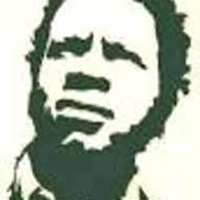
Paulo Vilanculo"
The recent episode involving the young men accused of managing the digital page associated with activist Unay Cambuma has once again exposed, in a raw and disturbing way, the deep weaknesses of the Mozambican judicial system. The Maputo City Judicial Court decided to release them on bail so they could await trial in "freedom," but the word becomes bitter when contrasted with the images broadcast by Luz TV, where the country watched, stupefied, as debilitated human figures, bodies that looked more like the remains of lives squeezed between cells, interrogations, and the heavy shadow of a justice system that insists on confusing legality with revenge. What kind of rule of law allows presumed innocents to leave the hands of the State almost like corpses? What kind of investigation system hides behind formalities when human dignity is trampled? To what extent is denouncing and criticizing government officials on social media a crime? And, above all, what future will a country have where criticism is confused with crime?
Social media, now an unavoidable part of the public sphere, has become a natural stage for political participation, denunciations, and scrutiny of power. Facebook, TikTok, or any other platform are now spaces where citizenship is exercised. The accusation of digital management, shrouded in a narrative of threat to public order, adds to the growing pattern of intimidation of critical voices and the attempt to control, by force, the Mozambican digital space. In a country where the Constitution proclaims freedoms, reality shows that exercising these rights can be costly for its citizens. The constitutional framework seems to clash with what many classify as a practice of institutionalized intimidation. Freedom of expression is not a concession from the government; it is a right acquired by citizens. The Constitution of the Republic guarantees, in its article 48, freedom of expression, opinion, and the press, ensuring that no citizen should be censored for expressing their thoughts.
How does a fictitious name, used online and created to protect the author, suddenly transform into an "identity" and even alleged legal evidence?WHow can a state condemn someone based on an identity that doesn't exist?
The use of pseudonyms is historical, legitimate, and even protected in many democratic systems. It is simply a mark of authorship, a name chosen to represent a voice, a thought, or a style. Authors, activists, journalists, and whistleblowers use pseudonyms; press legislation itself recognizes pseudonyms as a valid form of identity protection. What exists, in some contexts, is fear, and it is precisely this fear that pseudonyms attempt to circumvent. Journalists, writers, activists, and whistleblowers resort to fictitious names to ensure safety, avoid reprisals, or simply preserve creative freedom.
In legal terms, a pseudonym is merely a mark of authorship, not data that identifies a citizen. A pseudonym is not, in itself, an identity, much less can it be automatically considered "evidence" in a legal proceeding. To understand how courts deal with pseudonyms, it is necessary to separate three levels: real identity, digital identity, and legal proof. In fact, a pseudonym has never been and legally should never be treated as a civil identity. There is no crime in writing under a pseudonym. Treating pseudonyms as identities is not a legal practice, but rather a dangerous shortcut used by systems that seek to control social criticism. However, the pseudonym ceases to be treated as anonymity and becomes a political label to justify persecution. By treating a pseudonym as evidence, the justice system risks transforming fiction into conviction, and anonymity into a political weapon. The most serious consequence is that, in doing so, it weakens not only individuals but the rule of law itself.
When did reporting abuses and criticizing government officials on social media become a crime in Mozambique?But why are rulers afraid of being criticized?
Criticizing government officials and denouncing abuses of power on social media.Based on facts, evidence, documents, or testimonies, this is not a crime, it is civic participation. On the contrary, it is a constitutional right in any state that claims to be democratic. That is, criticizing government officials, denouncing mismanagement, corruption, or human rights violations is a civic practice, not a crime. Government officials have an increased duty of tolerance towards criticism; this is true in all democracies. The tacit criminalization of public opinion reveals a worrying pattern: a state that reacts to criticism with repression, instead of responding with transparency. Denunciations of corruption, bad governance, abuses of authority, or human rights violations—essential elements for the functioning of any democracy—are frequently interpreted as “attacks,” “defamation,” or “disinformation,” even when there is concrete evidence or testimony to support the allegations.
Mozambican musician Amândio Munhequeia, better known as “Doppaz”, was imprisoned under preventive detention, indicted for the crimes of inciting collective disobedience and instigating a crime. “Following the publication of videos via social media that attack the image and integrity of the President of the Republic and his family, a criminal case was opened,” the statement at the time read.Social activist Joaquim Pachoneia, who defines himself as a communicator and human rights defender, was accused of defamation by the former delegate of the National Institute of Road Transport (INATRO), Hilário Macie, in the Nampula City Judicial Court. Pachoneia, known for his public denunciations of corruption cases, reaffirmed that he is facing trial for actions taken in the interest of the community. “I denounced a case of corruption at INATRO. If they think I'm wrong, let them arrest me.” Meanwhile, the Minister of Transport confirmed the denunciations and dismissed the delegate. “Now, I am the one being prosecuted,” he declared to the Jornal Rigor newspaper.
When the State: arrests young people for posts, calls activists “agitators,” accuses digital pages of “disinformation” without evidence, tortures or threatens citizens, this amounts to persecuting political opinion, something prohibited by the Constitution and international treaties signed by Mozambique (such as the International Covenant on Civil and Political Rights). In this vein, we see a State persecuting the critic instead of the corrupt, where the problem is pointed at the voice that denounces, in a power that fears being denounced. In this context, bail functions as a legal veneer for a stain that remains: the intimidation tactic. In the “Unay Cambuma” case, the images not only shock, they denounce. They denounce institutionalized violence, subtle and overt torture, punishment without evidence, and even less a sentence preceding any judicial process. What was publicly displayed were the figures of debilitated young people, which should alarm any democracy in its formative stages, since the case in question is not merely legal, but also political and social, and profoundly reveals the violation of fundamental human rights. It demonstrates that, instead of strengthening the freedom and trust of citizens, what is prioritized is a lesson in intimidation and the tacit message that thinking differently has consequences.
What should have been a normal detention procedure turned into a spectacle of horror, where citizens, still presumed innocent, appear half-dead, weakened, as if the system itself had decided to punish them before even hearing their side. By insisting on treating critics as criminals, the State shifts its focus: it ceases to be the guardian of rights and becomes the enforcer of silence. By persecuting a citizen for a simple opinion, the State is violating the Constitution itself. The real crime is transforming fear into state policy. In a country where institutions should protect, the “Unay Cambuma” case becomes yet another chapter in a justice system that seems more inclined to control than to guarantee rights, more eager to punish critics than to defend the Constitution.
2025/12/3
Copyright Jornal Preto e Branco All rights reserved . 2025
Copyright Jornal Preto e Branco Todos Direitos Resevados . 2025
Website Feito Por Déleo Cambula