
The Dog
Paulo Vilanculo"
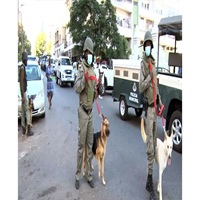
The comparative adjective used for the Police of the Republic of Mozambique (PRM), recently insultingly nicknamed "dog," prompts a reflection on dehumanization. More than an insult, this classification reveals the structural and moral crisis of a force abandoned by the state, used as an instrument of repression, and marginalized from professional dignity. What ethical or moral motivation can a professional have if he is treated like an animal? Amid protests marked by police violence, human rights violations, and state repression, who trains the dog to kill? Who gives the order to repress? Who is responsible, the dog or the dog's owner? Who should be held accountable: the officer executing the order, the protesting people, or those ordering the repression? If the police are government-owned, who should be taken to court: the dog, the dog's owner, or the civilian protesters? Who profits from the fear that has been instilled?
The recent viralization of the term "dog," derogatory association with officers of the Republic of Mozambique Police (PRM), is not only a gratuitous insult; it is a brutal reflection of the institutional, political, and social devaluation of a force that, in theory, should be the guardian of order, security, and public integrity. The use of the term in government discourse reveals something deeper: the chasm between official discourse and the daily reality experienced by thousands of subordinate officers.
The labeling of a police officer as a "dog" carries profound symbolic, psychological, and sociopolitical implications, with consequences that can be as significant for the public image of the force as it is for the officers' self-esteem. If internalized, this label reinforces a culture of blind submission, where officers don't think, they simply obey. This makes it dangerous for a profession that deals with human lives and demands constant ethical discernment. For subordinate officers living in precarious conditions, underpaid, and without recognition, being called a "dog" deepens feelings of uselessness, indignation, and silent revolt.
Comparing a police officer to a "dog" dehumanizes the professional and reduces their identity to an instrument of blind obedience, submissive and violent. It strips them of reason, autonomy, and human dignity. Police officers are seen not as public servants, but as "animals trained to attack." Calling a police officer a "dog," besides being an insulting and inhumane expression, exposes a scenario of accumulated indignation, not only among the population but also among the members of the force themselves, forced to blindly obey political orders and often suffocate the very communities of which they are a part. It is an institutional abandonment that turns the police officer into a scapegoat for a system that simultaneously subjugates and blames them. While the force's senior officers, many of them closer to political power than to the trenches of daily life, maintain perks, luxury cars, and hefty benefits.
The cruel irony is that the state that so often invokes the police force as a symbol of its authority is the same one that abandons its members to their fate. In recent demonstrations across the country, whether against hunger, tolls, election results, or the cost of living, we witnessed police actions marked by inhumane repression, human rights violations, beatings, and even summary executions. The police have become enemies of the people, when they should be their defenders. The officer who pulled the trigger was visible and easily condemned publicly, but the true mastermind remains in the shadows of power, shielded by impunity and complicit silence.
When a police officer fires live ammunition at unarmed citizens, when they beat protesters, or when they break into homes during protests, they don't do so on personal impulse; they do so under orders from above, under a chain of command that begins at the top: in the ministry, in the general command, in the government. It is the State, in its most authoritarian and elitist form, that uses its armed forces to ensure the maintenance of the status quo, the containment of popular uprising, and the repression of dissenting voices. Accountability falls to the "dog's owner," that is, the political power that commands the repression; justice will remain blind, selective, and complicit in impunity. Because the dog doesn't bite on its own; it bites when ordered to.
However, in Mozambique, this reversal of justice is the rule. Instead of holding those who order the repression accountable, they criminalize the protesters. They judge the poor, the unemployed, the students, the motorcycle taxi drivers, and the street vendors. It's civilians who go to court, not the ministers who ordered the massacre. It's the young people with signs and drums who end up detained, not the officers who ordered the shooting. The chain of responsibility is selectively ignored. The dog is arrested or punished. The people are judged. But the dog's owner, the one who releases it, trains it, and fuels its repressive instinct, remains untouchable, speaking about peace, order, and stability from the podiums, while the people's blood is still fresh on the ground.
The devaluation isn't just financial: it's moral, professional, and structural. We must muster the courage to stop treating symptoms and start curing the disease. We find in the police a force that tolerates the lack of decent pay under the new Single Salary Table (TSU) regime, without transparent and fair promotions, without functional life insurance, without decent housing, and with almost nonexistent benefits. And yet, they are the ones who face crime, protests, disasters, and urban violence daily, without minimal resources or legal protection.
THEThe police are no longer seen as protectors, but rather as aggressors. The police should be a bridge between the state and the citizen, but this adjective undermines any possibility of empathy, rapport, or respect. Therefore, it must be read with caution. It is dangerous when misinterpreted, as it can turn the police into scapegoats for a corrupt and authoritarian chain of command. The use of the term "dog," however, is not intended as a simple insult, but as a disguised cry of collective frustration, both on the part of a population that no longer trusts the police.
The term "dog" is not just a vulgar insult; it's a symptom of a profound institutional failure. It exposes the degradation of the police's public image, denounces the instrumentalization of law enforcement as a machine of repression, and raises the urgent need to reform not only police salaries and material conditions, but also the ethical, moral, and functional culture of the force itself. If police are trained to "attack" like a dog, then violence ceases to be the exception and becomes the norm. And this perverts the basic principle of modern policing: to protect and serve, with proportionality and respect for human rights.
The country urgently needs a profound reform of its public security policy, not only in terms of repression, but also in terms of a dignified recognition of the mission of its officers. Because as long as we treat our police officers like dogs, and allow them to live as such, we cannot expect them to treat us like citizens. If the State wants to restore the moral authority of the police, it must start by treating its officers like citizens, not like dogs in the service of fear.
2025/12/3
Copyright Jornal Preto e Branco All rights reserved . 2025
Copyright Jornal Preto e Branco Todos Direitos Resevados . 2025
Website Feito Por Déleo Cambula