
"The assassination of the Church Fathers not only devastates the Church, it also creates alarming chaos and insecurity in the country."
Paulo Vilanculo"
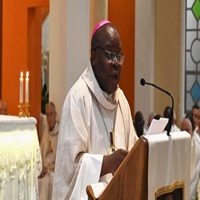
Patristics is the branch of early Christian theology and philosophy that brought together the teachings of the first "Church Fathers." Its objective was to consolidate Christian doctrine and defend it from criticism, using reason and Greco-Roman philosophy to explain the faith that was part of it. Dom Osório Citora Afonso, Bishop of the Diocese of Quelimane and Apostolic Administrator of the Archdiocese of Beira, was found dead in his official residence at the Episcopal Palace (the official residence of a Catholic bishop) in Quelimane. According to DW, the National Criminal Investigation Service (SERNIC) considers it an "aggravated homicide." The bishop was allegedly shot in his residence in the capital of Zambézia during the early morning hours, according to SERNIC spokesperson Maximino Amílcar, who said that SERNIC is still investigating the intricacies of the alleged homicide.
In a recent episode, Dom Cláudio Dalla Zuanna, Archbishop Emeritus of Beira, resigned from his post, leaving the Diocese for his homeland, Italy. According to the newspaper (O Autarca), on April 29, 2026, the city of Beira saw a man leave in silence. Dom Cláudio Dalla Zuanna, Archbishop Emeritus of Beira, wrote to Pope Leo (…), asked to leave, and the Pope accepted. He resigned. He cited health problems and concluded: “I can no longer do it. My time is up. The country needs another. The Church deserves a pastor with the total energy that I no longer have.” For the newspaper “O Autarca,” resignation due to incapacity is almost folklore. Dom Cláudio knew. At 68 years old, with failing health, he served the Diocese of Beira in the challenges of post-cyclone reconstruction, and in the pastoral and social crisis that Sofala is going through. He did not wait to be accused. He did not wait for a scandal. He didn't cling to the pastoral staff. Dom Cláudio refused to be that kind of leader. He refused to turn the position into a crutch. He understood that leading is, above all, serving. And serving requires physical, mental, and spiritual condition. When that is lacking, ethics dictates there is only one path: to make room. The newspaper concludes by writing that Dom Cláudio proves the opposite: Sometimes, the greatest act of love for an institution is to leave it in time. Staying without the necessary conditions is not a mission. It is selfishness. It is putting one's own name ahead of the common good. It is condemning a Diocese, a Ministry, a province, or a country to move at the pace of our own weariness. Dom Cláudio leaves a wounded but hopeful Beira. The Catholic Church, so often criticized for its conservatism, has now given a lesson in political modernity: the capacity for self-renewal begins with the individual courage to say "enough." In 2026, Mozambique will not need more heroes (...) Dom Cláudio leaves behind works, criticism, friends, and opponents. But above all, he leaves a precedent (...).
The Master's thesis in Political Science, by Caetano, Baptista, Comessário (2015),with the title:Political violence in Mozambique from 1966 to 1988, the case of Father Mateus Pinho Gwengere (dc.identifier.tid: 203023463), related to the area of political history of Mozambique, describes the political violence in Mozambique and, in a particular case, the causes that led to the death of Father Mateus Pinho Gwengere, a very important figure in the national liberation struggle and subsequent independence of the country, who, in addition to being considered a hero, was declared a reactionary and an enemy in Mozambique. The thesis concludes that the theory of national unity is still not very noticeable in Mozambique and that the disappearance of Father Gwengere is a direct consequence of the lack of unity, where regionalism and tribalism are still weaknesses that hinder the socio-political growth of Mozambique.
Gabriel Pedro Mucutubua (2025) wrote the book "The Only Sin of Dom Jaime".This book discusses the challenges facing the Catholic Church in the 21st century, especially in African contexts where religion, politics, and society remain deeply intertwined. One of the central issues of reflection is the balance between the Church's spiritual mission and social intervention. "The Only Sin of Dom Jaime" can be understood as a reflection on the tension between faith and power, Church and politics, silence and prophecy. By focusing on the figure of Dom Jaime Pedro Gonçalves, the work invites the reader to question whether the Church's mission should be limited to the altar or whether it should also involve itself in the defense of peace, justice, and human dignity. From this perspective, Dom Jaime's "only sin" would have been not remaining indifferent to the problems of his time. Dom Jaime's true "sin" was transforming faith into a concrete commitment to society. The actions of the Archbishop of Beira demonstrated precisely the opposite: a Church present in the decisive moments of national history.
Dom Jaime Pedro Gonçalves was one of the most influential figures in the Mozambican Catholic Church. Dom Jaime was one of the most visible figures of reconciliation, peace, and honesty in Mozambique. He became widely recognized for his role in mediating the process that culminated in the 1992 General Peace Agreement between FRELIMO and RENAMO, and is often described as one of the main faces of national reconciliation. Dom Jaime adopted an unusual public stance for a religious leader, intervening in political and social debates, defending peace, social justice, and national reconciliation. His actions led many to consider him a "spokesperson for the voiceless."
The tradition of the Church's social doctrine holds that the Church should not govern states, but has a moral duty to denounce injustices, defend human rights, and promote peace. Bishop Jaime became an example of this vision by becoming directly involved in the pursuit of peace in Mozambique.Will the statement by Dom Cláudio Dalla Zuanna, Archbishop Emeritus of Beira, serve as a lesson and warning from someone who knew how to leave in time? To what extent can a religious leader intervene in political life? Should the Church limit itself to evangelization or actively participate in social and political issues? When does the defense of justice and peace conflict with the interests of political power? What is the prophetic role of the Church in a society marked by inequalities and conflicts? The President of the Republic, Daniel Francisco Chapo, expresses deep sorrow and dismay at the death of His Excellency Reverend Dom Osório Citora Afonso. In his message, the Head of State states that the passing of Bishop Osório constitutes an irreparable loss for Mozambican society in general, and for Christian communities in particular, highlighting the fact that the deceased distinguished himself in life by his devotion to humility, pastoral dedication, and preaching of the values of peace and reconciliation.
2025/12/3
Copyright Jornal Preto e Branco All rights reserved . 2025
Copyright Jornal Preto e Branco Todos Direitos Resevados . 2025
Website Feito Por Déleo Cambula