
Tempo quaresmal em momento abismal sobre a paz em Cabo Delgado
Paulo Vilanculo"
Lent is the time when the Church, with maternal solicitude, invites us to place the mystery of God at the center of our lives, so that our faith may gain new momentum and our hearts may not be lost amidst the anxieties and distractions of daily life. The entire path of conversion begins when we allow ourselves to be reached by the Word and receive it with docility of spirit. There is, therefore, a link between the gift of God's Word, the hospitality we offer it, and the transformation it brings about. For this reason, the Lenten journey becomes a propitious occasion to listen to the voice of the Lord and renew our decision to follow Christ, walking with Him the path (...), where the mystery of His passion, death, and resurrection is realized.– Pope Leo.
In Africa, where religion often survives as a last moral refuge in the face of weak states, corrupt elites, and predatory foreign interests, the Vatican's role must be decisive, capable of unsettling the powerful and protecting the vulnerable, with a diplomacy of truth, as Augustine demanded of Christian rulers. Known for his history of defending the most vulnerable and refugees in conflict zones, he began his papacy with firm words: "peace is an evangelical duty and a moral urgency for all peoples." Acclaimed as a tireless defender of the marginalized, the new pontiff affirmed, in his first urbi et orbi blessing, that "peace is an imperative of the Gospel."
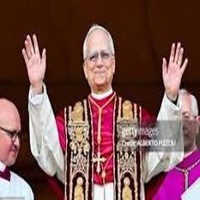
From the very first minutes after his election, Pope Leo XIV was hailed as a symbol of spiritual and diplomatic renewal. With humble origins and a pastoral history marked by the defense of refugees and communities victimized by armed conflict, the new pope quickly captured the world's attention as a potential mediator between warring nations and as a spiritual guide on a planet adrift amidst climate crises, wars, and glaring inequalities. Leo XIV as Pope marks a symbolic moment for the Catholic Church and for the world, bringing to the forefront discourses of renewal, reconciliation, and peace.
“God, revealing himself to Moses in the burning bush, shows that listening is a distinctive characteristic of his being: ‘I have indeed seen the oppression of my people who are in Egypt, and have heard their cry’ (Ex 3:7). Listening to the cry of the oppressed is the beginning of a story of liberation, in which the Lord also involves Moses, sending him to open a path of salvation for his children reduced to slavery.”– Pope Lion
A useful interpretative key to this is the tradition of Augustinian thought on peace and temporal power. In *The City of God*, Saint Augustine argues that perfect peace is only possible in the “heavenly city,” while peace on earth, *tranquillitas ordinis*, is always unstable, marked by the struggle against sin, pride, and the desire for domination. Peace, therefore, is less a permanent state of the world and more a constant effort to contain evil and promote justice. In his first homily, the new Pope referred to “regions where the blood of the innocent still cries out for justice,” without directly mentioning Mozambique, but hinting at a possible expansion of the Vatican's humanitarian agenda. The message touched the hearts of millions, but in Mozambique, particularly in Cabo Delgado, it was received with a mixture of hope and distrust. Many believe that Vatican diplomacy will be pressured to broaden its reach, not only in classic war scenarios like Ukraine, Gaza, or Sudan, but also in less publicized conflicts like that of Cabo Delgado.
Applying this lens to the African reality, especially Cabo Delgado, one perceives the tragic tension between the Christian ideal of peace and the real dynamics of international politics. The forgotten war that plagues northern Mozambique continues to claim victims daily. Thousands of internally displaced persons, villages reduced to ashes, and a youth without a future continue to mark the province's map. On this chessboard, human life becomes secondary, and the desired peace is often sacrificed on the altar of profit. The "earthly city," as Augustine describes it, is dominated by the logic of states and corporations, driven by love of power and domination, in contrast to the "city of God," moved by love of neighbor and justice.
In this context, peace in Cabo Delgado cannot be merely a spiritual abstraction or a protocol note. It requires historical understanding, political courage, and pastoral action. The province of Cabo Delgado, in northern Mozambique, has been immersed in a humanitarian and military crisis since 2017. Thousands dead, hundreds of thousands displaced, and silent destruction mark the daily life of the region. Despite the presence of foreign armed forces and the official rhetoric that the situation is under control, accounts that escape censorship indicate that suffering persists, with entire communities living in fear and abandonment. The Catholic Church, although present on the ground with humanitarian actions, has had a discreet role in the political sphere, limiting itself to occasional statements and generic appeals for peace.
“Dearly beloved, let us ask for the grace of a Lent that makes our ears more attentive to God and to the least among us. Let us ask for the strength of a fast that also extends to the tongue, so that offensive words may decrease and the space given to the voice of others may increase. And let us commit ourselves to making our communities places where the cry of those who suffer is welcomed and listening opens paths to liberation, making us more available and diligent in contributing to building the civilization of love.”– Pope Lion
We conclude by reaffirming that the Vatican must live up to its moral authority, addressing the conflicts as global ethical scandals and international leaders. Now is the time for concrete action, real mediation, active pastoral presence, and above all, international pressure for the resolution of the conflict. The people of Cabo Delgado have cried too much, have waited too long. Pope Leo XIV will also have to include the forgotten people of Mozambique in his mission.
2025/12/3
Copyright Jornal Preto e Branco All rights reserved . 2025
Copyright Jornal Preto e Branco Todos Direitos Resevados . 2025
Website Feito Por Déleo Cambula