
Talapa closes the second session of the Cousins' Assembly on behalf of the people
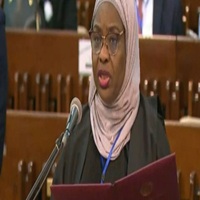
Paulo Vilanculo"
The implicit notion of the "Assembly of Cousins" must be understood within the framework of the party hegemony that structures the functioning of the legislative body. This hegemony conditions effective pluralism, reduces democratic conflict, and limits the exercise of political oversight. Party discipline tends to override the autonomy of elected representatives, weakening the role of parliament as an instance of control over executive power and of normative production oriented towards the public interest. How can it be claimed that the people are in a participatory or representative democracy if there is no free, clear, or transparent choice, and if the constitution of those elected does not occur through free choice but rather through lists of partisan convenience?
The closing speech, marked by solemnity and formalism, reproduced a narrative of institutional stability and democratic normality that contrasts significantly with the social, economic, and political dynamics the country is experiencing. The second session concludes without a rigorous assessment of the effectiveness of the approved laws, the Assembly's oversight capacity in relation to the Executive, or the real impact of parliamentary resolutions on citizens' daily lives. The absence of structured channels for participation by civil society, community, professional, and academic organizations reinforces the self-centered nature of the Assembly and widens the distance between the State and the citizens. The lack of institutional self-criticism reinforces the perception of a self-centered parliament, more concerned with preserving its symbolic image than with redefining its role in a context of multidimensional crisis.
There was a predominance of institutional rhetoric to the detriment of an approach oriented towards measurable results. Institutionally, it can be said that the Assembly is "of the people" only in a formal sense, that is, because its members were elected by universal suffrage. The central contradiction lies in the fact that the people are plural, while the parliament is partisan. As long as this partisanship is not compensated for by effective mechanisms of social inclusion, citizen participation, and representative autonomy of the deputies, the Assembly will continue to speak in the name of the people, but not from the people.
The claim that a "People's Assembly" is composed exclusively of party representatives embodies a structural contradiction between formal and substantive representation. In this context, the designation "People's Assembly" takes on a more symbolic than socio-political character, functioning as a discursive tool to legitimize a structurally partisan institution. In an exclusively partisan assembly, the representative's connection tends to shift from the voter to the party, since their political permanence depends more on loyalty to the party hierarchy than on the autonomous defense of the social interests they claim to represent. An assembly composed exclusively of party representatives may be legally legitimate, but it lacks substantive legitimacy to claim to be a "People's Assembly," insofar as it reduces social plurality to the internal logic of political parties. This phenomenon diminishes the deliberative function of parliament and transforms it into a space for ratifying decisions previously defined within the parties.
Political parties are, by definition, partial organizations, guided by specific programs and internal logics of power, discipline, and political survival. Political parties are partial organizations that express specific interests, visions, and projects, not those of segments of society. This empirical reality allows us to affirm that the Assembly functions more as a space for the reproduction of partisan power than as an arena for the expression of popular sovereignty. The constant invocation of "the people" in official speeches is not accompanied by policies that materially translate this representation.
In political theory, the concept of "people" refers to a plural, heterogeneous, and dynamic social totality, composed of different social groups, economic interests, cultural identities, and historical experiences. The repeated reference to the "Mozambican people" emerges as a legitimizing element in political discourse, but it is not accompanied by a critical evaluation of the practical effects of legislative activity in mitigating the country's main structural problems, such as youth unemployment, the progressive impoverishment of families, the fragility of essential public services, and persistent regional inequality.
The deliberate confusion between these two categories constitutes a semantic slippage frequently used to reinforce the symbolic legitimacy of institutions. Overcoming this contradiction would require reconfiguring the role of parliament, with greater autonomy for representatives, strengthening political oversight, and effectively incorporating mechanisms for citizen participation, capable of bringing formal representation closer to substantive legitimacy. In theoretical terms... From a democratic theory perspective, authors such as Hannah Arendt and Pierre Rosanvallon warn that political representation does not eliminate social plurality; rather, it should recognize it. When parliament closes itself off in an exclusively partisan circuit, this plurality is reduced to arithmetic majorities, and not to real social voices.
Representation presupposes the possibility for voters to identify, evaluate, and choose their representatives, establishing a direct political link with them. When elections are conducted exclusively through closed lists, drawn up without internal democratic participation and without mechanisms for public accountability, voters do not truly choose representatives, but rather ratify partisan options presented as unique or inevitable. Voting thus ceases to be an expression of conscious political will and becomes an act of forced adherence to opaque institutional arrangements. The representation of the people should be entirely mediated by these structures; the result is not the direct expression of the popular will, but its filtering through partisan interests.
The assertion that the people exercise sovereignty in a representative democracy becomes conceptually problematic when the process of choosing representatives does not occur freely, clearly, and transparently, but is mediated by party lists defined according to internal criteria of political convenience. In this way, the designation "Assembly of the People" takes on a predominantly symbolic and rhetorical character. This dynamic weakens the principle of popular sovereignty, since those elected tend to respond primarily to the parties that control their inclusion or exclusion from the electoral lists. The representative mandate becomes, in practice, a conditional mandate, subordinated to the logic of party loyalty and not to responsibility to the citizens. The autonomy of the representative is replaced by political discipline, compromising the deliberative and oversight function of parliament.
The lack of transparency in the formation of party lists undermines the substantive legitimacy of the electoral process. Without public, democratic, and verifiable criteria for selecting candidates, equality of political opportunity is seriously compromised. Access to elected office ceases to depend on the trust of voters and becomes determined by internal power networks, clientelism, and strategic alignment, which deepens the distance between representatives and the represented. Under these conditions, representative democracy subsists primarily as an institutional formality, sustained by legal procedures, but devoid of effective democratic content.
The rhetoric of popular participation thus conceals a structural democratic deficit, in which political representation becomes an exercise in reproducing party power. The people are called upon to vote, but not to choose; they participate in the process, but do not control its results; they legitimize the system, but do not direct it. This gap reveals a recurring tendency to prioritize the formal fulfillment of the parliamentary calendar, to the detriment of a substantive reflection on the representative function of parliament as a space for mediation between the State and society.
It can be concluded, therefore, that Talapa's closing speech reaffirms a political practice characterized by the centrality of discourse and the fragility of transformative action. Speaking on behalf of the people, without translating this discourse into effective and socially perceptible public policies, contributes to deepening the distance between the State and society. Overcoming this divide requires not only solemn sessions, but a profound reconfiguration of the role of parliament as a space for representation, oversight, and the production of social justice.
2025/12/3
Copyright Jornal Preto e Branco All rights reserved . 2025
Copyright Jornal Preto e Branco Todos Direitos Resevados . 2025
Website Feito Por Déleo Cambula