
Performance by artist Ana Joice in Beira: deconstruction of culture, politics and education
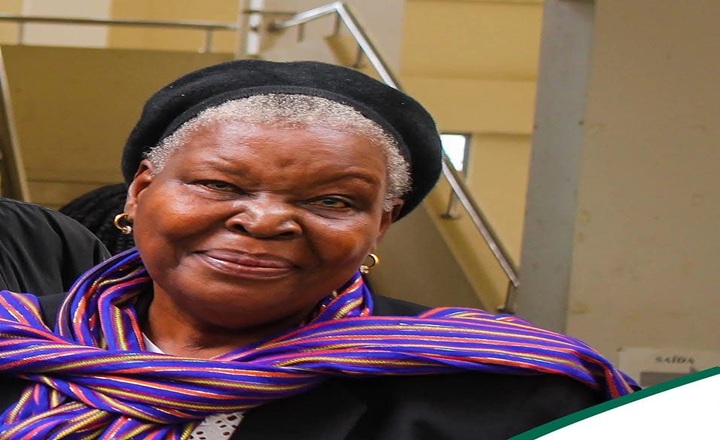
Paulo Vilanculo"
The news that Angolan singer Ana Joice is using one of the Samora Moisés Machel secondary schools in the city of Beira as a stage for a public performance raises a question that goes far beyond music, culture, or the right to entertainment. The same space that should represent concentration, learning, and discipline can be transformed into a stage for entertainment. What symbolic value are we attributing to the school? What moral image are we building when a space intended for the education of young people is transformed into a center of entertainment? What kind of school do we want to build, and what message do we want to convey to our young people? What is the purpose of using school space? When a space designed to teach, educate, and prepare young people for life is converted into a place of entertainment, are we, little by little, deconstructing the very culture of education?
There are events that seem banal, but which, when observed carefully, reveal profound contradictions within a society. The discussion in this opinion piece should not be understood as a condemnation of the artist, much less of Angolan music, but as a reflection on the social significance of the places we choose for certain activities. The secondary school in Beira became an entertainment venue this Friday in Beira. This is not even about arguing that a school should never host a cultural activity. A school is not just a building that can be occupied according to the convenience of the moment. It is a social institution full of meaning, whose main mission is to educate. The school symbolizes knowledge. It is there that the intention is to teach knowledge, discipline, responsibility, citizenship, and respect for collective values. For decades, the school has been presented to new generations as a space of respect, discipline, knowledge, and the construction of the future.
The problem arises precisely when the school ceases to use culture as an educational tool and simply makes its space available for entertainment. At first glance, it's just music, entertainment, and celebration. The controversy, therefore, is not necessarily about allowing a singer to perform in a school. But if we teach students that certain spaces have specific purposes, we must also preserve that distinction. Today it may be just a show. Tomorrow it may be something else. And, when we realize it, perhaps we will have preserved the school buildings but deconstructed the culture that should inhabit them—the culture of learning, thinking, questioning, and building the future. This is not to say that music does not educate. It does. It is true that artistic culture is indispensable to human development, and music constitutes a powerful language of identity, expression, and socialization. Music also educates, art also shapes, and culture also builds identity. The school can be a stage for culture, but it should not risk being perceived as an extension of an amusement park. Perhaps it is precisely this boundary that we need to recover.
A society that loses respect for knowledge opens the door to improvisation, superficiality, and a reversal of priorities, in which...As schools begin to be used indiscriminately for shows, parties, and other recreational activities, there is a risk of trivializing their function. Because a society that begins to lose symbolic respect for schools may silently begin to lose respect for knowledge.This is where the expression "deconstructing the culture of education" makes sense. It is precisely in this trivialization that the deconstruction of the culture of education can begin.The deconstruction of the culture of education begins precisely when the interests of adults start to speak louder than the right of young people to a protected, respected, and pedagogically oriented school.When the interests of adults occupy the symbolic space intended for education, it loses centrality and the school institution runs the risk of being instrumentalized.
On the other hand, the political-partisan instrumentalization of the school imposes a deviation from the educational mission, and the risk becomes even more worrying when the political-partisan management of public spaces begins to interfere with the identity and mission of educational institutions. The school cannot be transformed into a stage where political, partisan, or recreational conveniences take precedence over pedagogical needs. Even more serious is when this instrumentalization becomes normalized, because what today seems like an occasional concession of school space may tomorrow transform into a management culture in which the school is seen less as a place of learning and more as an asset available for purposes unrelated to its mission.
In this context, transforming a school into a performance venue might seem like just a detail, but it reveals a certain hierarchy of priorities. Do we easily find space and energy for entertainment while continuing to struggle to fully guarantee learning conditions? Therefore, a controversy arises in this situation.When schools cease to be treated primarily as spaces for the education of young people and instead become available to serve the interests of mobilizing, promoting, or entertaining adults, we are faced with a dangerous inversion of the educational function. In truth, Beira deserves culture. The people of Beira deserve entertainment. Ana Joice, as an artist, equally deserves spaces to present her music. But the city also deserves schools that are respected in their essential function of educating citizens before creating audiences.
2025/12/3
Copyright Jornal Preto e Branco All rights reserved . 2025
Copyright Jornal Preto e Branco Todos Direitos Resevados . 2025
Website Feito Por Déleo Cambula