
Ossufo Momade, da herança da RENAMO à sua marginalização no Estado: um avesso do véu e enforque do acordo de Roma?
Paulo Vilanculo"
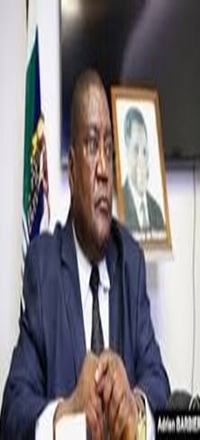
Ossufo Momade to the Council of State, contrasting with its real political decline within RENAMO, suggests a strategy of state manipulation to control the opposition from within? Political Fall and Formal Rise? A pawn in the chess game of Controlled Governance? Maintaining a domesticated, fragmented and functional opposition to political hegemony? The recent inauguration of the members of the Council of State brought to light an episode that did not go unnoticed in the Mozambican political landscape. Ossufo Momade's inauguration into the Council of State is not merely a matter of protocol, but a veiled attempt to "smother through a sieve" the spotlight on Venâncio Mondlane during his political rise, marked by speeches and popular mobilization in the streets that transformed him into an unavoidable figurehead for the opposition. However, the strategy today seems to be to minimize his presence, diverting attention or pushing him to the institutional margins, as if it were possible to hide the sun behind a sieve. Ossufo Momade, until recently considered the main opposition figure, has been relegated to an almost figurative role, sitting as a mere fixture, without prominence or recognition commensurate with his historical weight. Momade, who for years carried RENAMO's political and military legacy, now appears as a spectator of his own history, shrouded in an institutional silence that echoes the loss of influence and authority within and outside the party. Ossufo Momade, once the guardian of a legacy of resistance, becomes a metaphor for the domesticated opposition, watching from the podium as a game unfolds where the rules no longer favor it. His presence, almost diluted within the collective, can be interpreted as a reflection of a weakened opposition and a democratic process where plurality is tolerated only as a formality. By ignoring the centrality of Ossufo Momade as the opposition leader who should naturally occupy a prominent position, the State transmits a harsh message that quiets the voice that, yesterday, echoed as an alternative, but today has been reduced to rubble without decisive weight. The narrative built around the light of Ossufo Momade's "centrality" as an emblematic opposition leader in Mozambique contrasts with the lived reality: Momade appears as an empty shadow, while Venâncio emerges as a vibrant voice, capable of translating the concerns of urban youth and voters weary of government hegemony. The effort to stifle this brilliance reveals more fear than strength. It is a political management mechanism in which visibility is carefully controlled to prevent the most charismatic opponent from establishing himself as a legitimate alternative. Momade's decline within RENAMO and his rise to the Council of State are, therefore, two sides of the same coin: on the one hand, the collapse of the combative opposition and the emergence of a symbolic opposition, useful to the regime but deeply degraded, distant from the popular base. In this context, Issufo Momade increasingly emerges as an "unmasked and disused president," whose leadership appears to be trapped between loyalty to a government-led political process and the distrust of many of his former comrades-in-arms. What was promised as a new chapter in a true democracy of national reconciliation may be transforming into a sophisticated strategy of political domination, with Machiavellian overtones and unpredictable consequences. Behind the curtain of legality and public order lies a political drama with serious implications for the country's peace and stability. The loss of internal authority, evident in the recent demonstrations and mutinies by former guerrillas, suggests that the DDR, rather than healing wounds, may be exacerbating divisions within RENAMO itself. In this scenario, it appears to be a matter of protocol, fraught with political symbolism and questions about the true vitality of the Rome General Peace Agreement, signed in 1992 as a "symbolic hanging," whose spirit was precisely to grant dignity and political space to all forces that contributed to the construction of peace. Thus, Momade's appointment can be interpreted as the culmination of a process of political cooptation, where the supposedly neutral state acts as an invisible hand legitimizing certain opposition leaders, as long as they are useful in maintaining the status quo. Momade's symbolic retention on the Council of State demonstrates not only the erosion of his personal prominence but also the reverse of a commitment to national reconciliation that, since Rome, has been proclaimed as the foundation of a new era. In this logic, the Council of State ceases to be a stage for balance and becomes a showcase for hegemony, a bitter irony that, at the same time, loses internal legitimacy and becomes a controversial figure among RENAMO's own cadres and former guerrillas. In this regard, the Council of State, instead of strengthening democratic plurality, becomes a showcase for symbolic inclusion, where the presence of so-called opponents serves more to silence divergences than to listen to them. The gesture of reducing Momade to a mere member of the Council of State may, paradoxically, serve as fuel for consolidating Mondlane as the true leader of the opposition, with his growing prominence as its most expressive face, unlike PODEMOS, which is emerging disintegrated as an alternative force, a potential catalyst for the reconfiguration of Mozambican political space. Venancio Mondlane's rise is not limited to the leader's charisma, but to his ability to offer himself as a refuge to an electorate disillusioned with RENAMO's fragility and the increasingly symbolic, almost decorative, image that Ossufo Momade occupies within the institutions. By redefining the opposition, by placing Venâncio Mondlane at the center of its dynamics, ANAMOLA becomes identified as the true showcase of ostentation, an illusory repositioning of an opposition that pretends to be beyond the RENAMO-FRELIMO historical narrative. On the other hand, it places the MDM in a humiliating position: a party that no longer occupies a prominent space in the national debate, that neither attracts crowds nor galvanizes hope, and that positions itself as a mere figurehead reflecting its practical irrelevance and protagonism. The MDM occupies an increasingly diminished, almost decorative role, incapable of establishing itself as a credible alternative. Its presence in institutional spaces does not translate into a relevant voice, but rather into silence that echoes with resignation. This marginalization is not merely imposed by the system; it is also the result of an inability to renew itself internally and to articulate with the new dynamics of political contestation. Thus, the MDM emerges, side by side with Momade's RENAMO, as part of an opposition emptied by the weight of history and the limits of its strategy. The MDM seems condemned to live on symbolic remnants, unable to re-emerge as a disruptive force. Its humiliating and uncomfortable position is yet another portrait of the failure of the promises of political pluralism in Mozambique. The political snapshot of this inauguration thus reveals not only Momade's position in the institutional organizational chart, but also the fragility of Mozambican democracy and the slow erosion of Rome's promise. In this context, Ossufo Momade ceases to be the leader of an opposition project with social and armed roots, and takes the place of an institutionalized opponent, secure, predictable, and, for many, devoid of real representation. His internal authority weakens, while his external prestige grows... but only in the formal theater of official politics. The more the State tries to reduce Mondlane to silence or irrelevance, the greater the pressure will be for ANAMOLA to establish itself as a legitimate party, claiming space in arenas such as the Council of State and in future political negotiations, and becoming the “new epicenter of the opposition,” one that carries the hope of giving voice to a suffering but still resilient society.
2025/12/3
Copyright Jornal Preto e Branco All rights reserved . 2025
Copyright Jornal Preto e Branco Todos Direitos Resevados . 2025
Website Feito Por Déleo Cambula