
Mozambique:Granting border rights or privatizing the country in the name of (under)development?
Paulo Vilanculo"
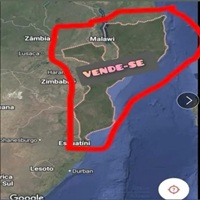
In the name of development, under the argument of efficiency and regional integration, the concession of the Machipanda and Cassacatiza borders is presented as a solution to boost logistics corridors and attract investment. However, this measure could also represent the transfer of state authority to foreign private hands. On paper, the project seems promising.While the government speaks of progress, but in practice concedes borders, it opens a debate on the dilemma between development and delegation of sovereignty, and society needs to understand: Is it development or delegation of sovereignty? To what extent can Mozambique continue to concede strategic spaces in the name of progress without compromising its autonomy? Can the State delegate the command of its own borders to third parties without compromising sovereignty? Can a State remain sovereign while handing over the administration of its borders to third parties? To what extent does the concession of borders not paradoxically represent the outsourcing of sovereignty itself? How can the State be strengthened while handing over control of its entry and exit points? How can we believe in the rhetoric of modernization when sovereignty is at stake?andIs this being treated as a backroom deal? Is the State granting concessions in order to privatize, or, more seriously, selling off parts of the country?
The government announced the launch of international public tenders for the concession of the Machipanda border crossings in Manica province and Cassacatiza in Tete province, under a public-private partnership regime, opening a new chapter in the history of Mozambican territory management. According to the Ministry of Transport and Logistics, these public-private partnerships will improve the flow of goods, increase revenue, and reduce dependence on foreign infrastructure. The official discourse speaks of attracting investment, modernization, stimulating integration and regional development, as well as improving the efficiency of tax collection.
Under the guise of modernization, trade fluidity, and regional integration, the State seems to be moving towards a new form of administration: the outsourcing of sovereignty, a project that transforms what...andThe borders are, in fact, a symbol of independence and national authority. The need for modernization is undeniable. Modernizing the borders is urgent; no one doubts that, and no one denies the importance of new infrastructure. But what is concerning is the modernization model that is intended to be adopted. The danger lies not in the idea of modernization itself, but in the nature of the concessions. The problem is how and with whom modernization takes place. Modernizing the borders is imperative, but privatizing them is an act of renunciation. Mozambique needs to modernize, yes, but not at the cost of its sovereignty; it cannot mean selling the country piecemeal. Therefore, what is at stake is not only operational efficiency, but sovereignty over its own territory.
Customs in Mozambique underwent a Bretton Woods reform process (World Bank and International Monetary Fund) in the mid-1980s. Subsequently, in 1996, the British firm Crown Agents took over with the aim of improving revenue collection for the government through "legitimate trade," with financial support from the UK Department for International Development (DFID), the World Bank, and the International Monetary Fund. In 2001, the management of Customs began to gradually return to Mozambican hands during the transition of management under the then Minister of Finance, Luisa Diogo. On July 5, 2006, Mozambique took full control of Customs; at the time, the Minister of Finance, Manuel Chang, stated that "today we have a modern Customs service."
Experiences in Mozambique show that many projects undertaken “in the name of development” end up becoming revolving doors of corruption, cronyism, and external dependence. Ports, tolls, and roads have provided bitter lessons about the price of “attracting development” without guaranteeing national control, and in many of these cases, the country emerges more dependent than developed, with opaque contracts, unequal profits, and increasingly reduced control over its own resources. Who guarantees that, in a few years, Mozambicans will not have to “pay” to cross their own border, as already happens with tolls and other concessioned public services?
When a country starts selling its borders, it's a sign that the house is already for sale. A border is not simply a logistical facility; it is a living symbol of independence, a space where the State asserts itself as a State and the pulse of national sovereignty. By privatizing border control, the State not only outsources the management of infrastructure...andOutsourcing part of its political authority. By placing it under private concession, the State assumes the risk of transforming sovereignty into a mere contractual clause, subject to the logic of profitability and the interests of investors. In practice, the State is transferring control of sovereign decision-making spaces to private operators in exchange for the flow of goods and services entering and leaving the country.
Development should not be confused with the surrender of sovereign functions. Development does not mean sacrificing borders; no country is truly modern if it does not possess authority over its own territory. A nation may have modern ports, paved roads, and digitized borders, but if command is in the hands of third parties, the allure of progress may hide the price of dependence. In other words, whoever controls the gates of the territory also controls the flow of the economy and the security of the country.
The public-private partnership model, so often presented as a solution to the lack of resources, has proven in Mozambique to be fertile ground for opaque contracts, economic dependence, and loss of institutional autonomy. It is understood that the challenge is not only technical but profoundly political, but Mozambican political history teaches that the loss of sovereignty rarely happens abruptly; it comes in the name of progress, justified by beautiful words like "partnership," "efficiency," and "integration."andHowever, true regional integration is not built with outsourced gateways, but with strong institutions, transparent policies, and conscious sovereignty. Mozambique's real challenge is to modernize, yes, but without submitting; to grow without dependence; to integrate without dissolving. Modernization is legitimate; ceding control is dangerous. If this continues...theIn Rio, the promised modernization may become the most elegant form of dependency, where the flag continues to fly.theIf the flag is raised, the State will become a mere manager of contracts, and not a guardian of the territory and national sovereignty.
2025/12/3
Copyright Jornal Preto e Branco All rights reserved . 2025
Copyright Jornal Preto e Branco Todos Direitos Resevados . 2025
Website Feito Por Déleo Cambula