
Mozambique: sovereign fund or government current account?
Paulo Vilanculo"
The Mozambique Sovereign Wealth Fund was created to strategically manage revenues from natural gas exploration, primarily from the Rovuma Basin. Its main purpose is to guarantee long-term economic stability and ensure that today's natural resources also benefit future generations, transforming gas into productive investment and sustainable development. In theory, the fund should function as a national savings account, accumulating reserves, financing structural projects, and protecting the country from international market fluctuations.
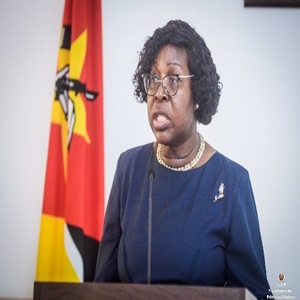
The recent embezzlement of $33.6 million, justified by Prime Minister Benvida Levy by claiming the amount "was used for normal government expenditure," reveals more than just political advocacy; it also demonstrates how the sovereign wealth fund's purpose has been distorted. By justifying the expenditure of millions as "normal," the Prime Minister not only normalizes opacity but also legitimizes abdication of accountability. This is the transformation of mismanagement into administrative practice, a political flaw that undermines any credibility of the State. Talking about "routine" in a country where hunger is growing, youth are unemployed, and public health is in dire straits is an insult to collective intelligence; it exposes the chasm between the discourse of governance and the reality experienced by the Mozambican people.
Mozambican society therefore has the right and duty to ask: what "normal expenses" are these that consume millions of dollars without leaving any visible traces of development? For whom does the state spend? For the people or for itself? What normality does the government talk about, while the people face schools without desks, hospitals without medicine, potholed roads, and wages that barely last the month?
Millions in gas revenues disappear in the name of "normal expenses," and the country remains hostage to poverty, dependence, and the illusion of progress. The problem lies not only in the destination of the money, but in the logic of power that sustains it. The State, instead of serving as an instrument of development, has become a machine of political consumption where the "normal" is privilege, and the "abnormal" is transparency and transformation. And when the population questions, those in power respond with technicalities, transforming the misappropriation into "current management." When Prime Minister Benvida Levy states that the amount was spent on "normal state expenses," she implicitly acknowledges that the fund is being treated as a supplementary government coffer, not as an untouchable sovereign reserve. Instead of guaranteeing the future, the fund risks fueling the political present—a present that, instead of investing in the population, invests in maintaining power.
By using the fund's resources for current expenses, the government is transforming a sovereign reserve into a convenient political fund, compromising transparency and public trust. The impact is serious, as the fund, which should be an instrument of economic independence and social justice, ends up reinforcing political dependence and state mismanagement. Internally, the country loses its ability to invest in essential areas such as education, healthcare, and infrastructure; externally, it loses credibility and investor confidence.
The recent episode surrounding the embezzlement of $33.6 million from the Sovereign Wealth Fund exposed an uncomfortable contradiction within the Mozambican government. This discursive disagreement between two key figures in the Executive branch is not merely a technical discrepancy; it reflects internal fissures in governance and a crisis of transparency in the management of public resources. First, this contradiction reveals a lack of coordination and governmental coherence. A government that speaks with one voice only when announcing "successes" and contradicts itself when explaining irregularities demonstrates institutional fragility and a lack of clear leadership. Second, the episode demonstrates that the Sovereign Wealth Fund is being managed with opacity. More broadly, this institutional embarrassment reinforces the public perception that the Sovereign Wealth Fund is being manipulated for political expediency, not according to good governance criteria. Third, the contradiction also suggests a dispute over internal legitimacy: while the Ministry of Finance tries to preserve its technical image and credibility before international organizations and economic partners, the Prime Minister seeks to avoid political damage by protecting the image of the Executive.
The disagreement between the two leaders symbolizes the same dilemma that characterizes the Mozambican state: a country that talks about transparency but acts in the dark; that talks about sovereignty but governs by improvisation. While the Minister of Finance cautiously admitted that the funds were not used according to the regulations, suggesting irregularities and a lack of clarity in the fund's management, attempting to protect her institutional and technical responsibility by implicitly acknowledging that there was misuse, the head of government seeks to politicize the issue, normalizing the misappropriation under the rhetoric of current management. If two central voices in the government cannot provide a unified explanation for the use of the funds, it means there is neither sufficient transparency nor effective control over the fund's financial flows.
The Sovereign Wealth Fund was created with the goal of protecting the Mozambican economy from external shocks. Its design stipulates that a portion of gas revenues should be channeled to the state budget for public expenditures, but the remainder should be reserved, invested, and capitalized, with clear transparency rules, regular reporting, and independent oversight. In other words, it should function as a long-term national savings account, similar to what countries like Norway, Botswana, and others do. The essential purpose of a sovereign wealth fund is twofold: to guarantee long-term economic and budgetary stability, preventing the country from becoming dependent on fluctuations in international gas prices, and, on the other hand, to ensure that today's natural resources also benefit future generations, transforming the wealth of the subsoil into sustainable development and productive investment.
Mozambique's Sovereign Wealth Fund should be a symbol of financial independence and intergenerational justice. Therefore, accumulating reserves, generating financial income, and financing structural public investments, it should represent the hope of a new era, a mechanism capable of transforming natural gas resources into tangible progress, economic sustainability, and social justice, such as education, healthcare, energy, agriculture, and infrastructure. But by being used for "normal government expenditures," it becomes a metaphor for what Mozambique has been facing for decades: a country rich in potential but poor in management and transparency. This practice destroys public trust and nullifies its original purpose: the fund ceases to be a guarantee of economic sovereignty and becomes an instrument of political survival. And, if this continues, the Sovereign Wealth Fund will cease to be the "people's fund" and become the fund for government survival. Thus, instead of representing security for the future, the Sovereign Wealth Fund risks becoming yet another symbol of the fragility of Mozambican governance, where national wealth serves to sustain power, not the people. It follows that the Fund's real impact is still far from its original intentions. What we see is a repeated pattern in which funds come in, the narrative changes, and millions disappear.
2025/12/3
Copyright Jornal Preto e Branco All rights reserved . 2025
Copyright Jornal Preto e Branco Todos Direitos Resevados . 2025
Website Feito Por Déleo Cambula