
MORETE DE SARTORI IN THE MAFIA ENCLAVE IN MEDLIN
Paulo Vilanculo"
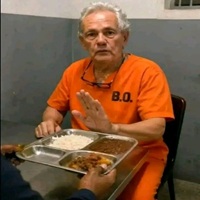
Umberto Sartori Vidock, detained on April 21, 2026, on a search, arrest, and imprisonment warrant, died in the maximum security prison, also known as BO. Sartori, an Italian-born businessman who became a naturalized Mozambican citizen, was one of the businessmen associated with the Kaya Kwanga residential and tourist complex, located in Maputo. In a live broadcast on TV Miramar, the group is accused of involvement in drug trafficking, document forgery, organized crime, and money laundering, culminating in an investigation where, to date, complete details regarding the legal progress of the indictment have not been publicly released.
"Medelin" is used here as an imaginary name for the location of the Kaya Kwanga residential and tourist complex in Maputo. Medellín was a powerful Colombian criminal organization that dominated the global cocaine trade in the 1970s and 1980s, led by Pablo Escobar. This group controlled approximately 80% of the drug market in the United States and generated billions of dollars in profits. "Enclave" refers to a territory or region whose borders are completely surrounded by the territory of another entity (state or municipality, such as Maputo), and the metaphor of the two adjectives is used here as an intellectual provocation by someone declaring war on a mafia organization, not out of a commitment to justice, but perhaps due to a dispute over territory, control, and political hegemony. On a symbolic level, it would be like witnessing empires that prospered not only through brute force, but through their ability to infiltrate, co-opt, and negotiate with formal power structures, where both converge in the capacity to transform illegal economies into global systems of influence, and crime and politics into diffuse organizations that transcend common crime and approach a power structure parallel to the State.
The Sicilian Mafia, for example, emerged in the region of Sicily around the 19th century. Initially, it wasn't exactly a "mafia" as understood today, but rather local groups that offered "protection" to landowners in a context of absence of a strong state. Looking at Kaya Kwanga as a cartel, a "mafia," the phenomenon is not only criminal but also historical and social, born from inequalities, state absence, and informal power structures—something that, to some extent, helps to understand similar dynamics in other contexts around the world. Over time, these groups became highly structured organizations with their own codes (such as silence and omertà), illegal activities that included extortion, drug trafficking, political corruption, and assassinations. In a world where the boundaries between legality and illegality are becoming increasingly blurred, history offers us characters and structures that, although distant in time and space, engage in a disturbing dialogue with contemporary realities. The Medellín Cartel, as compared to Maputo in this article, can be likened to a discreet strategic adoption that combines institutional corruption, transnational networks, and the selective use of violence, consolidating a model of strategic terror aimed at direct confrontation with the State.
From a comparative perspective, the Umberto Sartori Vidock case reignites the debate in Mozambique about the extent to which the fight against organized crime and systemic corruption can depend solely on high-profile arrests and deaths shrouded in mystery. The experience of the Italian Cosa Nostra mafia demonstrates that truly confronting criminal networks requires much more than isolated operations: it demands the effective independence of institutions, protection of magistrates, permanent transparency, and consistent political will capable of challenging vested interests. In Italy, the State waged a long and painful war against the Mafia, transforming judges like Giovanni Falcone and Paolo Borsellino into historical symbols of the defense of legality, even at the cost of their lives. Unlike scenarios where suspects die before being judged, the Italian fight sought to dismantle mafia structures through justice, financial investigation, and institutional accountability, leaving the lesson that a strong state not only eliminates individuals but dismantles entire systems of corruption and complicity. Thus, Mozambique finds itself at a decisive moment between the clarity of judicial actions and the shadows of political interests.
The death of Umberto Sartori Vidock in BO, the maximum-security prison, without ever having been tried or heard by a judge, raises profound concerns about the state of justice and human rights in Mozambique. In light of international human rights, Sartori's death before trial can hardly be interpreted as a triumph of justice, even in the face of serious suspicions linked to the alleged "Medellín" Maputo cartel. The episode may symbolize not only the collapse of constitutional guarantees of due process, but also the transformation of pre-trial detention into a silent and premature punishment, where the citizen loses the right to a defense even before conviction. In a state that proclaims itself democratic, where people die behind bars without a judicial sentence, this can represent a grim picture of judicial delays, the dehumanization of the prison system, and institutional fragility in protecting human dignity. This inevitably raises doubts about the effectiveness of the prison system, the protection of life under state custody, and the risk of justice being replaced by narratives of fear, silence, and institutional impunity. The country needs to redefine whether the current movement represents genuine cleansing or is merely another chapter in internal rearrangement where the public display of detention can be interpreted as part of a game of internal trade-offs and balances, a kind of "penumbra" where transparency is selective and justice is sometimes instrumental. At first glance, it appears to be an exercise in sanitation and restoration of legality; however, a more critical reading raises an uncomfortable question: are we facing a true crusade against corruption and crime, or just an internal reconfiguration of interests? Who are the scapegoats for the corruptors?
2025/12/3
Copyright Jornal Preto e Branco All rights reserved . 2025
Copyright Jornal Preto e Branco Todos Direitos Resevados . 2025
Website Feito Por Déleo Cambula