
Mining explorations in Inhambane: barricades of the communities of Belane and Chipandeni, another Afungi?
Paulo Vilanculo"
The year 2026 presents itself as a symbolic and political milestone for Vilankulos and, by extension, for the Vilankulos District. Traditionally recognized as a prime tourist destination, anchored in the Bazaruto archipelago and the service economy, the region is now being repositioned on the map of national strategic extractive activities, taking on contours that evoke a "new Afungi," not only because of the scale of investments, but also because of the expectations, tensions, contradictions, and the inevitable challenges that accompany them.
The province of Inhambane is structurally deprived of its potential, its development tied to a combination of enclave economy, political centralism, community exclusion, and elitist capture of wealth. The local population participates only as spectators, providing precarious labor, seen as an obstacle to be overcome, and not as a central subject of the economic process. This shift becomes even more evident with the new mega-mining project in Vilankulos, under the responsibility of the Haiyu Mining company, in a copper mining concession covering an area of 3,190 hectares, with estimated reserves of 93.77 million tons of heavy minerals, including ilmenite, titanium dioxide, zircon, and rare earths – resources of high strategic value in the international market. The initial investment is around 30 million dollars, approximately 1.8 billion meticais, with the government estimating tax revenues of around 66 million meticais from production tax alone. In terms of time horizon, this is said to be an activity with the potential to last for half a century, an argument frequently invoked to support the promise of long-term economic development for Inhambane.
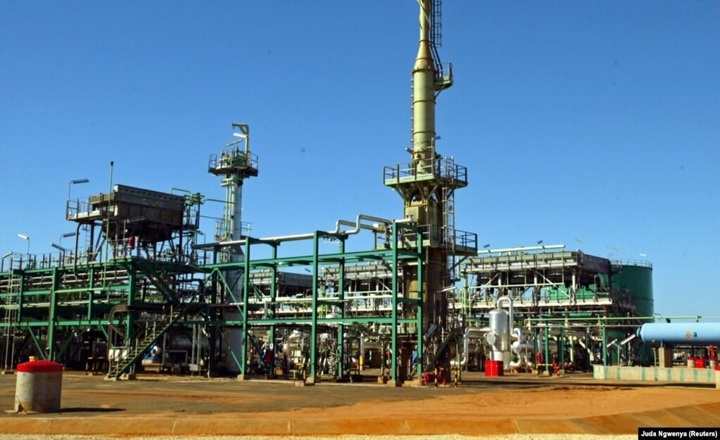
The implementation work already carried out includes geological and environmental impact studies, obtaining the DUAT (Land Use and Development Right) in 2022 and the environmental license in 2024, earthworks for the permanent camp, construction of road access, pilot dredger tests, definition of storage zones, and the installation of a processing plant, in an advanced stage, which will allow for the outflow of exports. In September 2025, during a working visit to the localities of Mapihe and Quewene, the District Administrator, José Jeremias, focused his greatest attention on this Quewene mining project, as it represents a qualitative leap in the district's economic model. In the experimental phase, with support infrastructure under construction, the project should enter full operation in 2026, preparing the ground for full exploitation from 2027 onwards. Only the Belane and Quewene deposits allow for projections of continuous exploitation for more than two decades in the initial phase, positioning Vilankulos and the southern corridor as emerging platforms for industrial mining in Mozambique. Ilmenite, the main mineral being mined, is used for the production of titanium dioxide, which is widely used in the paint, textile, plastics, ceramics, automotive, paper, and even food industries.
But behind the official narrative of progress, warning signs emerge that recall past experiences. Local sources mention conflicts and barricades in the communities of Belane and Chipandeni, which feel excluded from the decision-making process and the promised benefits. This is a pattern already observed in other national megaprojects by SASOL, including the heavy sands in Inhambane, where the announced “development” translates, for many, into impoverishment, displacement, cyclical conflicts, and weak redistribution of wealth. The State prefers to remain silent because acknowledging local impoverishment would require a profound review of the political choices made in recent decades. This admission would call into question economic alliances, partisan interests, and networks of benefit that feed precisely on the opacity between macroeconomic growth and local misery. This situation is aggravated by the capture of benefits by political and economic elites. Licenses, concessions, and land use rights are negotiated in restricted circuits, far removed from communities, transforming the State into a mediator of private interests rather than a promoter of local development. Tax evasion also serves the discourse of stability.
It's important to remember that, according to VOA (June 20, 2020), citing Reuters, the South African petrochemical giant Sasol Ltd. was exploring for gas between Inhambane and Sofala, off the coast of Mozambique, in Block 16/19. Having received the exploration license in 2005, it abandoned the deepwater portion of the license in 2013, maintaining the hydrocarbon potential assessment in the shallow water section. However, the gas discovered in one of the Njika wells, in deep waters, was deemed not commercially viable in an exploration area that decreased from 10,548 km² to 2,857 km², according to data from the National Petroleum Institute. The official narrative measures success by investment volume, number of licenses issued, or export value, ignoring the concrete indicators of the precarious living conditions of the populations that persist. Major strategic decisions are made outside the province, where provincial governance tends to reproduce relationships of dependency, limiting its autonomy in territorial planning and hindering the adaptation of public policies to local realities.
History shows that models based on exclusion collapse due to excessive inequality and loss of legitimacy. When communities cease to see the State as a fair mediator and begin to perceive it as complicit in their poverty, conflict ceases to be the exception and becomes the rule. When projects move forward without real consultation and without visible gains for the communities, development becomes a source of conflict with barricades, protests, or silent resistance that generates a climate of instability that discourages long-term productive investments. Excluded, displaced, or ignored communities in decision-making processes respond with open or silent resistance, recurring conflicts, and distrust of the State and investors, and so-called "development" tends to lose social legitimacy. By concealing conflicts, displacement, precarious work, and environmental degradation, the State preserves an image of a "favorable investment environment," even if this environment is built at the cost of silencing communities.
Tourism, the province's main economic driver, is structured as an enclave economy. Resorts, hotels, and luxury developments coexist with impoverished communities, without the development of robust local economic chains. Hotels, resorts, and now mining and energy projects operate disconnected from the local economic fabric, where inputs are imported, technical staff come from outside the province, profits are repatriated or concentrated outside the province, and the result is statistical growth without structural transformation of the local economy. As long as wealth continues to be extracted without local productive linkages, as long as tourism remains segregated, and as long as the State functions more as a facilitator of capital than as a guarantor of the public interest, Inhambane will remain a prisoner of the paradox of being rich in potential, abundant in resources, but poor in social transformation.
Despite its extensive tourism potential and abundant natural resources, Inhambane's development remains hampered by a series of structural, institutional, and political obstacles that persist over time. There is no significant manufacturing industry, skilled employment remains scarce, and without industrialization, there is no sustained development. A large portion of the goods consumed by the sector are imported, the technical staff are mostly from outside the province, and profits tend to circulate outside the province. Inhambane exports raw materials and imports finished products; tourism and mining do not fuel local industrial chains. Infrastructural weaknesses reinforce these limitations. Structural deficiencies persist, including degraded secondary roads and precarious water, sanitation, and transportation in rural areas, where development is concentrated in pockets of progress, leaving vast areas functionally abandoned. The result is development concentrated in islands of prosperity, surrounded by vast territories of social and economic exclusion.
What hinders the development of Inhambane is not the weak profitability of tourism nor the local inability to exploit mineral resources, but rather the economic and political model of redistributive management. The central challenge lies not only in the extraction of minerals, but in the capacity of the State, companies, and local leaders to break with the enclave model, transform resources into concrete well-being, and prevent the new economic cycle from being built, once again, on the exclusion of communities that live on rich but historically impoverished land. To admit that areas rich in tourism, gas, or minerals remain poor is to acknowledge the failure of a concentrated extractive model, dependent on external capital and with little interest in internal productive linkages. This model reduces local initiative and transforms the province into a space for execution, not conception, of development. This will persist until the social cost of silence outweighs the political comfort of denial.
THEThe development of Vilankulos, in particular, is ceasing to be perceived as a collective opportunity and is shifting towards a threat to local survival and development, tending to transform into a technical, politicized narrative that reduces people to numbers and territories to concessions. It is in this context that Vilankulos enters 2026 amidst the promise of a new economic era and the risk of repeating the Afungi scenario, where abundant resources coexist with profound inequalities and social frustrations. Thus, Inhambane grows, but does not develop; it produces value, but does not convert it into lasting social well-being.
2025/12/3
Copyright Jornal Preto e Branco All rights reserved . 2025
Copyright Jornal Preto e Branco Todos Direitos Resevados . 2025
Website Feito Por Déleo Cambula