
Licungo University graduates as it rises to a new era of challenges in the central region of Mozambique
Paulo Vilanculo"
(An honorable reflection on the resolutions of the 7th ordinary session of the university council)
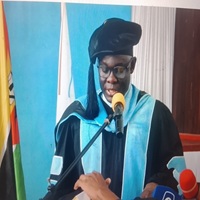
The city of Beira will be the stage this Friday for an academic celebration that simultaneously symbolizes an individual achievement and a collective expectation of science and technology. The graduation ceremony at Licungo University leads us to reflect on the place the institution intends to occupy in the development of Mozambique. The new era of challenges begins precisely when students leave the academic space and are called upon to demonstrate, in practice, the social value of what they have learned. In this historical journey of education, the debate about the quality of higher education graduates is imperative, raising a fundamental question: do the weaknesses in employability result from the quality of university education, or are the public institutions, organizations, companies, and industries themselves revealing limitations in their capacity to welcome, guide, and provide professional experiences to recent graduates? How often are higher education institutions accused of producing graduates with limited practical experience? It is equally important to ask how many organizations are actually available to offer quality internships, and how many companies and industries establish consistent partnerships with universities and invest in preparing young professionals to gain some prior experience for the job market?
The paradox of the quality of higher education in Mozambique can be understood from three structural dimensions that condition the preparation of future graduates: the precariousness of secondary education, as a preparatory stage for university entry. Indeed, when students arrive at higher education carrying learning gaps accumulated at previous levels, universities face the challenge of developing scientific and professional skills on a sufficiently consolidated formative base. Another paradox lies in the fact that Mozambique is progressively expanding opportunities for access to higher education without this expansion, in itself, guaranteeing an equivalent improvement in the quality of training. It is important, however, to recognize that university expansion does not necessarily constitute a factor of academic deterioration; the problem emerges when quantitative growth is not accompanied by the qualitative consolidation of teaching and learning conditions. The expansion of access, although a democratic achievement and an instrument of social inclusion, can also be interpreted as one of the elements that compromises quality when it is not accompanied by proportional investments in infrastructure, libraries, laboratories, technologies, and rigorous evaluation and accreditation mechanisms. In addition to these limitations, there is the issue of teacher qualification and professional development, whose role is not limited to the transmission of content, but also requires scientific expertise, pedagogical competence, research, and continuous updating.
In parallel, the discussion about the quality of higher education in Mozambique has been permeated by a comparative, often derogatory, argument that tends to prioritize in-person, day-to-day education over evening, blended, and distance learning modalities. This hierarchy, often based more on social perceptions than on objective evidence of academic performance, fuels the idea that students trained in day-to-day, in-person programs inherently possess superior scientific and professional preparation compared to those attending other educational modalities. The central concern, therefore, lies in the transformation of the attendance modality into an informal criterion for distinguishing academic competence, as if daily physical presence in the classroom constituted, in itself, a guarantee of quality, while the temporal and spatial flexibility of other models necessarily represented a weakness in training. In reality, the quality of higher education should be measured by rigorous and common criteria, including the adequacy of curricula, the qualifications of teachers, the rigor of assessment, the availability of teaching resources, scientific rigor, and the skills actually acquired by graduates.
The question of know-how, which emerges in the debate on the quality of higher education in Mozambique, goes beyond the simple acquisition of theoretical knowledge or the availability of laboratories and equipment, the absence or insufficiency of which can compromise the scientific mission of what Jacques Derrida problematizes in his reflection on the university and its critical autonomy. Higher education requires, above all, an effective articulation between theory and practice, through quality professional experiences in public institutions, civil society organizations, companies, industries, and other productive sectors, which should constitute privileged spaces for learning, experimentation, and skills development. In this context, curricular internships, supervised professional practices, institutional partnerships, and intervention projects are fundamental instruments for transforming scientific knowledge into the capacity for execution, problem-solving, and innovation. More than a curricular complement, practical experience can favor the employability of graduates and create conditions for entrepreneurship, allowing them to mobilize the knowledge acquired in identifying opportunities, creating businesses, and developing solutions tailored to the needs of society. However, this responsibility should not fall exclusively on universities, but also requires the effective involvement of the State, businesses, and professional organizations in creating learning and job placement opportunities.
The paradox arises of demanding professional experience from graduates when they are not always provided with opportunities to acquire that same experience. This contradiction reveals that employability depends not only on individual competence or the quality of education, but also on the institutional and economic capacity to create conditions for the transition between university and the professional world. The central question, therefore, ceases to be merely whether universities are training high-quality graduates and also becomes whether society, through its institutions, organizations, companies, and industries, is prepared to welcome these graduates, provide them with professional experience, and transform academic knowledge into employment, innovation, and entrepreneurship. The discussion cannot unilaterally blame universities for the gap between academic training and the demands of the job market, ignoring the role of employing sectors in creating opportunities for internships, practical learning, professional integration, and skills development. It is important to reaffirm that the quality of higher education is not proven solely by the theoretical mastery of content, professional vocation, or the ability to reproduce knowledge acquired in the classroom, but also by the possibility for graduates to demonstrate their skills through direct contact with the practical experience of institutions, organizations, companies, and industries. It is in this encounter between knowledge, know-how, and professional reality that academic training finds one of its most concrete expressions, transforming knowledge into the capacity for intervention, problem-solving, and innovation.
In the case of the city of Beira, due to its port, commercial and logistical importance, among other activities, it offers a particularly relevant scenario for reflecting on the role of higher education institutions in preparing professionals capable of meeting the demands of a transforming economy. Creating the conditions for these professionals to develop skills and effectively contribute to national development is a shared responsibility between educational institutions, the State, the private sector and civil society.Professional institutions must therefore cease to be seen merely as spaces for recruiting qualified labor and equally assume their role in creating opportunities for internships, supervised apprenticeships, and the integration of young graduates. This shared responsibility can help reduce the paradox of demanding professional experience from those who have not yet had the opportunity to acquire it, opening paths to employability, self-employment, and entrepreneurship. The quality of education is not exhausted by the diploma that certifies what the graduate has learned; it is revealed, above all, in the opportunities that allow them to demonstrate what they can do, transform experience into competence, and convert knowledge into work, innovation, and social value. Consequently, the evaluation of the quality of graduates must be accompanied by a critical analysis of the responsibility of employers, public employment policies, and cooperation mechanisms between academia and the productive sector.
The true challenge of higher education lies not only in teaching people to think or to know, but also in the challenge for institutions to create conditions so that graduates know how to apply, transform, and produce knowledge, converting academic training into professional competence, innovation, and socioeconomic development.The university, as a space for the production and dissemination of knowledge, is called upon to demonstrate that higher education must translate into concrete solutions to the problems affecting citizens' lives. Training highly qualified professionals is an indispensable mission, and the growth of higher education poses new challenges to Licungo University itself, particularly regarding the quality of teaching, scientific research, and curricular innovation. However, the research developed in universities needs to engage with the concrete problems of the region, from urban management and climate resilience to education, health, public administration, agriculture, commerce, and digital transformation. It is in this connection between scientific knowledge and social needs that higher education finds one of its most important reasons for existing. In this sense, Licungo University consolidates its contribution to the training of human capital to strengthen the technical, scientific, and professional capacities of the region. By graduating new professionals in the city of Beira, Licungo University reaffirms the relevance of higher education in the central region of the country and renews expectations regarding its contribution to national development.
2025/12/3
Copyright Jornal Preto e Branco All rights reserved . 2025
Copyright Jornal Preto e Branco Todos Direitos Resevados . 2025
Website Feito Por Déleo Cambula