
Impact of Mozambique flag smuggling in the Strait of Hormuz
Paulo Vilanculo"
In this article, the concept of "smuggling under the Mozambican flag" does not refer to the traditional smuggling of goods, but to the illegal appropriation and misuse of the national flag by a vessel that, according to the Mozambican Maritime Transport Regulatory Institute, has never been registered in the National Ship Registry. This is a form of maritime fraud in which a symbol of sovereignty is used without authorization to confer a false legal identity to the ship, leading third parties to believe that it is under the jurisdiction and protection of the Mozambican State. From this perspective, the "flag" ceases to represent only the nationality of the vessel and becomes a potential instrument for concealing the true identity of its operators, compromising the transparency of international maritime trade, the safety of navigation, and the international credibility of Mozambique as a flag state and as an exporter of liquefied natural gas.
The Strait of Hormuz is one of the most strategic maritime corridors on the planet. It is one of the most important chokepoints in international energy trade. In a geopolitical context marked by conflicts and energy disputes, trust in the legal identity of vessels has become an integral part of the architecture of international maritime security. International networks involved in the smuggling of oil, gas, weapons, and goods subject to sanctions frequently resort to document forgery, electronic alteration of ship identities, manipulation of AIS (Automatic Identification System), and the use of flags of countries completely unaware of the existence of these vessels. It is estimated that a significant portion of the world's traded oil and liquefied natural gas transits through this strait daily, making any documentary irregularity potentially relevant to international energy security.
In conflict scenarios, such as those involving Iran, Israel, the United States, and other regional actors, the manipulation of vessel identity can be used to circumvent trade restrictions, conceal supply routes, hinder the attribution of responsibility, or reduce international scrutiny. In recent years, several specialized reports have warned of the growth of so-called "shadow fleets," consisting of vessels that use false identities, flag changes, fraudulent documentation, and manipulation of electronic identification systems to transport goods subject to international restrictions. The fraudulent use of a state's flag, a mechanism that allows concealing the true origin of the cargo, hindering international inspections, and escaping financial and commercial control mechanisms, often referred to as "flag fraud" or "flag identity theft," represents one of the most worrying phenomena in contemporary maritime transport.
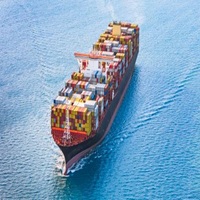
The recent incident involving the gas tanker "DISHA," IMO number 8818219, with a crew of Indian citizens aboard in Iranian territorial waters in the Strait of Hormuz, flying the Mozambican flag without ever having been registered in that country, raises serious questions not only in Mozambique but also in the international arena of international maritime law and international conventions on commercial exports. The Mozambican Maritime Transport Regulatory Institute states that the DISHA vessel "is not listed in the National Register of Ships of the Republic of Mozambique," "does not have authorization to fly the Mozambican flag," and "has never been registered under the national maritime legal regime." In practice, the regulator is abdicating direct legal responsibility of the Mozambican state for the vessel's nationality and characterizing the case as an alleged fraudulent use of the national flag, producing effects that go far beyond a simple administrative clarification.THEThe prompt statement from the Mozambican Maritime Transport Regulatory Institute that the ship is not registered in the National Ship Registry underscores the importance of a swift institutional response to protect the State's credibility. Although the absence of evidence and the mere fraudulent use of the flag do not constitute proof of State involvement, the international community may question why those responsible for the fraud specifically chose the Mozambican flag and not that of another State. Even though the statement from the Mozambican Maritime Transport Regulatory Institute dismisses any legal link between the State and the vessel, a strategic question remains: why was the Mozambican flag specifically chosen?
Even if this coincidence is not enough to infer complicity or responsibility on the part of the Mozambican State, it would be necessary to demonstrate, through evidence, that public authorities, authorized entities, or State agents were unaware of the irregular use of the national flag. The alleged fraudulent use of the Mozambican flag by a ship transporting liquefied natural gas cannot be analyzed in isolation from Mozambique's strategic positioning in the global energy market. The potential association of Mozambique's name with schemes involving the fraudulent use of its flag could generate significant reputational risks, leading maritime insurers, financial institutions, port operators, and trading partners to strengthen due diligence mechanisms regarding vessels registered under the Mozambican flag. The immediate interpretation could be an attempt to exploit weaknesses in maritime identification systems or to create confusion about the true origin of the cargo. Any failure in this system not only affects the State whose flag is being misused but also impacts the stability of global supply chains and confidence in international maritime trade.
The first impact of this pronouncement is international legal. Under the United Nations Convention on the Law of the Sea (UNCLOS), each State exercises effective jurisdiction and control over ships flying its flag. In International Maritime Law, a ship's nationality is not a mere bureaucratic formality. The flag establishes the ship's nationality and determines which State exercises jurisdiction and control over the vessel. The flag represents the legal link between the vessel and the State that confers nationality upon it, granting it rights and imposing responsibilities. For Mozambique, the consequences could be particularly sensitive. The country is in a decisive phase of establishing itself as a producer and exporter of liquefied natural gas, seeking to consolidate the confidence of international investors and strengthen its reputation as a credible energy partner. As one of the new African LNG exporters, the use of its flag in such a sensitive energy corridor as the Strait of Hormuz inevitably generates ambiguities and fuels suspicion within the international community.
It is precisely because Mozambique is among the countries exporting liquefied natural gas that any misuse of its flag on gas tankers is more sensitive. While this does not mean that all irregular use of a flag is necessarily linked to illicit activities or military strategies, it demonstrates how weaknesses in registration and identification systems can be exploited by different actors in high-tension environments. The presence of a ship allegedly using the Mozambican flag "obtained illicitly" in one of the world's main gas export corridors raises concerns that transcend national borders, involving economic, geopolitical and maritime security interests, and Mozambique's response must go beyond simply denying any potential responsibility.
However, from a political and strategic perspective, it can be argued that the coincidence creates a "grey area" that requires a robust institutional response. In any case, the episode demonstrates that, in the current geopolitics of energy, the maritime reputation of a gas-producing state has become a strategic asset whose protection requires transparency, rigorous oversight, and international cooperation. The episode highlights the need to strengthen national maritime registration systems, digitize databases of ships authorized to fly the national flag, promote interoperability mechanisms between maritime, customs, and police authorities, and strengthen cooperation with the International Maritime Organization and other international maritime enforcement agencies. It is also important to consider the dimension of international security. From a diplomatic standpoint, the situation may require a swift response from the Mozambican authorities. If it is demonstrated that a particular vessel improperly used the national flag, the State should officially notify the competent international organizations, cooperate with the maritime administrations involved, and adopt measures to prevent further occurrences.
2025/12/3
Copyright Jornal Preto e Branco All rights reserved . 2025
Copyright Jornal Preto e Branco Todos Direitos Resevados . 2025
Website Feito Por Déleo Cambula