
IMF, a new Proinvest on the road to (Ma)luala?
Paulo Vilanculo"
In Mozambique, the reference to Privinvest alludes to the Privinvest Group, an international shipbuilding conglomerate based in Lebanon, identified as one of the main players in the corruption scandal known as "hidden debts." Is the IMF facing a new opportunity to support Mozambique's economic transformation, or is this yet another financing model whose benefits may not reach the poorest and most marginalized communities? What type of development will be financed, who will it be aimed at, and what mechanisms will ensure that the resources allocated to economic development translate into effective improvements in the living conditions of the population? Will the new IMF program translate into real benefits for the lives of ordinary citizens, or is there a risk of repeating development models in which large financial resources circulate through decision-making centers, while populations remain on the margins of economic opportunities? Will the new financial resources reach the communities that have historically remained on the margins of major investments, or will they continue to concentrate in the same urban and economic spaces as always? These questions ironically bring back memories of Privinvest and the so-called "hidden debts," but also highlight the need to concretely assess who benefits from the large financing programs and economic reforms of the IMF in Mozambique.
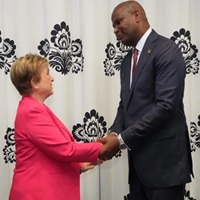
According to a Facebook post attributed to the source AIM/Jornal Rigor, Daniel Chapo met in New York, on the sidelines of the 81st Session of the United Nations General Assembly, with the Managing Director of the International Monetary Fund (IMF), Kristalina Georgieva. The meeting reportedly addressed issues related to strengthening Mozambique's fiscal position and monetary policy, as well as the continuation of economic reforms. The meeting occurred in a context presented as unprecedented: for the first time, Mozambique reportedly arrived at the negotiating table without any outstanding debt to the Fund, after having prepaid approximately $701 million in March. The meeting also followed an IMF technical mission, led by Pablo López-Murphy, which was in Maputo to prepare the groundwork for a new financing program. Georgieva described the talks as positive and stated that the IMF is ready to help Mozambique "unlock its economic potential." However, the following question remains: does the IMF want to transform Mozambique into something that brings real benefits to the lives of ordinary citizens, or into a new Previnvest program heading towards Maluala?
It is at this point that the reference to Maluala takes on a symbolic dimension. Maluala (1979) is a historical film produced by the Cuban Institute of Cinematographic Art and Industry (ICAIC), which addresses the story of Gallo, the leader of a community who, distrustful of government promises, traitors, and subversives infiltrated into the settlement, faces a scenario marked by distrust and division. In the film, enslaved Africans become fugitives, hiding in the mountains, in so-called palenques, at the end of the 19th century. The analogy transports this cinematic dimension to contemporary Mozambican reality, where, amidst promises of development, financing programs, and economic reforms, the fundamental question remains: to what extent do the benefits of these processes actually reach the communities that need them most?
The question is where the money goes, who benefits from it, and whether communities will continue to watch development from the sidelines or will finally become a part of it.It should also be measured by its capacity to transform financial resources into social dignity and concrete opportunities for the average citizen. The existence of new funding programs therefore demands transparency, oversight, institutional accountability, and mechanisms capable of ensuring that resources are not diverted from the objectives for which they were contracted. The reality of the Lualua communities, an example from Zambezia Province, helps to illustrate this point concretely. In many communities, most dwellings continue to be built of wattle and daub, while access to electricity remains limited. The deterioration of roads and the inadequacy of public transport further exacerbate isolation and hinder the population's access to basic services, markets, and economic opportunities.
The scandal involved illegal state loans worth approximately $2.2 billion, contracted between 2013 and 2014 to finance maritime projects. British justice concluded that Privinvest inflated costs and made illicit payments to Mozambican government officials and international bankers. The experience of the "hidden debts" remains an unavoidable memory whenever Mozambique discusses large financial operations, especially when these involve significant public commitments. If the IMF intends to help Mozambique "unlock its economic potential," as Kristalina Georgieva stated, this potential must not be measured solely by the state's ability to balance its accounts or attract external financing. The real challenge of a new IMF program will not only lie in public accounts figures, monetary reforms, or macroeconomic indicators. It will also lie in the capacity to transform financial stability into human development, passable roads, electricity, functional public services, employment, and better living conditions in rural communities.
2025/12/3
Copyright Jornal Preto e Branco All rights reserved . 2025
Copyright Jornal Preto e Branco Todos Direitos Resevados . 2025
Website Feito Por Déleo Cambula