
Gundana, a plot of sophisms of Mozambican heroism
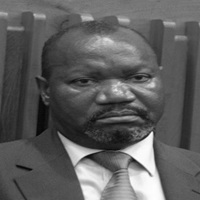
Paulo Vilanculo"
“The plot of sophisms” is not a posthumous accusation; it is a civic critique of how we construct our heroes, who decides memory and whom it serves. In a country where official history is often replaced by public debates, the death of emblematic figures should be an occasion for democratic maturity in which we honor without mythologizing, remember without feeling, without wanting to dehumanize.
Over the decades, liberation has been narrated as a linear epic, often shielded from uncomfortable questions. Certain biographies have been elevated to dogma, while others have been diluted, omitted, or instrumentalized according to convenience. Feliciano Gundana is referred to in some political circles and speeches as a figure linked to the first political articulations of the Mozambican liberation struggle, in a still embryonic period, prior to or parallel to the full institutionalization of FRELIMO. His name is associated with initial nationalist dynamics, political contacts, ideological mobilization, and debates that preceded the consolidation of the hegemonic liberation narrative. Unlike other widely documented leaders, Gundana does not occupy a central place in the canonical historiography of the liberation struggle; his trajectory remains poorly systematized, with scattered references, often oral, local, or politically motivated.
The plot surrounding Gundana reveals a tension between the acclaimed hero and the (in)concrete historical subject, opening fertile ground for the sophistry of oversimplification, rhetoric that confuses participation with authorship, and sacralization that exempts the scrutiny that elevates a given "contribution," but rather a retreat and concealment of the hagiography that transformed history into a nationalist catechism of political identity and the liberation of Mozambique. The title of "political founder of liberation" attributed to Gundana is, for some, a belated and inflated recognition; for others, an attempt at symbolic reinscription of actors marginalized by the dominant official narrative. The idea of "founder" has never been neutral, but rather a product of choices, selections, and silences.
The death of Feliciano Gundana, an unavoidable figure in the political genesis of Mozambique's liberation, imposes silence and respect, but also evokes critical memory, especially when national history is constructed amidst established narratives, symbolic disputes, and shadowy areas that time has not dissolved. One might believe that death, paradoxically, liberates the word and allows for a serene revisiting of past events, separating fact from propaganda and real merit from accumulated symbolic capital. Liberation was not the work of isolated individuals, but of a mosaic of actors, currents, and mythical contradictions in our Mozambican history, much of it silenced by the official narrative of sophistical heroism.
To exalt Gundana's death today requires more than sudden and automatic praise; it demands contextualization, a comparison of sources, and recognition of the ambiguities of the Mozambican historical process. It also requires admitting that liberation also generated forms of exclusion, and that some names were used as moral anchors to legitimize later practices that betrayed the ideals proclaimed before FRELIMO (...).It is known that whoever controls the archive controls the memory and consequently the history of many unrevealed (un)documented paths, others deliberately erased, such as the bomb ordered for Eduardo Chivambo Mondlane, Urias Simango, Chicuarra Massinga, Kavandame, Joana Simeão, among others who lie in the trenches of memory and remain inaccessible in the history of Mozambique "free" from the liberators. To speak of Gundana and other forgotten figures is not merely to rescue individual memories; it is to question who decides what history is and who has the right to exist within it.
The idea of an unwritten heroic history in Mozambique is not a result of chance or a simple lack of records. It stems from a profound, silent, and persistent political choice. Over time, national liberation has been narrated as a closed journey, with defined protagonists, consecrated dates, and a linear logic that left little room for parallel voices. In this process, many figures who participated in the early articulations of nationalist thought, such as Gundana, were pushed to the margins of collective memory. This is not necessarily about denying their contribution, but about rendering it irrelevant in the face of an official narrative that needs few heroes to function. This recognition is uncomfortable because it exposes continuities between the logic of liberation and certain practices of power in the post-independence period. The more restricted the group, the easier it is to concentrate historical and political legitimacy in a single epicenter. Recognizing other trajectories forces us to admit that liberation was not homogeneous, nor consensual, nor exclusively led by a single structure. This admission weakens the founding myth and opens space for questions that some prefer to avoid.
One might believe that writing this history would imply revisiting internal conflicts, ideological divergences, and exclusions that occurred during and after the liberation struggle. It would imply acknowledging that not all nationalists fit into the political project that prevailed, and that some were discarded not for lack of merit, but for incompatibility with the dominant narrative. However, unwritten history is no less true; it is merely less convenient. Thus, the refusal to write history does not reveal a lack of material, but a fear of its effect. Because each forgotten hero returned to the national narrative forces the country to look at itself without filters, to confront its contradictions, and to accept that liberation was plural, imperfect, and profoundly human.His name reappears primarily in contexts of critical revision of history, regional claims, or contestation of the official memory of liberation. May Gundana rest in peace, and may his memory, like that of so many others, be returned to the most honest place that history can offer: that of human complexity, far from the altar and close to the truth.
2025/12/3
Copyright Jornal Preto e Branco All rights reserved . 2025
Copyright Jornal Preto e Branco Todos Direitos Resevados . 2025
Website Feito Por Déleo Cambula