
Government commitment to mitigating the suffering of populations affected by floods in Mozambique
Paulo Vilanculo"
ANDIn Mozambique, the overflowing rivers also carry the silent revolt of a people tired of promises, who no longer ask for miracles, but demand dignity, prevention, and responsible governance. As long as the focus remains solely on political decisions, as long as the people continue to pay, with lives and misery, the price of a State that always arrives after the tragedy. The creation of the Operations Room raises an initial question: why does such a structure only emerge when the impacts of the floods were already visible on the ground? However, a closer reading reveals an inevitable institutional paradox: where, ultimately, does the role of the INGD (National Institute for Disaster Management) lie? Are we witnessing an implicit sign of discrediting existing technical institutions? The paradox becomes evident in that, if the INGD were functional, efficient, and properly equipped, an Operations Room directly subordinate to the Head of State would not be necessary.
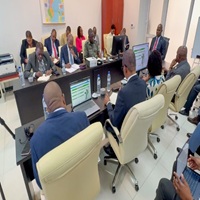
The President of the Republic has ordered the establishment of an Emergency Operations Room at the Presidential Palace, with the aim of ensuring continuous monitoring of the calamitous situation resulting from the intense rains, floods, and inundations affecting the southern and central regions of Mozambique. The floods are not merely a climatic phenomenon; they are a reflection of a power structure that has normalized popular suffering. Women, children, and the elderly continue to be the most affected, in a scenario where humanitarian assistance arrives late and insufficiently. The measure...the head of state of MozambiqueIt was presented as an urgent action in response to the worsening humanitarian crisis faced by thousands of Mozambicans. The initiative aims to strengthen the State's humanitarian response capacity, balancing and complementing supplies from the central region of the country, in order to ensure more effective food assistance to populations affected by the floods. The decision comes days after the Council of Ministers declared a State of Emergency and aims to strengthen inter-institutional coordination, continuous monitoring of developments on the ground, and guarantee a rapid, effective, and integrated response to the needs of the affected populations.
The President's decision to create an Emergency Operations Room to monitor the evolution of floods in various regions of the country has reignited a silent, yet structural, debate about the management of natural disasters in Mozambique. At first glance, the initiative can be interpreted as a sign of active leadership and concern for the suffering of the affected populations. However, the creation of a parallel structure at the presidential level raises doubts about the effectiveness, institutional trust, and clarity of the chain of command in emergency situations, and implicitly suggests that existing mechanisms were not responding with the expected effectiveness. The creation of the Emergency Operations Room, far from being merely an act of presidential sensitivity, exposes a profound contradiction in the Mozambican governance model: when institutions fail, new structures are created instead of correcting existing ones.
In the context of disaster risk management, political leadership is essential, but it should translate into strengthening existing institutions, not their informal replacement. By legal mandate, the National Institute for Disaster Risk Management (INGD) is the state body responsible for coordination, prevention, response, and recovery in the face of natural disasters. The INGD, the body legally responsible for leading the disaster response, should, at that time, have been fully operational, coordinating mitigation, assistance, and resettlement efforts. This institution should theoretically have been leading flood monitoring, activating contingency plans, managing accommodation centers, and coordinating with national and international partners. The paradox is evident: if the INGD were functional and efficient, if it were properly equipped, a dedicated Operations Room directly subordinate to the Head of State would not be necessary, or we would be facing an implicit sign of discrediting existing technical institutions. If the State recognizes limitations in the performance of the INGD (National Institute for Disaster Management), the solution lies not in superimposing structures, but in seriously investing in its reform, capacity building, and operational autonomy. It is therefore also important to question whether this Operations Room has had a real impact on the lives of the affected populations? With each rainy season, the same scenario repeats itself: avoidable deaths, forced displacements, famine, and a State that appears more to tally damages than to prevent them. There is little discussion about the funds allocated to disaster risk management, the mitigation projects announced over the years, or the technical recommendations that are systematically ignored.
However, it was the Secretary of State for the Province, Henriques Bongece, who went to areas affected by the floods, where the N1 highway is presumably cut off or submerged, to interact with teams from INAMAR and SENSAP, deployed to raise awareness among the population not to cross the flooded road and to ensure immediate intervention in case of incidents. The sequence of events suggests a fragmented response from the State: first with field visits led by political representatives, then with the creation of parallel central structures, while the technical body par excellence remains, at least in the public eye, in a largely invisible role. More than symbolic visits or sporadic deployments of teams on the ground, floods require technical coordination, unified command, and institutional clarity. What was expected was a strong presence of the governors of the affected provinces, presumably elected to serve the people, hand in hand with the ministers of the relevant departments, side by side, involved in visible and impactful interventions and evacuations for the affected populations, instead of witnessing extortion of the victims. Institutional overlap not only compromises the efficiency of the response but also hinders accountability in case of failures. This model of action raises real risks. When many command and few coordinate, no one is responsible. This confusion is paid for with human lives, material losses, and prolonged suffering of the populations.
The Minister of Transport and Logistics, João Matlombe, speaking to the press, explained that public infrastructure has been severely affected, with the greatest impact in the provinces of Sofala, Gaza, and Maputo. He stated that National Road N1 could remain impassable for a minimum of 15 days due to damage caused by intense rains and flooding affecting various regions of the country. According to João Matlombe, quoted by the Ngani portal, the N1 is affected at several critical points in the provinces of Sofala, Gaza, and Maputo, and that repair work can only proceed after the waters recede and a detailed technical assessment of the damage is carried out. In this context, the minister assumes a central role in a domain that, technically, does not entirely belong to him. Ultimately, who should decide on the repairs, the Minister of Transport or the Minister of Public Works? The Ministry of Transport and Logistics has the primary mission of ensuring mobility, regulating transport, and guaranteeing the safe circulation of people and goods, not the execution of public works. The duplication of responsibilities by João Matlombe and the passive assistant role of Fernando Rafael represent mechanisms that can generate not only operational confusion but also institutional weakening, instead of strengthening the national capacity to respond to disasters.
Mozambique has a Prime Minister who is the leader of the country's government and can comment on any Ministry. On the other hand, the President of the Republic of Mozambique appointed a Minister of Public Works, Housing and Water Resources. This Ministry, through the National Roads Authority (ANE), is the body responsible for the construction, maintenance and rehabilitation of national roads, including the N1. This raises the key question: shouldn't the Ministry of Public Works, Housing and Water Resources be the one leading and officially communicating about road infrastructure repair works? When João Matlombe comments on road repair deadlines, he enters a field that is, by nature, technical-operational and within the purview of Public Works, although this does not invalidate his concern or duty to inform about impacts on traffic, but it raises doubts about who is actually coordinating. If the works are delayed, who is responsible? If the costs are insufficient, who explains? If the road collapses again in the next rainy season, who takes responsibility?
João Matlombe's statement, far from ending the debate, opens space for critical reflection on the true scope of his communications and their institutional significance. Are we facing a new super-minister, above the President, the Emergency Operations Room to monitor the evolution of floods in various regions of the country, and the Prime Minister of the government? In practice, the excessive centralization of decisions at the highest level of political power does not solve structural problems such as the lack of technical means, insufficient financial resources, the fragility of early warning systems, and the absence of solid territorial planning policies. On the contrary, this can contribute to the politicization of the tragedy, transforming the management of human suffering into an exercise of political visibility, rather than technical efficiency. The drama unfolding in the flooded areas—displaced families, destroyed crops, the risk of disease, and food insecurity—demands swift responses on the ground. In practice, the suffering experienced in accommodation centers and flooded communities cannot be resolved through visits and meetings in central monitoring offices; it must be resolved with food, potable water, medical assistance, functional logistics, and long-term prevention policies. And as long as this cycle continues, the people will continue to suffer, not only from the floods but also from the State's own inability to manage disasters.
2025/12/3
Copyright Jornal Preto e Branco All rights reserved . 2025
Copyright Jornal Preto e Branco Todos Direitos Resevados . 2025
Website Feito Por Déleo Cambula