
Cyclone “Gezani” Another gift for the MOWAMBIGANIANS
Paulo Vilanculo"
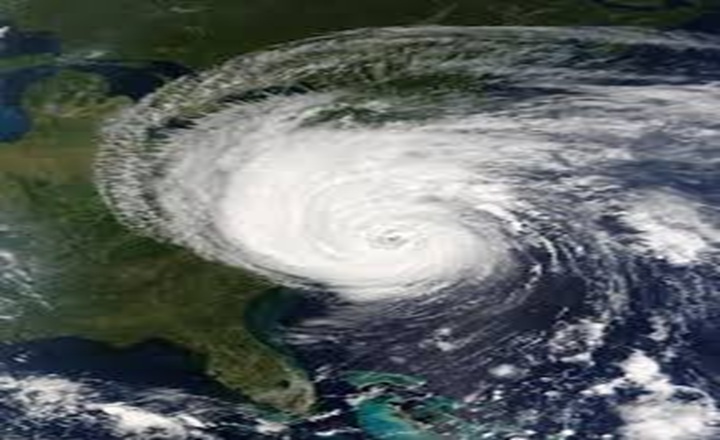
Mozambique is once again facing another painful chapter in its history marked by natural disasters. Cyclone Gezani has emerged as yet another harsh blow to a country that, year after year, finds itself held hostage by floods, devastating winds, and political promises that rarely translate into structural solutions. What should be treated as a predictable natural phenomenon within the region's climatic reality is transformed into a social tragedy amplified by fragile infrastructure, poor urban planning, and the persistent absence of resilient public policies.
"Gezani leaves homes, schools, and health centers without roofs in Jangamo, Inhambane"DW
For decades, Mozambique has been classified as one of the countries most vulnerable to climate change, and yet the same emergency scenarios continue to repeat themselves. The problem is no longer just heavy rain or overflowing rivers; it has become the inability to transform past experiences into robust preventative policies. Cyclone Gezani exposes, once again, the gap between official discourse and the reality experienced in communities. While it is true that natural phenomena cannot be avoided, it is also true that the scale of their consequences can be reduced through responsible governance, strategic planning, and a genuine commitment to collective well-being. Cyclone Gezani is not just another storm; it is a portrait of the systemic fragility of a country that, despite successive tragedies, still struggles to convert lessons into concrete actions. The growing pressure of climate change, which intensifies extreme phenomena and increases prevention costs, makes the necessary investments even more technically and financially demanding. Waterborne diseases will emerge, repeating a pattern already known in each rainy season. The suffering of the people becomes statistical routine, while official reports speak in numbers, percentages, and "readiness levels."
In a vulnerable country like Mozambique, the central issue is not only the occurrence of cyclones, but the structural capacity for anticipation and adaptation. Regional experience shows that, even with limited resources, it is possible to reduce human losses through planning, education, and political commitment. In more resilient countries, climate adaptation is transversal to all public policies. In countries prone to cyclones, floods, and other extreme events, both in Southern Africa and other regions of the world, the response has shifted from being merely reactive to becoming structural and preventive. In Madagascar, for example, despite economic limitations, investments are being made in community-based early warning systems, the construction of permanent shelters, and resettlement plans in less vulnerable areas; South Africa is investing in more rigorous urban planning, modern drainage infrastructure, and the integration of meteorological data into municipal policies, while Mauritius has consolidated cyclone-resistant building codes and a strong public culture of prevention. Outside the region, Japan has become a global benchmark by integrating advanced warning technology, ongoing disaster education, and mandatory building codes. A common element in these experiences is not the absence of natural phenomena, but rather the political commitment to anticipation, institutional accountability, and continuous investment in climate resilience, demonstrating that geographical vulnerability does not necessarily have to translate into recurring human tragedy.
The perception that Mozambique perpetuates only reconstruction after cyclones and other natural disasters is linked to a set of structural, political, and economic factors that condition the capacity for long-term prevention. The country is recurrently affected by extreme events. After the cyclones that have battered Mozambique in recent years, such as Cyclone Idai, Cyclone Freddy, Kenneth Chido, Dikeledi, and Jude, the Government has been proposing and implementing a series of post-disaster rehabilitation measures instead of systematically investing in risk reduction before the occurrence of preventive and resilience actions, seeking to shift the response from a purely emergency model to one increasingly oriented towards prevention, anticipation, and adaptation. Mozambique perpetuates only reconstruction not out of mere inertia, but because it faces a structural cycle of vulnerability, external dependence, institutional fragility, and political decisions oriented towards immediate results. With each cyclone, resilient houses, dignified resettlements, and infrastructure adapted to climate change are promised. However, what we observe is a repetition of improvisations and delayed reactions.
Breaking this cycle would require transforming prevention into a national strategic priority, with sustainable funding, institutional accountability, and rigorous territorial planning before the next storm arrives. Mozambique is heavily dependent on external funding for reconstruction, creating a cycle where international resources arrive mainly after the tragedy, encouraging a reactive approach. Preventive investments, such as structural drainage, permanent resettlement, and rigorous monitoring of occupations in risk zones, require continuous funding and institutional stability. On the other hand, the absence of robust housing policies and effective monitoring allows vulnerability to be reproduced year after year. There is a problem of weak territorial planning. Many communities continue to settle in flood-prone areas due to a lack of economic and housing alternatives. There is also an institutional dimension where disaster risk management is not yet fully integrated into national macroeconomic planning. Meanwhile, the government discourse insists on the narrative of climate inevitability, attributing the damage exclusively to the force of nature.
The cyclone may be a natural phenomenon, but the extreme vulnerability of the populations is largely a consequence of human and political decisions. The scale of the tragedy is also not a result of chronic negligence in the construction of drainage systems, the monitoring of occupations in risk zones, and the effective implementation of territorial planning plans. The real challenge is not drying up the waters after the storm, but preventing them from continuing to find the same unprepared country. “Gezani,” which means “bathe” in the local language of Manica Province, sounds almost like a cruel irony in the face of the scenario unfolding in the affected areas. The populations do not “bathe” by choice, but are forced to repeatedly immerse themselves in extreme vulnerability that goes far beyond the force of the waters. They bathe in structural abandonment, precarious infrastructure, the absence of adequate drainage, disordered occupation tolerated for decades, and the lack of housing policies that offer dignified alternatives. Thus, “Gezani” ceases to be just the name of a storm; It becomes a symbol of a nation that, as long as it does not prioritize prevention, serious territorial planning, and resilient investment, will continue to be forcibly "bathed" in the same tragedies.
2025/12/3
Copyright Jornal Preto e Branco All rights reserved . 2025
Copyright Jornal Preto e Branco Todos Direitos Resevados . 2025
Website Feito Por Déleo Cambula