
Contradictions in Ministry of Education's decisions: curricular liberalization or silent commodification of education?
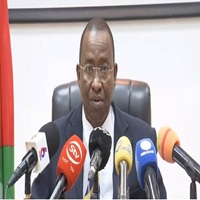
Paulo Vilanculo"
The recent stance taken by the Ministry of Education and Culture (MEC) in Mozambique, through seemingly complementary decrees, has revealed profound institutional and political contradictions in the education sector. On the one hand, Decree No. 124/MEC/GM/2026 made the teaching of the Portuguese language, history, and geography of Mozambique mandatory in all private and international schools with foreign curricula, arguing for the defense of national identity, cultural integration, and the strengthening of educational sovereignty. On the other hand, the same ministry prohibited private schools from using textbooks designed for free distribution in public schools, even threatening criminal liability for institutions that allow these materials to circulate within their premises. Apparently, the decrees in question seek to organize the national education system. However, when critically analyzed, they reveal a clear political and pedagogical incoherence. If the central objective of the first decree is to ensure cultural integration and the standardization of national content, it becomes contradictory to prevent private schools from using exactly the same textbooks officially produced by the State to teach that content. How can one intend to consolidate a common national identity while fragmenting the pedagogical instruments that support that same identity? Ultimately, the central question remains without a convincing answer: if the official textbooks represent the values of national identity and cultural integration, why does their use in private schools become problematic?
The historical problem of the late, insufficient, and unequal distribution of school textbooks in Mozambique far predates the phenomenon of textbook circulation in private schools. Every school year, numerous public schools begin classes without sufficient textbooks, even before any allegations of diversion to private education. Attributing indirect responsibility for the textbook shortage to private schools seems to function more as a discursive mechanism for the state to evade responsibility than as a concrete explanation of the structural problem of educational logistics. The Ministry itself implicitly admits the existence of a parallel market for the illegal sale of free textbooks. Now, if textbooks reach private schools through illicit means, the focus of the problem should be on the internal circuits of corruption, diversion, and clandestine commercialization existing within the state distribution system itself. Punishing private schools for possessing textbooks without dismantling the diversion networks represents attacking the effects and not the causes of the problem.
The contradiction between mandatory and prohibited textbooks becomes evident when the Ministry of Education attempts to justify the ban by stating that the free books were designed exclusively for students in public schools and that their circulation outside the "normal circuit" harms the distribution system. According to the ministry's spokesperson, Silvestre Dava, the presence of these books in private schools would mean that some public school students may have been left without textbooks. However, this narrative presents weaknesses that are difficult to conceal. Furthermore, the threat of criminal liability for private schools introduces an excessively coercive and contradictory tone in a context where the State itself defends principles of educational inclusion and public-private partnerships. The criminalization of the use of official textbooks conveys a paradoxical message: the State wishes to ideologically control the content taught, but does not accept that its own materials are used outside the previously established economic circuit. The debate, therefore, goes beyond the simple circulation of school textbooks; The question is to understand to what extent education in Mozambique is being guided by genuine pedagogical principles or by silent mechanisms of political, economic, and institutional control. It is at this point that a socially legitimate suspicion emerges: is the problem centered on the free use of books or on an attempt to create a new mandatory publishing market for private schools?
When the Ministry of Education instructs parents of students in private schools to purchase books from accredited publishers and bookstores, it opens the door to questions about possible hidden economic interests behind the discourse of pedagogical legality. The ministerial narrative attempts to present the measure as an act of administrative organization, but the practical effect points to a partial economic liberalization of the school curriculum. The State continues to monopolize content and national identity, but simultaneously creates mechanisms for the mandatory consumption of paid materials for certain sectors of society. Instead of an educational policy based on the democratization of knowledge, we are witnessing the risk of constructing a dualistic education system: a public school dependent on insufficient free textbooks and a private school forced to buy commercially available materials under state supervision. Another contradictory element lies in the fact that the State simultaneously assumes a nationalist and mercantilist stance. Nationalist when it imposes mandatory patriotic content; mercantilist when it transforms the same content into differentiated products according to the economic capacity of families.
Thus, the defense of national identity ceases to appear as a genuinely pedagogical project and begins to reveal aspects of political and economic control over the education system. The situation becomes even more delicate when one observes that many Mozambican families make enormous financial sacrifices to enroll their children in private schools due to the degradation of public education. Preventing these families from using free official textbooks or those acquired informally, forcing them into new expenses, can deepen social inequalities and increase the costs of education without necessarily improving pedagogical quality. It may be suggested that the real conflict lies not in pedagogy, but rather in the economic and administrative control of the school textbook market. The decrees also reveal a growing trend of centralization and excessive oversight of the education sector. The mobilization of inspection teams to collect books within schools conveys an image of educational policing incompatible with modern principles of pedagogical freedom and institutional cooperation. Instead of dialogue with private schools, the Ministry of Education opts for punitive and coercive measures, fostering an atmosphere of distrust between the State and the actors in the education sector. In this way, the Ministry's decrees end up exposing a profound tension between nationalist discourse, state control, and economic interests in the Mozambican education system. While the ministry proclaims to defend national identity, its own measures reveal ambiguities that weaken the coherence of public education policies.
2025/12/3
Copyright Jornal Preto e Branco All rights reserved . 2025
Copyright Jornal Preto e Branco Todos Direitos Resevados . 2025
Website Feito Por Déleo Cambula