
Chiveve in “mussodji”, Carige says a final goodbye to the artist “Xavier Tepo” and a strengthening hug to the musicians Mozambicans
Paulo Vilanculo"
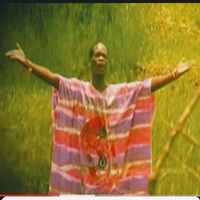
On September 27, the city of Beira was plunged into mourning with the death of Xavier Tepo, founder and lead vocalist of the band Mussodji, in Chiveve, Beira. Remember that the Aruangua Cultural Center became a meeting place, where new talents were discovered and encouraged. Mussodji, in the Ndau language of the central region, means "tears." The Mussodji Band emerged following in the more deeply rooted footsteps of Rastilhos and Djakas. In the 2000s, in a musical and artistic project carried out by the Provincial House of Culture, a cradle of diverse artistic endeavors, a jury composed of Paulo Vilanculo-Vilas (artist), Dionísio (drummer), Jorge Mamade (musician and composer), Estêvão Ucama (conductor-instrumentalist), Tony Camacho (producer), among others, took on the role of evaluating and classifying emerging bands, opening doors for young artists united by Xavier Tepo to establish the band Mussodji, the band Nhacha, and many others in the national and international music arena. This legacy is not limited to the past. This gesture reaffirms the importance of sharing and continuing the musical legacy in a city on the move, germinating new generations seeking to occupy the stage of Beira's cultural life and bridge the gap between past and future. As we bid farewell to an icon, we reaffirm our commitment to making creativity flourish in Beira, ensuring that music continues to be an instrument of identity, unity, and hope. The news of the musician's passing, victim of illness, leaves an irreparable void in Mozambican music, but also a legacy that endures, made of rhythms and poetry that expressed the spirit of Chiveve and echoed far beyond the city's borders. The musician's physical departure represents an irreparable loss for local and national culture, leaving orphans not only his stage companions, but also all who found in his timbre and lyrics a form of resistance, identity, and celebration of life. Xavier Tepo's silence transformed into a "mussodji," a unanimous lament, where family, fans, and colleagues came together to pay their final respects to the artist who made music a mirror of the Beira soul. The pain of his farewell was accompanied by a gesture of strength from the mayor of Beira, Albano Carige. He joined the family and the artistic community in bidding Tepo farewell and extended a heartfelt embrace to Beira's musicians, encouraging them to keep alive the flame of creativity and cultural resistance that Tepo represented. The mayor recalled the late Xavier's unique role in promoting popular music and extolling Sofala's cultural identity. In his statement, Carige also emphasized that Xavier Tepo was more than a musician, but rather a guardian of collective memory, who knew how to transform pain, joy, and hope into melodies that today belong to everyone, remembering him as a pillar of local culture. It is worth noting that the mayor of Beira has embraced several artistic initiatives in Beira, notably welcoming many talented locals as collaborators in the city's municipal services. For many, this gesture was seen as a call for continuity, a commitment to preserving the city's artistic identity, so often forgotten, but always resilient. In the heart of Chiveve, where the sounds of music have always accompanied the city's pains and joys, the silence of a collective "mussodji" now echoes, a lament from all those who saw Tepo as an artist and guardian of cultural memory. His songs, which narrated experiences, hopes, and resistance, were transformed on this day into a farewell hymn. He was the voice of a generation and will continue to be an inspiration for many others. Beira loses a son, but inherits a legacy that must be preserved. "It is a day of mourning for the city of Beira. Besides being an icon of local music, Xavier Tepo also paved the way for the emergence of new artistic generations. We lost one of our best, but the legacy remains that will not be erased," he stated. Carige's embrace of solidarity with local musicians reflects the recognition that culture is the beating heart of the city and that figures like Xavier Tepo do not disappear; they become eternal, inspiring every chord and every new voice. On the other hand, Tepo's physical disappearance brought to light a bitter contradiction that reveals that the artists who give face, voice, and identity to Mozambican culture are often celebrated only at the time of death, but in life, we struggle against a lack of support and an abandonment by cultural policies. In life, Xavier Tepo, like so many other musicians, faced the same difficulties that mark the trajectory of those who dare to make a living from art in Mozambique: a lack of consistent public policies, a lack of funding, neglect by institutions, and a system that marginalizes culture. Xavier Tepo shouldered the burden of keeping the cultural flame of Chiveve alive in a country where culture is treated as a dispensable appendage. Xavier Tepo symbolizes a chapter of resistance and creativity, but with his death he also denounces the state's complicit silence regarding culture. It is time to transform grief into a cry, saying that "it is not enough to mourn musicians when they pass away; we must honor them in life, creating conditions for them to flourish." However, the truth is harsh: cultural promotion in Sofala and Beira should not be sustained solely by goodwill; it requires real investment, political recognition, and priority in government agendas that have left local culture adrift, surviving more on the passion of artists and the community than on institutional support. We cannot continue to mourn artists only when they pass away, while in life they face abandonment and indifference. It is unacceptable that artists who carry the banner of national identity die in poverty, oblivion, or loneliness. It is unacceptable that cultural spaces survive more on the passion of a few than on the commitment of institutions. It is unfair that talented youth continue to be neglected while they seek a path to dignity on the stage. Today, Chiveve mourns. Xavier Tepo's passing is, indeed, a loss that leaves a void difficult to fill and symbolizes both a loss and a call, a wake-up call to value art and culture while still alive. We either bury each artist and pieces of our own history, or we immortalize the voice, marked by rhythm and poetry, the rhythm of the Ndau, the blend of the "Ndokodho and utse-sena" dances of the "chamari...chamuari"—a friend who departed on his "Kanghala"—a raft that, ironically, as a fortune teller, Xavier Tepo declared: "nhassi a wu y wani, kanghala, xamuari wee..."—that today you will not catch (my) raft, friend and brother. We will certainly never catch Xavier Tepo's raft together, nor will it ever be Mussodji's. It will remain in our hearts, as fellow artists who continue to sail, and Xavier Tepo will continue to be a beacon for new generations of musicians and admirers. Meanwhile, at the grassroots, Beira's cultural flame has been kept alive by those who refuse to give up. The Aruangua Cultural Center has become a stage of resistance, a space dedicated to discovering new talent and developing new bands, reborn with each new voice raised in the neighborhoods, each chord resounding in the squares, each young person who believes it is possible to make art a path to dignity. Amid tears and applause, Beira bid farewell to a son who, even in the most difficult moments, never abandoned his people, transforming joy and feelings into poetry and dance. However, it is necessary to transform mourning into action, striving for culture to cease being seen as an appendage and become the center of political and social life, singing in unison to say, "Xavier Tepo did not leave, he simply became eternal music, leaving us with the duty of not letting culture die."2025/12/3
Copyright Jornal Preto e Branco All rights reserved . 2025
Copyright Jornal Preto e Branco Todos Direitos Resevados . 2025
Website Feito Por Déleo Cambula