
Artimiza Magaia, a new AM7 in the political struggle and disguise?
Paulo Vilanculo"
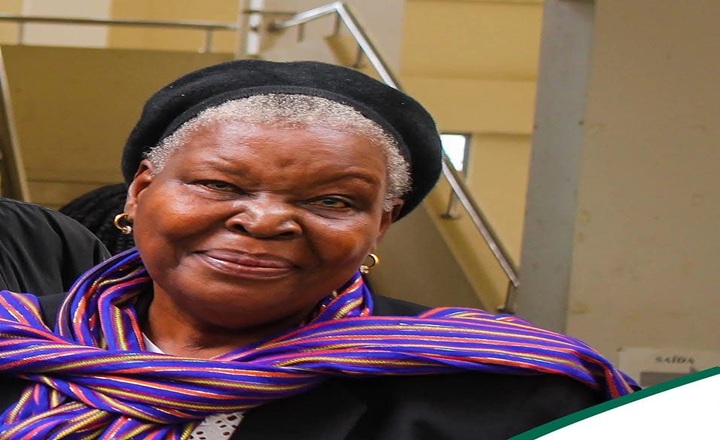
In Mozambique, Artimiza Magaia's recent trajectory seems to fit precisely within a political territory where the boundary between militancy, activism, public denunciation, and internal confrontation is becoming increasingly difficult to distinguish. Artimiza Magaia, a FRELIMO militant, pastor, social activist, and personality with a strong presence on social media, has adopted a critical voice regarding leaders, party structures, and certain political choices. And when a FRELIMO militant begins using social media to publicly confront leaders of her own organization, the question ceases to be simply who Artimiza Magaia is, but rather: what is happening within FRELIMO itself that is causing some of the most forceful criticisms of the party to emerge from within? To what extent does internal criticism truly constitute a rupture, and to what extent might it constitute a strategy for political repositioning? Is the issue of "AM8" a new voice of dissent emerging from within FRELIMO? Can someone remain deeply connected to a political organization while simultaneously building a public image of challenging that same organization? Will they become a future protagonist of an internal movement? Will they be an activist dissatisfied with certain party practices?
There are times when politics ceases to be merely a dispute between parties and transforms into a battle within the organizations themselves. The capacity of social media to alter the traditional relationship between activist and party cannot be ignored. The expression "new AM7" gains significance not necessarily as a factual comparison between people, but as an image to describe a figure emerging from within the political system to publicly confront some of its practices, discourses, and protagonists. The name Artimiza Magaia gained national prominence particularly during FRELIMO's internal process for selecting candidates for the 2024 legislative elections. Magaia publicly contested the election of Agostinho Vuma as a candidate for deputy for Gaza, accusing him of vote-buying. The denunciation had political consequences: Vuma's candidacy was eventually withdrawn, according to press reports, and subsequently the businessman and politician took legal action against Magaia, alleging defamation. Today, a video posted on Facebook can reach thousands of people before any party structure can even react. Previously, internal disputes were resolved through meetings, committees, conferences, and disciplinary bodies. Magaia seems to understand this new communication logic and uses it to bring certain issues into the public sphere.
In September 2026, for example, she publicly criticized the influence of figures linked to FRELIMO's central bodies in the struggle for political space in Nampula, advocating for greater recognition of local figures. Her 2026 speech on Nampula is particularly revealing of this transformation. By questioning the presence of figures from Maputo vying for political space in the province, Magaia raised a question that transcends her own person: who should politically represent a community, the individuals who live and work there or those who have closer ties to the central power structures? In a certain video, she criticized the current Secretary-General of FRELIMO, Chakil Aboobacar, pointing to his leadership as producing speeches that, in her view, do not correspond to concrete results. In the same statement, Magaia raised accusations about alleged relationships of influence and political favoritism in Nampula, involving members of the Talapa family. These allegations are positions attributed to Magaia herself and should not be treated as proven facts without independent evidence or a response from the individuals mentioned.
Internal dissent is not a matter of fact; it is part of the life of political parties. A member can disagree with the leadership, denounce irregularities, challenge procedures, and demand reforms without thereby abandoning the organization. In certain circumstances, internal criticism can represent precisely an attempt to contest the direction of the party from within. It is here that the expression "political disguise" should be understood as a provocation only to prove that the evolution of his political trajectory will demonstrate whether Magaia is building an independent platform for criticism, whether he intends to provoke changes within FRELIMO, whether he seeks greater political space within the organization itself, or whether his interventions result primarily from specific conflicts with certain leaders. Magaia has become a kind of megaphone for disputes that previously might have remained confined to party corridors. And this, in itself, already constitutes a political phenomenon worthy of analysis.
One episode that helps to understand Artimiza Magaia's growing public presence was her reaction to the controversy surrounding the acquisition of vehicles for the Constitutional Council. Faced with a process initially valued at approximately 49.5 million meticais, involving, among other vehicles, a Mercedes-Benz valued at approximately 27.8 million meticais and a Hyundai Palisade valued at 18 million, Magaia reacted publicly with strong emotion, questioning the priorities of public spending in a country where, according to her intervention, deficiencies persist in schools, hospitals, and access to medicines. The political dimension of her intervention gained even greater prominence when, on October 1st, the Functional Unit for the Supervision of Acquisitions (UFSA) of the Ministry of Finance suspended the procedures to allow for technical supervision of the process, alleging the existence of evidence of possible non-compliance with public procurement and state asset management regulations.
Another episode that reinforces Artimiza Magaia's image as a voice of public dissent was her stance on the alleged embezzlement of approximately 510 million meticais from the National Social Security Institute (INSS). Magaia publicly argued that the investigations should not be limited to the former director-general of the INSS, Joaquim Siúta, who is a defendant in the case, but should also reach the political figures who oversaw the institution during the period in which the investigated events occurred. In particular, she questioned the role of the then Minister of Labor and Social Security, Margarida Talapa, currently President of the Assembly of the Republic, asking how it would have been possible for hundreds of millions of meticais to be moved without the oversight and supervisory mechanisms detecting the problem. Magaia's position, on this point, coincides with a broader discussion about institutional responsibility: if the resources belong to the workers and pensioners who contribute to the system, the investigation must clarify not only who carried out the acts under investigation, but also whether there were failures of supervision, control, or oversight at the level of the structures responsible for oversight. It is important, however, to distinguish the need for an investigation from any premature conclusion about criminal responsibility: the process remains ongoing, and the presumption of innocence prevails until a final judicial decision.
Artimiza Magaia's criticisms go beyond partisan issues and delve into the realm of public policy management and the execution of large state projects. The project returned to the execution phase in September 2026, under the responsibility of the Ministry of Transport and Logistics, then headed by João Matlombe, with completion scheduled for 2028. In the controversial BRT dossier, Artimiza Magaia once again took a critical stance regarding the government's actions, directing his observations to the then Minister of Transport and Logistics, João Matlombe. The issue raised by Magaia is part of a debate that has accompanied the project for over a decade: successively announced, reformulated, and postponed, the BRT finally reached the execution phase in September 2026, with an associated investment of hundreds of millions of dollars and a promise to transform mobility in the Maputo Metropolitan Area. Magaia's criticism, in this context, can be interpreted as a questioning of the relationship between government promises, budgetary priorities, and concrete results for the citizen. The project's official history itself demonstrates that the BRT solution went through different phases and models before its current launch, while the Government maintains that the new version should transport around 125,000 passengers per day and reduce travel times and congestion. The journalistic question, therefore, is not only whether Magaia is criticizing the minister, but to understand whether his intervention represents yet another expression of his growing scrutiny of governance or whether it is beginning to shape a broader political strategy of public assertion.
Magaia did not emerge in the public sphere as an external adversary of FRELIMO. On the contrary, recent sources continue to identify her as a militant or sympathizer of the party. Perhaps the true phenomenon lies not only in Artimiza Magaia. Perhaps it lies in the Mozambican political moment itself, in which the boundaries between militancy, activism, internal opposition, digital influence, and the struggle for power are becoming progressively more fluid. African political history knows several cases of militants who transformed themselves into internal critics and, subsequently, into protagonists of new political currents. But it also knows cases of figures who used criticism of the party apparatus as a mechanism for individual affirmation without breaking with the original structure. Therefore, placing Artimiza Magaia in this second category would be premature. What can already be stated is that her public communication has changed the way certain internal conflicts within FRELIMO reach the average citizen.
2025/12/3
Copyright Jornal Preto e Branco All rights reserved . 2025
Copyright Jornal Preto e Branco Todos Direitos Resevados . 2025
Website Feito Por Déleo Cambula