
Abertura do ano lectivo 2026: Governo apela contribuições monetárias para construção de novas escolas
Paulo Vilanculo"
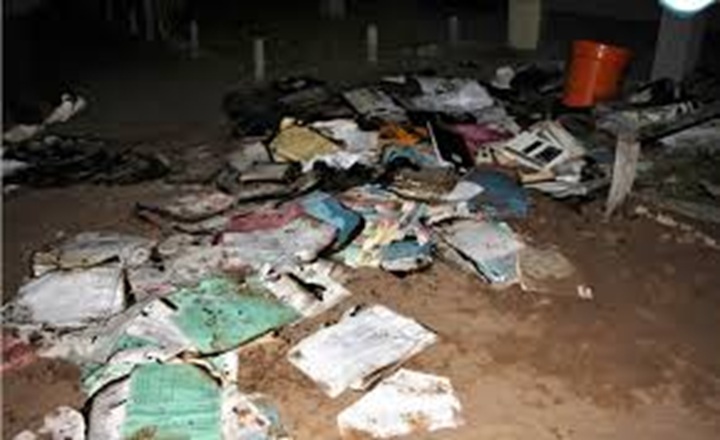
The city of Beira hosted the main opening ceremony for the 2026 school year, in a context still marked by the effects of natural disasters that continue to affect the national education system, especially in Sofala province. The Government acknowledges that one of its biggest challenges remains the lack of adequate school infrastructure. Data released within the framework of humanitarian aid indicates that, following Cyclone Idai, more than 3,500 classrooms were destroyed, severely affecting between 2,700 and 2,723 classrooms and more than 305,000 children, with the greatest impact in Sofala. The situation has recently worsened with new severe weather. In his speech, the President of the Republic, Daniel Chapo, stressed that "This start of the school year occurs in a context where, in recent weeks, Mozambique has once again been ravaged by floods and inundations and Cyclone Gezani, causing loss of life and destruction of infrastructure." Despite the adverse scenario, the Head of State appealed for collective resilience: “Cyclones may knock down walls, but they cannot knock down the dreams of the Mozambican people. Floods may interrupt paths, even knock down bridges, roads, classrooms, but they cannot interrupt the hope of a determined people, like the Mozambican people.”
During the ceremony, the handover of the Manga Secondary School, fully rehabilitated with support from the United Nations Development Programme (UNDP), was recalled, in a process that took five years to complete. “We had the honor and the duty to hand over the Manga Secondary School, fully rehabilitated with the help of the UNDP. No one—as a country, as a government, as a state, as a family, as a person—grows and walks alone. We all need someone else to grow together. Therefore, we want to express our deep gratitude to the development partners present here, UNDP, United Nations, for the work they did at the Manga Secondary School,” declared Daniel Chapo. Meanwhile, goals previously established by the Executive continue to be evoked in the public debate. The Government's Five-Year Program (PQG) 2020-2024 foresaw the construction of 3,335 classrooms for Primary Education by 2024. According to data presented to the Assembly of the Republic by the then Minister of the sector, by the first quarter of 2024, 3,143 classrooms had been completed, corresponding to 94% of the target, with the expectation of completing more than 400 additional classrooms by the end of the cycle, benefiting more than 40,000 students. Even so, the critical perception persists that the construction of new schools and fully adequate infrastructure continues to fall short of the needs.
In this context, the intervention of the Tzu Chi Charity Foundation has been highlighted as decisive in the reconstruction of the school infrastructure in Sofala. The organization delivered the Esturro Basic School in Beira, considered the largest primary school in the country, inaugurated during the main ceremony. On the occasion, the President stated: “…the new Esturro Basic School, built from scratch, thanks to funding from one of our outstanding partners in the education sector, the Tzu Chi Charity Foundation. Therefore, we wanted to take this opportunity to say, in the presence of the Vice-President of the Tzu Chi Charity Foundation, thank you very much for your presence and for this school! We reaffirm our solidarity and the unwavering commitment of the State and the Government of the Republic of Mozambique to support, rebuild and strengthen our collective resilience as a People.” The Esturro Basic School has 46 classrooms, a computer room, a library, four teachers' rooms, an administrative block and separate restrooms. The foundation plans to build 23 schools in Mozambique, of which 17 are already completed, benefiting communities affected by Cyclone Idai. Among those already inaugurated are the Nhatsato Primary School in Nhamatanda and the 25 de Setembro Basic School in Dondo.
On January 31, 2024, the same organization handed over the Mafambisse Secondary School to the Government, considered the largest purpose-built secondary school in the country. Located in an area of approximately 17,000 square meters, the infrastructure is resilient to weather events and has the capacity to accommodate approximately 10,000 students in three shifts. The three-story building includes 58 classrooms, 18 sanitary blocks, five teachers' rooms, three laboratories equipped for Physics, Chemistry and Biology, three computer rooms, an infirmary and a multi-purpose sports field. The works cost 13 million US dollars. Under the motto “to love and care for others (…), to give back a space for children to grow up with their heads held high and their feet firmly planted in the future”, the foundation, an international NGO from Taiwan with special consultative status at the United Nations and representations in more than 60 countries, operates in Mozambique under a memorandum signed with the Government since 2019, within the framework of the Post-Cyclone Idai Recovery Plan. “We believe that education is the hope for children and that is why we decided to build a total of 23 schools in Mozambique, as a way to ensure that children have a good environment and a quality education,” declared Pi Yu Lin, after inaugurating the Health Center and the Vocational Training Center in Metuchira.
Daniel Chapo reinforced the strategic role of education: “…we declare education as a central pillar of national transformation and as the most powerful instrument of economic freedom for Mozambican citizens. Let us make the School a Base for the People to Take Power. Wherever there is a Mozambican child, there must also be an opportunity to learn, a bridge of hope, even in the most adverse contexts. We reaffirm, before all of Mozambique, that education continues to be the first major investment of a Nation that chooses to build its future with intelligence, courage and vision.” At one point, President Daniel Chapo said: “The Tzu Chi Foundation has about 10 million members worldwide and each one receives the equivalent of 2,100.00 Mts (…). We also want to do our part: “Each child receives only 20.00 Mts, if each family receives 50.00 Mts it is not a small amount of money… for 1, 2, 3 years another school can be built… Investing in education is, above all, investing in people.” We quote.
Recognizing that free basic education is a fundamental right enshrined in the Constitution of the Republic of Mozambique, President Daniel Chapo's appeal for direct monetary contributions from children and families raises a legitimate debate about the role of the State in guaranteeing this right. The Head of State, by adopting this perspective, even symbolically, seems to transfer part of the structural responsibility for financing public education to citizens who, in many cases, face severe economic limitations. Community participation can complement, but not replace, the structural duty of transparent, planned, and sustainable public funding.
If investing in education is, first and foremost, investing in people, then it is primarily the State's responsibility to ensure that this investment is not conditioned by the contributory capacity of the most vulnerable. In a country marked by profound social inequalities and high poverty rates, solidarity mobilization can be a meritorious civic gesture, but it should not replace the State's primary obligation to plan, budget, and guarantee, in a sustainable and equitable manner, universal access to decent school infrastructure. The risk lies in normalizing contributions as a recurring solution to structural failures, weakening the principle that public basic education is not a concession, but an inalienable right. The real challenge lies in the State's role in ensuring that access to school is never perceived as a result of charity or popular collection, but rather as a concrete expression of a right that the State has an undeniable obligation to protect and materialize.
2025/12/3
Copyright Jornal Preto e Branco All rights reserved . 2025
Copyright Jornal Preto e Branco Todos Direitos Resevados . 2025
Website Feito Por Déleo Cambula