
Is Mankind the Environment's Greatest Enemy? A Look at the Environmental Situation in Maputo
Nunes Daniel Manhonha"
Sustainability has become a recurring word. It appears in school curricula, political leaders' speeches, and international reports. It's a concept that generates consensus and seems to point to the future we all desire: a cleaner, more balanced, and fairer future. However, when theory meets practice, the reality of Maputo's streets presents a stark contrast. The city reveals a landscape marked by strewn trash, rivers turned into sewers, plastic clogging drainage ditches, and toxic smoke from improvised fires. The portrait is harsh but honest: the greatest enemy of the environment in Maputo is not the lack of laws or the absence of environmental projects, but the citizens themselves.
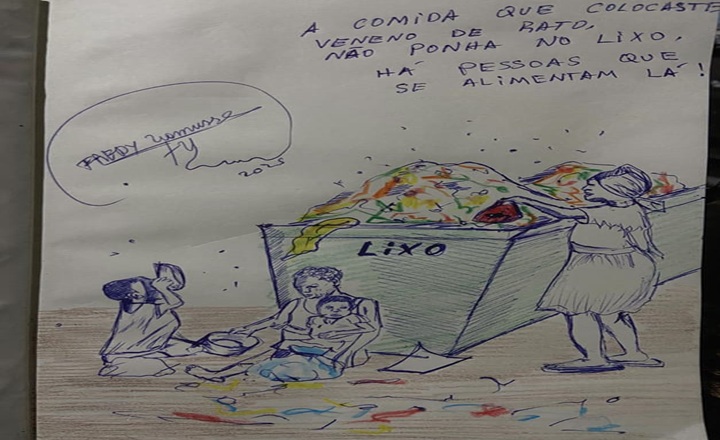
This realization may be disturbing, but it's necessary. Many citizens continue to act as if garbage were the sole responsibility of the municipality, sanitation services, or NGOs. It's common to see people throwing bottles, bags, and food scraps on the street without the slightest embarrassment, even when a dumpster is just a few meters away. The excuse is always the same: "the municipality doesn't do its job." But to what extent is it reasonable to expect the municipality to monitor and educate each individual? The problem is less institutional and more behavioral.
The impact of irresponsibility isn't limited to physical waste. Noise pollution has become another serious and little-discussed problem. Churches blasting megaphones, bars operating late into the night, and public transport blasting music have transformed Maputo into a city where rest is a rare privilege. Sustainability, often reduced to ideas of recycling or urban afforestation, is, in fact, also a matter of respect for collective space, social balance, and community awareness.
The consequences of this daily negligence are profound. The trash that clogs our ditches today is the same that, tomorrow, causes devastating floods during the rainy season. The water we waste today is the same water that will be missing from the taps of future generations. Smoke from domestic fires, seemingly harmless, is a silent poison that increases cases of respiratory diseases and overburdens the health system. To pretend we don't see these connections is to live under a dangerous illusion.
Maputo's future depends less on laws on paper and more on changes in daily attitudes. There's no point in waiting solely for government policies or international projects while each citizen continues to act as if public spaces were a private extension of their backyard. The city is a reflection of its inhabitants. If what we see today is neglect and pollution, it's because these attitudes have become ingrained in our way of life.
It's time for us to take responsibility. Sustainability isn't a slogan for conferences or a fad for political speeches; it's a practice that begins with every daily gesture. The enemy is in the mirror, and only when we face this truth can we transform Maputo into a city worthy of the future we so often proclaim.
2025/12/3
Copyright Jornal Preto e Branco All rights reserved . 2025
Copyright Jornal Preto e Branco Todos Direitos Resevados . 2025
Website Feito Por Déleo Cambula