
Where is the government of this country?
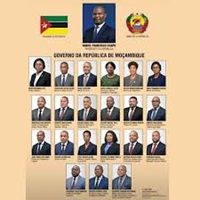
Jornal Preto e Branco"
A year after the current government took office, it becomes inevitable to raise our voices and, without hesitation, issue a yellow card to the Government of Mozambique. Not as a gesture of gratuitous hostility, but as a civic duty for those who believe in a country that has already paid too high a price for the stubborn repetition of the same structural errors. Mozambicans witness, day after day, a government that seems detached from real life, preoccupied with itself, absorbed in its internal priorities, and incapable of seriously assuming the responsibilities that fall to it.
The country's fundamental problems have been repeatedly identified over the years by national and international reports, civil society organizations, and, above all, by the people who experience them firsthand. Yet, they persist and worsen. The social, economic, and institutional erosion that Mozambique faces is not the result of unexpected catastrophes, but rather a chronic inability to govern with vision, courage, and political will. The country seems trapped in a cycle where popular expectations are renewed, and the government insists on frustrating them.
The government took office in a context of severe crisis, but instead of addressing the structural obstacles hindering development, it preferred to patch up cracks and mask problems that require profound interventions. The lives of citizens have not improved. The cost of living continues to devour wages, and inflation brutally affects the poorest families, while the official narrative attempts to soften the reality with promises and justifications. The lack of solid, stable economic policies oriented towards collective well-being is one of the most visible aspects of this tired and unambitious transformative governance.
In the social sector, the picture is even more bleak. Education remains trapped in a system that reproduces inequalities, fails to motivate teachers, does not guarantee minimum learning conditions, and exposes children and young people to an uncertain future. Schools are deteriorating, teaching materials are scarce, curricula have little connection to national realities, and results continue to reflect this neglect. Higher education, in turn, has become an elitist space, distant from the majority and profoundly disconnected from the needs of the market and the real economy.
Public health is no exception to the same pattern of neglect. Hospitals lack medication, professionals are poorly paid, equipment is broken, there are long queues, and patients, due to a lack of adequate care, end up losing their lives in situations that could easily have been avoided. This is not a lack of diagnosis. It is a lack of political will to organize, professionalize, and make efficient a sector that constitutes the backbone of national dignity. The country has become accustomed to hearing explanations when what is lacking are solutions.
In the field of governance and public administration, the country is sinking into a labyrinth of bureaucracy, corruption, nepotism, and institutional capture. The institutions that should guarantee balance and transparency are riddled with practices that favor private interests and groups entrenched in power, to the detriment of the common good. Public trust is deeply eroded, and no development is possible when the State does not inspire respect, predictability, and justice. It is unacceptable that a year after taking office, the Government continues to navigate between speeches and promises, while reality deteriorates. Insecurity has become a permanent shadow over Mozambique. In the province of Cabo Delgado, the insurgency has dragged on for years, and despite international commitment and the sacrifices of the Defense and Security Forces, the Government continues to fail in what should be its primary obligation: protecting human lives and restoring normalcy. The prolonged violence is not only a military failure, but above all a political one. The absence of effective development, reintegration, and prevention strategies continues to fuel the cycle of violence and displacement. Responsible governance cannot simply expect foreign presence to solve what is, first and foremost, a national problem.
In the central and southern parts of the country, urban crime is on the rise, kidnappings continue to terrorize business owners and families, and corruption in the justice sector undermines any hope of accountability. Impunity has become the norm, and the government, instead of confronting these criminal networks head-on, prefers occasional speeches that have little or no impact on the reality experienced by the people. The security forces remain politicized, poorly equipped, and often used as instruments of intimidation rather than protection. Infrastructure continues to reflect decades of mismanagement: potholed roads, neighborhoods without sanitation, unstable power, irregular water supply, and basic services that rarely meet the needs of the population. Climate change intensifies these challenges, yet the country continues without a robust, up-to-date, and rigorously executed plan. Each rainy season brings destruction and mourning, while the government is limited to improvised responses that do not prevent the suffering from recurring. Sustainable development has become a slogan when it should be a state policy.
From an economic standpoint, the country does not flourish because it remains trapped in an extractive vision that marginalizes farmers, fishermen, small industries, and local entrepreneurs. The government concentrates its efforts on large capital sectors, ignoring the fact that poverty will only be combated with the real development of the domestic economy. Credit is inaccessible, the tax burden is suffocating for those who produce, and corruption makes it impossible to compete with those who operate protected by political influence. There is no inclusive growth in a country where only a minority reaps the fruits of national labor.
The government needs to listen to the real country. It needs to listen to the citizens, not just its circles of influence. It needs to abandon the political arrogance that treats criticism as attacks and opposition as the enemy. To govern is to serve, not to protect privileges. And today, unfortunately, the signs point to a government more concerned with maintaining its power structure than with transforming the country it claims to represent.
This yellow card is a clear and democratic warning: Mozambique needs a different stance, a different seriousness, a different commitment. It is unacceptable to continue justifying failures with legacies of the past, external crises, or unavoidable obstacles. The country needs firm, competent, ethical leadership deeply committed to the public interest. It needs courage to confront powerful groups, dismantle schemes, reorganize institutions, and rebuild public trust.
Mozambicans deserve more. They deserve a state that functions, that protects, that respects, and that delivers results. They deserve to see their lives improve, not just hear recycled promises. They deserve transparency, justice, inclusive growth, dignity, and real hope. If the government continues to ignore these signs, the yellow will inevitably turn red, and popular judgment will come sooner or later, whether at the ballot box, in history, or in the collective conscience of a nation that no longer tolerates empty promises.
2025/12/3
Copyright Jornal Preto e Branco All rights reserved . 2025
Copyright Jornal Preto e Branco Todos Direitos Resevados . 2025
Website Feito Por Déleo Cambula