
Ballad for My Daughters: The Song We Cannot Forget
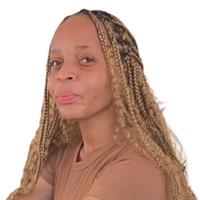
Edna Tuaria Aníbal"
José Mucavele is more than a musician. He is one of the guardians of the Mozambican soul, an artist whose voice has spanned generations, always carrying the tenderness of a father and the conscience of a man rooted in his people. With a discreet but profoundly impactful career, he showed that it's not necessary to record dozens of albums to make history. A single musical gesture, his "Balada para Minhas Filhas," was enough to make it eternal. This song, written in the national language, transcended borders and was even adopted by UNICEF as a symbolic anthem of peace and hope. But its true greatness lies in the way it forces us to look within, to reflect on who we are and where we are going. The Ballad for My Daughters is, at first glance, a song of paternal love. But when listened to carefully, it's also a life manual. Mucavele advises his daughters to care for their lives as if cultivating flowers, to protect themselves from the dangers that lurk in the world, to walk with dignity and truth. It's a song that seems simple, but holds layers of depth: it speaks of freedom, but not the empty freedom that's shouted in speeches; it speaks of true freedom, the kind that arises from being rooted in identity, family, and nature. Each verse is an embrace, but also a call to responsibility. And this is where the song meets our time. I look at Mozambican youth today and can't help but sense a certain disconnect. Many chase imported dreams, learn foreign languages, but no longer know how to construct sentences in their native tongue. They grow up with access to new technologies, but without knowing the history of their grandparents. The Ballad for My Daughters, then, sounds like a warning: if we don't cultivate our own flowers, if we don't care for our roots, we will live on borrowed words, cultures, and identities that are not ours. It's not about rejecting what comes from outside. It's about learning not to lose what's ours. Other peoples proudly proclaim their cultures, while we often remain silent, as if ashamed of what we inherited. Mucavele's song shows that true pride is born in the home, in family, in language, in the small gestures that reveal who we are. It's a song that simultaneously consoles and disturbs: consoles because it reminds us that we can still pass on values of love and respect to future generations; disturbs because it shows us the real risk of losing this thread of continuity. It's no coincidence that other Mozambican artists and writers followed the same path. António Marcos (Maengane), with his marrabenta, also sang about the simple life, about the need to maintain dignity and morality in everyday life. Likewise, Mia Couto wrote countless times that a nation that loses its language loses its soul. The Balada para Minhas Filhas resonates with these voices: they all remind us that we cannot let our cultural heritage die through neglect or indifference. Today's youth need this music not as a museum piece, but as a guide for life. Because "Ballad for My Daughters" is not just a father's song for his daughters. It is a people's song for their descendants. It is a promise that, even in a world full of dangers and distractions, it is still possible to live with truth, love, and conscience. And listening to it, I feel proud to be African. A pride born not from comparison with others, but from the certainty that our freedom of expression will only be real when it is spoken in our own language. If we let it die, we will take the history of our people with us. But if we preserve it, we will leave those who come after us an invaluable treasure: the living memory of who we are. The Ballad for My Daughters is more than a song. It's a plea. It's the silence that cries out for us. It's up to us to decide whether we want to remain silent or whether we have the courage to sing with it, so that the flowers in our garden never stop blooming.2025/12/3
Copyright Jornal Preto e Branco All rights reserved . 2025
Copyright Jornal Preto e Branco Todos Direitos Resevados . 2025
Website Feito Por Déleo Cambula