
Security and Social Transformation: A Reflection on the Impacts of Military Presence on Communities Affected by Terrorism
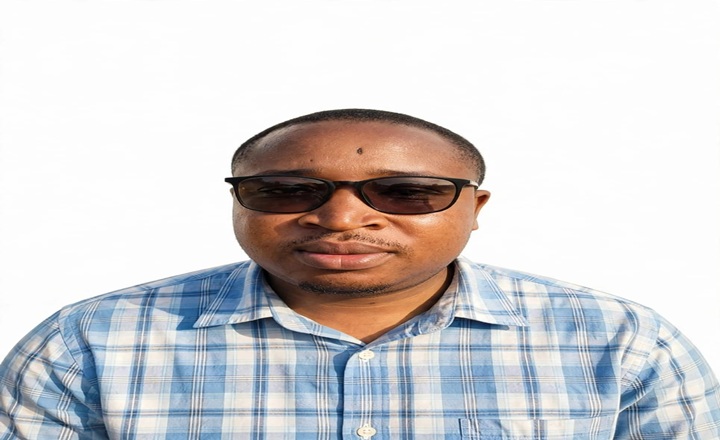
Dário Júlio Albino Maunze"
The military presence in communities affected by terrorism goes beyond the dimension of security and protection of the population. In Mozambique, armed violence has disrupted the lives of many families, forcing them to adapt their routines and activities. In this context, the presence of the Defense and Security Forces can contribute to the restoration of tranquility and the gradual resumption of community life.
However, the coexistence between military personnel and civilians also produces effects on social relations, economic activities, and cultural habits. Between opportunities for closer relationships and challenges in their interactions, it is important to reflect on the changes that accompany this presence and on the marks that may remain on communities after the deployment of the forces.
In conversations with some residents of a community affected by terrorism, which I cannot mention, obviously for security reasons, the military presence is associated with a greater sense of protection and the possibility of resuming activities previously hampered by insecurity. Fishing, shellfish harvesting, salt production—specifically, domestic salt—and agriculture depend, to a large extent, on the ability to move around and work with relative peace of mind. These residents also mention that children attend school more calmly and that adults are able to carry out their tasks with less fear.
These insights show that security has concrete effects on daily life, because it allows families to earn a living, merchants to maintain their businesses, and communities to gradually recover their routines.
The military presence can also boost the local economy. Increased demand for goods and services can benefit small traders and mobile wallet agents, especially in areas without bank branches. However, the benefits are not equal for everyone, and increased demand can contribute to higher prices. Therefore, economic opportunities must be analyzed alongside the difficulties that may affect part of the population.
Daily contact between military personnel and civilians, through conversations, community activities, business dealings, and mutual assistance, can foster mutual understanding and build trust. In some communities where football plays a prominent role, friendly matches between military and local teams, or attending community games and international championships, can also bring people closer together.
And, as often happens, a single controversial refereeing decision is enough to transform calm spectators into veritable refereeing experts! Beyond the humor, these moments show that leisure activities, when part of local customs, can facilitate coexistence, although they are not common to all communities, of course, also depending on the operational context of the deployed force.
Living together also brings together people with different eating habits, languages, and cultural backgrounds. A soldier from the southern part of the country, accustomed to consuming xima with cancana, for example, might discover new flavors by trying xima or even karakata.with moringa or nheede stewFried, or even green or dried fruits, like mango added to any stew, papaya in cassava leaf curry, but I was going to say matapa.However, I might introduce some confusion in the interpretation. What initially seems strange can become familiar and even desirable. It wouldn't be surprising if someone who tasted certain delicacies with some skepticism ended up, days later, asking when they would be served again. After all, integration can also begin in the stomach!
Language is also an important factor in this debate. On the one hand, some soldiers seek to learn local expressions, such as Salaama, Koxeleliwa, mwanaka or mpattane, expressions for greeting, requesting help such as nkimele maassi, or even expressions to win over women such as kinusiveliwa ninyo-wo okala mwaraka. On the other hand, expressions such as madala or edjou may also enter the conversations of some residents. This exchange shows that cultural transformation does not occur in only one direction. Military and civilians can incorporate elements from each other without necessarily abandoning their traditional habits.
The close relationship between military personnel and civilians can also extend to romantic relationships. In some conversations, residents expressed concerns about the offering of money and gifts to women in exchange for sex, or to actually win over a partner, which, in a way, can limit the ability of other local young men to find women to marry. Expectations are created, and there is a possibility of children being born when military personnel are temporarily stationed in a particular region.
These concerns do not allow for generalizations of behavior, as there are relationships built on respect and responsibility. However, when commitments are not upheld, the consequences can fall primarily on women and children resulting from marital relationships with military personnel.
Military mobility makes this issue particularly relevant. A transfer from one position to another, or a rotation of forces, should not function as a strategic escape from parental responsibilities for the mother and her children. The end of a mission does not eliminate duties towards the children, regardless of geographical distance.
The challenge is not to prevent relations between the military and civilians, but to promote respect, awareness of consequences, and individual responsibility, so that coexistence does not create problems that are borne exclusively by the families of the communities in question.
The military presence in communities affected by terrorism should be analyzed not only for its role in security, but also for the economic opportunities, cultural exchanges, and social challenges that accompany coexistence.
Between a conversation in the local language, a shared meal, or, where it happens, a game of football, small experiences can leave important marks. But an essential question remains: what social marks will remain in the communities when the military is no longer present? And, more importantly, how can we ensure that the changes experienced in the present translate into lasting benefits for the future?
These questions invite us to look at the military presence not only for its role in the current context of insecurity, but also for the transformations that may occur and the challenges it poses to society.
Therefore, the true reach of a military presence may not only be revealed while the forces remain in the communities, but also in what the communities are able to preserve, develop, and transform after they cease combat, or the values that soldiers carry back to their units and their families.
2025/12/3
Copyright Jornal Preto e Branco All rights reserved . 2025
Copyright Jornal Preto e Branco Todos Direitos Resevados . 2025
Website Feito Por Déleo Cambula