
Violence in Politics
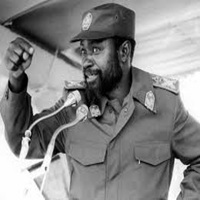
Afonso Almeida Brandão"
History is filled with blood-stained episodes concerning Presidents of the Republic, Heads of Government, Journalists, Politicians, Police Officers, and other Social Figures assassinated around the world. From South American dictatorships to African political and tribal turmoil, the last century and a half has seen dozens of Presidents of the Republic (and others!) fall at the hands of rebels, opponents, death squads, as has frequently happened in Mozambique, and also by the military or extremists. In the most secular countries, despite regime changes, there was generally a period of relative calm, with assassination attempts mostly carried out by individuals suffering from mental health issues. In Europe during the second half of the 18th century and throughout the 20th century—if memory and biographical notes serve us correctly—there were only two: Paul Doumer, the fourteenth French President, assassinated in 1932 by a Russian immigrant, and President-King Sidónio Pais, shot dead by José Júlio da Costa, a former soldier, in 1918 at Rossio station in Lisbon, after having escaped another assassination attempt days earlier. The United States is far more prolific. Four presidents assassinated, from Lincoln in 1881 to JFK in 1963, and eight attempted assassinations, two of which were against Gerald Ford in 1975. Leaving aside those who are not criminally responsible, most of the homicides, or attempted homicides, are politically motivated. And, with one or two very specific exceptions, all are perpetrated by individuals linked to left-wing movements or parties. We do not intend, in any way, to suggest that voters or sympathizers of the various left-wing parties are more violent than others; there is surely some valid sociological explanation for this. Because, given their sheer number, it's becoming difficult to believe that these are mere coincidences… We also have the case of the assassination of President Samora Machel (in 1986, when the plane he was traveling in, carrying other FRELIMO members, crashed in the Libombo Mountains, already within South African territory, on a flight departing from Mozambique). Two other examples: Manuel Enrique Araújo (El Salvador, 1913) ended up succumbing to several stab wounds inflicted by three farmers while attending a concert. Also, Nobel Peace Prize laureate Anwar Al Sadat (Egypt, 1981) did not survive an attack by the Egyptian Islamic Jihad, which opposed the Peace Accords with Israel. Since neither genetics nor political pre-determinism is at play, what reason, or reasons, justify the fact that most assassination attempts against political leaders are carried out by people associated with left-wing regimes? The genesis of the problem lies, above all, in a discursive issue, where the main focus is on the "individual self," the subject of a panoply of rights that Society is obliged to guarantee. This rational dystopia has social consequences, leading them to feel, on the one hand, entitled to a set of innate rights for which they do not have to fight or deserve, and, on the other hand, heralds of good and decency that they must impose on society even if it, democratically and legitimately, makes other choices. It is, therefore, difficult to understand and, above all, to accept, that commentators, trashy columnists, and "opinion makers" with public and ethical responsibilities consider the attempted assassination of Trump (or, for that matter, Bolsonaro, years before) to be failed attacks and missed opportunities. No lives are worth more than others, and all are inviolable. Not just those of the people you like… The murders ordered by Hitler and Mussolini are just as condemnable as those ordered by Stalin or Che Guevara. There is no poetry in these deaths, if there is any at all… But, more seriously, these acts generally have the opposite effect. In the rational, thoughtful, and critical society that still remains, disapproval and condemnation are carried out by plebiscite, in favor of the victim. To illustrate this, one must remember the effect of a sudden explosion in Marinha Grande in 1986, handing Mário Soares a presidency that, days before, was nothing more than a mirage… With the concepts of family, respect, and tolerance so distorted, they believe that their truths, their opinions, their visions are always more beneficial, more useful, and more assertive than those that oppose them, feeling entitled (there it is!) to impose them, by any means, on others. Only in this way can one understand the plethora of (mostly violent) demonstrations regarding issues that do not directly concern them. What legitimizes Mozambicans (for example), Portuguese, Spaniards, French, and Americans to close streets, burn tires, loot shops and cars, and revolt against the authorities regarding election results in third countries? Do we, Mozambicans, know better than Brazilians that Bolsonaro did not deserve to be President of Brazil? Or do the French, better than Americans, know that Trump should not have been elected? Or do the French, better than Italians, know that Meloni was not suitable for Italy? The truth is, with the exception of Foreign Policy—and, my friends, this applies to any country in the world, especially those that harbor terrorists or possess weapons like Mozambique and others—doesn't concern us at all, and even less so if we fight against our own people, as is the case with foreign troops fighting in Cabo Delgado for almost five years. If you have such a strong desire to change regimes, emigrate, register to vote in those countries, run for elections, win them, and then you can change the regimes as you please. Now, don't make us spend hours in the car, or locked in our homes in fear, with roads blocked, businesses closed because they don't like A or B for not having won elections that were far from free (but rather rigged!), like the elections that took place in our country, with Daniel Chapo being falsely elected among us... Because, as far as we're concerned, that was literally a stray bullet… Does anyone still doubt it?!2025/12/3
Copyright Jornal Preto e Branco All rights reserved . 2025
Copyright Jornal Preto e Branco Todos Direitos Resevados . 2025
Website Feito Por Déleo Cambula