
When ECOWAS becomes part of the problem
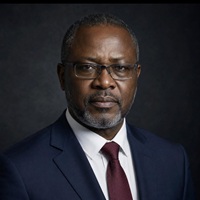
Adriano S. Kansala"
The end of the ECOWAS and Senegal monopoly on mediation.anda sine qua non condition for a credible and lasting solution.
Background note: This opinion piece was inspired by the news article “Civil society takes the conclusions of consultations with the African Union to international diplomacy,” relating to the initiative of Guinean civil society organizations to share the results of their consultations on the political and institutional crisis in Guinea-Bissau with international diplomatic representatives.
Civil society points the way. Diplomacy must know how to listen.
There are moments in the life of nations when the most important political initiative does not come from governments, parties, or international organizations, but from society itself.
The recent initiative by Guinean civil society organizations, which brought the conclusions of their consultations with the African Union to international diplomacy, deserves recognition, solidarity and, above all, concrete political consequences.
In seeking international interlocutors to present their concerns and proposals, these organizations recall a frequently forgotten truth: Guinea-Bissau does not belong to its rulers, its military, its neighbors, or regional organizations. It belongs to its people.
It is particularly important to value the openness shown by the diplomatic representatives of Finland, Japan, and Switzerland, mentioned in the context of these contacts. The willingness to listen to civil society constitutes a significant contribution to a diplomacy that is not limited to relations between governments, but recognizes citizens as legitimate protagonists in national political life.
This openness deserves applause. But listening is only the first step. The true value of diplomacy is also measured by the ability to transform legitimate concerns into concrete, coordinated, and verifiable political initiatives.
Guinean civil society does not need more formal displays of sympathy. It needs partners willing to support political freedom, the protection of fundamental rights, electoral truth, and the effective restoration of constitutional order.
When the mediator comes to be perceived as part of the problem.
It is necessary to acknowledge a political reality that successive diplomatic declarations have failed to change: ECOWAS faces a profound crisis of credibility among significant sectors of Guinean society.
This is not about denying the historical importance of the regional organization, nor about devaluing the principles of integration and solidarity among the peoples of West Africa.
This means recognizing that an organization tasked with facilitating the resolution of a crisis cannot ignore the perception of bias that undermines the trust of the parties involved and the public.
Among many Guineans, there is a conviction that ECOWAS has ceased to act as a sufficiently independent mediator and has, at certain times, contributed to the preservation of political balances that should be subject to scrutiny.
This perception, regardless of the organization's stated intentions, constitutes a real political problem.
Mediation requires more than an institutional mandate. It requires trust.
And when trust disappears, insisting indefinitely on the same model is not necessarily diplomatic perseverance. It can become political obstinacy.
ECOWAS must therefore accept an independent evaluation of the results of its intervention in Guinea-Bissau and recognize that the formal legitimacy of a mediation does not dispense with its political credibility.
Senegal cannot continue to monopolize the Guinean solution.
The relationship between Guinea-Bissau and Senegal is too important to be reduced to the political choices of their respective leaders.
They are brotherly peoples, united by geography, history, families, trade, and human ties that no political circumstance should compromise.
Precisely for this reason, it is necessary to distinguish between friendship among peoples and the responsibilities of their rulers.
The close political ties between Macky Sall, Bassirou Diomaye Faye, Cheikh Niang, and Umaro Sissoco Embaló, at different times and under different circumstances, raise legitimate questions about the continuity of Senegalese policies regarding the Guinean crisis.
This assessment does not mean that everyone played the same role, shared identical intentions, or participated in a concerted strategy. Rather, it means that regional policy should be examined by its results, the relationships of influence it fosters, and its consequences for Guinean sovereignty.
The continuation of a mediation predominantly led by Senegal, in a context of deeply fragile trust, can hardly produce the inclusive and lasting solution that Guinea-Bissau needs.
The issue is not about being hostile to Senegal.
It's about preventing the resolution of a national crisis from becoming politically dependent on a single neighbor.
Senegal should remain a partner of Guinea-Bissau. However, it should not hold a privileged and practically exclusive position in defining its political future.
The shadow of Françafrique and the question of national resources.
It would be equally naive to analyze the political instability of Guinea-Bissau while ignoring the geopolitical context of West Africa.
The region is undergoing a profound transformation in the relationships between sovereignty, security, natural resources, and international influence.
In numerous African countries, criticism persists regarding the mechanisms of political and economic dependence associated with what has historically been known as Françafrique.
Guinea-Bissau is not isolated from these dynamics.
Its geographical location, its natural resources, its economic potential, and its regional integration give it a strategic importance that far exceeds the size of its territory.
It is therefore legitimate to question the political and economic interests that influence the positions of external partners.
The relationship between Senegalese leaders, French President Emmanuel Macron, and the successive protagonists of Guinean politics must be analyzed with transparency and a critical spirit.
But there is an indispensable distinction: the existence of close diplomatic relations or economic interests does not, in itself, constitute proof of a concerted strategy for appropriating Guinean resources.
What is required is transparency, public scrutiny, and guarantees that no political solution will be subordinated to external interests incompatible with popular sovereignty.
The resources of Guinea-Bissau belong to the Guinean people. They are not negotiable assets of foreign leaders, intermediaries, or powers.
Portugal: distinguishing official policy from democratic solidarity.
It is also important to avoid unfair generalizations about Portugal.
Over the years, a significant number of Portuguese parliamentarians, from different political backgrounds, have demonstrated attention, solidarity, and commitment to democracy, human rights, and institutional stability in Guinea-Bissau.
This contribution deserves recognition and gratitude.
The relations between our peoples are too profound to be confused with any ambiguities in certain governmental or diplomatic positions.
The role of these legislators demonstrates that there is a democratic consciousness in Portugal that does not indifferently accept the normalization of constitutional ruptures or the transformation of military force into a source of political legitimacy.
Portugal can and should play a constructive role, particularly within the framework of the CPLP, by supporting a solution that respects the self-determination of the Guinean people.
Democratic solidarity is not a form of guardianship. It is the recognition that freedom, constitutional legality, and fundamental rights should not be sacrificed in the name of merely apparent stability.
The CPLP is not ECOWAS — and cannot behave as its extension.
The Community of Portuguese-Speaking Countries has its own identity, political legitimacy, and responsibilities.
The CPLP was not created to automatically replicate the positions of other regional organizations.
Much less to passively watch the institutional deterioration of one of its founding states.
Under the leadership of President José Ramos-Horta, the Community has an important opportunity to assert a more active, coherent and results-oriented diplomacy.
This requires going beyond the diplomacy of mere statements.
The CPLP should contribute to an international political initiative that places Guineans at the center of the process, with defined objectives, a verifiable timetable, and monitoring mechanisms.
Cooperation with ECOWAS remains desirable. But cooperation does not mean subordination.
The CPLP is not ECOWAS. And Guinea-Bissau cannot remain hostage to the limitations of a mediation that has failed to restore trust or constitutional normality.
The end of the monopoly on mediation is a sine qua non condition.
The time has come to acknowledge that the current mediation model needs a thorough overhaul.
In my view, ending the political monopoly of ECOWAS and Senegal over the mediation process is a sine qua non for building a credible and lasting solution.
I am not proposing the exclusion of Senegal from ECOWAS, nor the marginalization of Senegal.
I propose an end to a situation in which the political leadership of the process remains excessively concentrated in actors whose impartiality is questioned by relevant sectors of Guinean society.
A responsible alternative should be based on a joint initiative of the United Nations and the African Union, with substantial participation from the CPLP, cooperation from ECOWAS, and the effective involvement of Guinean political forces, institutions, and civil society organizations.
This initiative should include:
1. An international political facilitation mechanism with a clearly defined mandate, responsibilities, and timetable.
2. Immediate and verifiable guarantees of political freedom, personal security, freedom of the press, and civic participation.
3. The release of those detained for political reasons and the cessation of arbitrary persecution and restrictions.
4. An independent and documented assessment of the electoral process interrupted in November 2025 and the conditions under which subsequent political acts took place.
5. A legally defensible, inclusive constitutional and electoral roadmap subject to independent monitoring.
6. A mechanism for public accountability, with progress indicators and periodic reports.
The essential thing is that the mandate be built with Guinean participation and not imposed as yet another formula conceived abroad.
The international military presence also requires an assessment.
The persistence of political crises and institutional breakdowns, despite the presence of the ECOWAS stabilization mission in Guinea-Bissau, necessitates a serious evaluation of the effectiveness of the current model.
It is important to distinguish the ECOWAS Stabilization Support Mission in Guinea-Bissau (ESSMGB) from ECOMIG, which operates in Gambia.
The evaluation should examine the mandate, the results, the accountability mechanisms, and the effective contribution to the protection of institutions and citizens.
It is not enough to maintain military contingents indefinitely without demonstrating that their presence contributes to preventing further constitutional breakdowns.
Consideration should be given to progressively replacing the current model with a genuinely impartial international presence, possibly with contingents from outside West Africa, should an independent assessment justify it.
Any alternative would require an adequate legal basis, applicable authorization or consent, funding, defined leadership, clear rules of operation, and an exit strategy.
The goal should not be to protect governments, leaders, or external interests.
The goal should be to protect the people, the institutions, and the conditions necessary for the free exercise of democratic sovereignty.
The solution must come from the people of Guinea-Bissau.
The most important conclusion to be drawn from the civil society initiative is precisely this: the people of Guinea-Bissau possess the political capacity, collective intelligence, and legitimacy to build their own solution.
They don't need tutors.
They need conditions of freedom, security, and trust that allow them to engage in dialogue, make decisions, and rebuild national institutions.
The international community should facilitate, protect, and monitor this process.
It should not replace the Guinean people.
The African Union, the United Nations, the CPLP, ECOWAS, and bilateral partners can play complementary roles, provided there is a coherent political architecture and that no organization claims a monopoly on the solution.
The recent initiative from civil society demonstrates that there is a desire for participation that goes beyond traditional party structures.
This desire should be valued.
National dialogue cannot be a ceremony intended to legitimize decisions already made. It must constitute a genuine process of political negotiation, with freedom, inclusion, guarantees, and verifiable institutional consequences.
Guinea-Bissau needs partners, not mentors.
The international community faces a choice.
It can continue to prioritize diplomatic crisis management, multiplying communiqués, missions, and declarations that do little to change the reality.
Or it can recognize that lasting stability depends on democratic legitimacy, electoral truth, accountability, and citizen trust.
The initiative of Guinean civil society deserves to be welcomed as an opportunity to change the paradigm.
It is now up to Finland, Japan, Switzerland, and other international partners willing to listen to the people of Guinea-Bissau to help transform this dialogue into concrete results.
It is up to the African Union and the United Nations to consider a more comprehensive and impartial political initiative.
It is up to the CPLP to fully assume its responsibilities.
It is up to ECOWAS and Senegal to recognize that mediation is not an acquired right, much less a perpetual monopoly.
And the people of Guinea-Bissau have what should never have been taken from them: the right to freely decide the destiny of their homeland.
Because Guinea-Bissau is not a backyard.
It's not an informal protectorate.
It is not a reserve of resources at the disposal of foreign interests.
It is neither a laboratory for political experiments nor a territory where force can indefinitely replace legitimacy.
Guinea-Bissau belongs to the Guineans.
And any solution that does not start from this fundamental truth will be doomed to reproduce, sooner or later, the causes of the crisis it seeks to resolve.
Sovereignty is not granted. It is respected.
Democracy cannot be manufactured. It must be built.
And peace is not imposed upon a people. It is built with them.
Willing to make any sacrifice for the Fatherland.
2025/12/3
Copyright Jornal Preto e Branco All rights reserved . 2025
Copyright Jornal Preto e Branco Todos Direitos Resevados . 2025
Website Feito Por Déleo Cambula