
GUINEA-BISSAU: THE SOLUTION MUST COME FROM WITHIN, BUT IT CANNOT REMAIN HELD HOSTAGE BY THE OUTSIDE
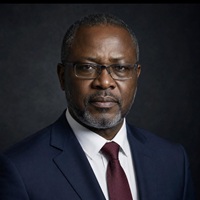
Adriano S. Kansala"
A reflection on Miguel de Barros' proposal, the limits of ECOWAS mediation, the threat of drug trafficking, and the responsibility of the United Nations.
I. The lucidity of Miguel de Barros: instability is a consequence, not a cause.
The interview given by sociologist and researcher Miguel de Barros to the newspaper O Democrata, published on October 8, 2026, constitutes an intellectually serious and politically timely contribution to the reflection on the future of Guinea-Bissau. Its merit lies in refusing to treat instability as an isolated episode, resolvable by yet another circumstantial agreement or by an electoral calendar imposed on discredited institutions.
Miguel de Barros proposes a National Reconstruction Pact with three main goals: restoring political confidence, rebuilding the constitutional and democratic order, and transforming the economy, society, and institutions. This proposal deserves to be valued and explored in greater depth, precisely because it raises the right questions.
The solution must be essentially endogenous: no country can indefinitely delegate responsibility for its own destiny. But an endogenous solution does not mean a solitary solution. Where institutions have been weakened, international involvement can be an instrument for recovering, not surrendering, sovereignty.
Coups d'état, institutional dissolutions, and electoral manipulation reflect the fragility of the political contract that should regulate power and subordinate arms to democratic legitimacy. It is not enough to react to each crisis: it is necessary to prevent its recurrence. Reconciliation does not mean equating those responsible for the constitutional rupture with its victims, nor transforming dialogue into a whitewashing of responsibilities.
II. Civil transition: a condition, not a concession.
The withdrawal of the military from politics and the formation of a civilian government constitute one of the most solid pillars of the proposal. But it is not enough to proclaim a return to the barracks. It is necessary to define responsibilities, deadlines, guarantees, and verification.
A credible transition requires: an effective transfer of power to a legitimate civilian authority; the absence of a military veto over political, judicial, or electoral decisions; a public timetable for constitutional normalization; independent monitoring; and political, diplomatic, and legal consequences for non-compliance.
Civilian government cannot be a façade for an intact military power. It must effectively control the administration, the budget, and the electoral instruments. Its composition must reflect competence, integrity, and representativeness. Proportional rules of ineligibility for key transitional leaders in the first elections can prevent conflicts of interest. The transition should last long enough to produce verifiable results, but not to perpetuate itself.
III. ECOWAS: when the mediator becomes part of the problem
ECOWAS has historically played a significant role in regional integration and conflict prevention. However, acknowledging this past cannot indefinitely justify its present choices.
The successive constitutional crises, the persistence of military interference, and the fragility of electoral institutions demonstrate the inadequacy of the results obtained. I believe that, due to the nature and effects of certain interventions in Guinea-Bissau, ECOWAS can no longer be considered a sufficiently independent mediator and has become one of the central factors in the crisis.
This is a political assessment of behaviors and outcomes, not a judicial conclusion about individual intentions. The repeated impression of accommodating those in de facto power, to the detriment of the unequivocal restoration of popular sovereignty, undermines trust. When decisions and omissions benefit those responsible for constitutional breaches, it is legitimate to question whether other political or strategic interests are being protected. Such suspicions require independent scrutiny and should not be presented as proven facts.
Criticism of ECOWAS is not a rejection of African integration. Senegal and the other peoples of West Africa remain our brothers and natural partners. The people should not be confused with the short-term choices of their governments.
IV. Subsidiarity is not a sentence of dependence.
The principle of subsidiarity values geographical proximity and regional knowledge. But it also organizes cooperation: it does not grant diplomatic monopolies to entities whose actions have become the subject of controversy.
Chapter VIII of the UN Charter recognizes regional organizations without eliminating the Security Council's inherent responsibilities. When regional mediation loses effectiveness or credibility, cooperation must be reconfigured. Advocating for a more direct role for the UN is not to antagonize ECOWAS; it is to reject the idea of an acquired right to indefinitely direct the destiny of another State.
Guinea-Bissau is not the property of any sub-regional organization. Its sovereignty belongs exclusively to its people.
V. The United Nations must assume a more direct responsibility.
Guinea-Bissau does not need more diplomatic communiqués without consequences. It needs a mechanism with political authority, technical competence, a presence on the ground, and the ability to verify commitments.
I advocate for an international political mission to support constitutional restoration, led by the United Nations and with national ownership, a limited mandate, and verifiable objectives. I do not propose international administration of the country.
Timor-Leste demonstrates that the UN can play a concrete role in institutional building during deep crises; the executive powers of UNTAET, created by Resolution 1272 (1999), would not automatically be suitable for Guinea-Bissau. Namibia teaches that electoral credibility begins with freedoms prior to voting: UNTAG also monitored political and security conditions. Mozambique, through ONUMOZ, shows the importance of verifiable commitments, incident prevention, and electoral monitoring, although Guinea-Bissau does not face a comparable civil war. It is important to adapt the lessons, not copy models.
VI. The National and International Transition Guarantee Mechanism
I propose a National and International Transition Guarantee Mechanism, based on a representative national platform and an international monitoring component.
The platform would bring together legitimate political forces, civil society, women, youth, traditional authorities, religious communities, and relevant institutions. The military would participate only in matters of transfer of powers and defense reform, without political veto.
The UN would coordinate the international component, in full political partnership with the African Union and the CPLP. ECOWAS would provide advice and consultation, without exclusive direction of the mediation or veto power. The mandate would depend on legitimate national agreement and, when necessary, on decisions of the competent UN bodies. An independent assessment under the auspices of the Secretary-General could precede the definition of the mission, resources, and presence on the ground.
VII. Eight indispensable guarantees
First — Fundamental freedoms: an end to arbitrary restrictions on political activity, the press, assembly, and civic participation.
Second — Effective civilian government: verifiable transfer of authority and oversight mechanisms.
Third — Military neutrality: non-interference in politics, reorganization of the chain of command, and democratic civilian control.
Wednesday — Electoral independence: transparent and legal reconstitution of the CNE and GETAPE, audits and independent observation.
Fifth — Judicial guarantees: independent judicial institutions protected from military and partisan interference.
Friday — Accountability: an independent fact-finding commission to investigate serious human rights violations and institutional breakdowns, with national and international experts, witness protection, and due process.
Seventh — International verification: access to institutions, periodic public reports and non-compliance alerts.
Eighth — Results-based calendar: verifiable deadlines, no indefinite transition or rushed elections.
The announcement, on October 8, 2026, of the postponement of the elections previously scheduled for December 6, without a new date, reinforces the need for a public and verifiable roadmap.
VIII. A new international architecture
The African Union must assume political responsibilities commensurate with its instruments for defending the constitutional order. The CPLP has a particular responsibility, stemming from historical, linguistic, and institutional ties, and should not accept a merely symbolic presence.
The United Nations must ensure a framework of multilateral legitimacy and technical coordination. ECOWAS should be relegated to an advisory role, subject to independent evaluation of its actions. The organization has condemned constitutional ruptures and called for inclusive transitions, but declarations of principle do not dispense with the need for results-based evaluation. Accountability strengthens, not diminishes, regional legitimacy.
IX. Rebuilding democracy means rebuilding the economy.
Poverty, the fragility of public services, dependence on a narrow export base, and lack of opportunities do not, in isolation, explain coups d'état, but they do make society vulnerable to clientelism.
Reconstruction should prioritize family farming, food production, local processing, storage, transportation, and market access. Diversification should include the blue economy, sustainable natural resources, renewable energies, technical and vocational training, and youth entrepreneurship.
I propose a Fund to Support Institutional Reconstruction and Local Development, financed by national resources and voluntary international contributions, subject to independent audits, transparent disbursements, and public oversight. The resources should build national capacity, not perpetuate parallel structures.
X. The responsibility of the Guinean people and their international duty.
Criticism of ECOWAS cannot absolve Guinea's political, military, and economic elites of responsibility. Institutional capture, corruption, and military interference also depend on internal decisions. Reconstruction requires truth, legality, integrity, and the submission of power to the popular will.
It would be equally naive to ignore cross-border interests, political and financial dependencies, criminal networks, and external diplomatic choices. The international community should not choose rulers for the Guinean people: it should help ensure that citizens can choose freely and that their vote is respected.
XI. Drug trafficking: a revolving platform and the risk of state capture.
There is one dimension that can no longer be overlooked: the use of Guinea-Bissau as a hub for international drug trafficking and the risk of the state being captured by transnational criminal networks.
The country has been repeatedly identified as a transit point for cocaine from Latin America to Europe. Its geographic location, maritime access, institutional fragility, and limited enforcement capabilities attract criminal organizations. The risk goes beyond drug trafficking: it includes the penetration of political institutions, security forces, administration, and the economy by illicit interests.
Where criminal networks have invested in routes, protectionist relationships, and institutional influence, a genuine transition threatens financial and strategic interests of great value. The greater the penetration of these networks, the greater the potential resistance to democratic reform and the loss of a valuable operational base. Crimes should not be attributed to specific individuals without evidence; precisely for this reason, independent investigations and guarantees of integrity are essential.
This threat constitutes an additional and compelling reason for United Nations leadership, in partnership with the African Union and the CPLP, and for the specialized participation of UNODC. The strategy should integrate constitutional restoration, security reform, judicial independence, the fight against corruption, financial transparency, and action against drug trafficking. ECOWAS would have an advisory role.
The fight for democracy is also a fight to prevent national sovereignty from being subordinated to international criminal networks. Elections that fail to confront potential mechanisms of capture can only perpetuate the crisis.
XII. From reflection to national commitment
Miguel de Barros has rendered an important service to the national debate. It is not a matter of disputing the authorship of a solution, but of transforming an intellectual proposal into a verifiable national commitment.
Guinea-Bissau needs a civilian government that governs, Armed Forces respected in their constitutional mission but removed from political disputes, free elections, credible courts, professional administration, and an independent civil society.
Peace cannot continue to mean only the absence of armed conflict. Stability cannot mean the continued rule of the same interests. Reconciliation cannot replace justice.
The principle of subsidiarity cannot become a diplomatic prison. ECOWAS cannot claim a monopoly over our destiny. The UN, the African Union, and the CPLP must support a genuinely national transition, verifiable and protected against military interference and organized crime.
Guinea-Bissau does not need another transition that perpetuates the crisis. It needs a transition that puts an end to the conditions that reproduce it.
Sovereignty does not belong to those who control the weapons, nor to those who conduct the mediations. It belongs to the people. And it is to the people that it must be returned, without ambiguities, without undue tutelage, and without further betrayals of their will.
2025/12/3
Copyright Jornal Preto e Branco All rights reserved . 2025
Copyright Jornal Preto e Branco Todos Direitos Resevados . 2025
Website Feito Por Déleo Cambula