
GUINEA-BISSAU: MEDIATION NEEDS CREDIBILITY, NOT GUARDIANSHIP
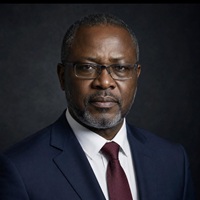
Adriano S. Kansala"
Sheikh Niang must step down; ECOWAS must pave the way for a UN-African Union initiative.
Brotherhood is not up for discussion.
The Senegalese people are our brothers and sisters. We are together—yesterday, today, and tomorrow. We share borders, families, historical memory, cultures, and a common aspiration for African dignity. No criticism directed at President Bassirou Diomaye Faye or his Minister Cheikh Niang should be confused with a criticism of Senegal, the Senegalese people, or their respectable diplomatic tradition. Governments are responsible for their choices; peoples should not be held accountable for them.
A mediation is not legitimized solely by appointment.
ECOWAS entrusted Senegal with mediating the Guinean crisis. On August 6, 2026, Cheikh Niang traveled to Bissau to present the mandate to the transitional authorities. The act is official; its effectiveness and political legitimacy are not automatic. The mediator must earn the trust of the various stakeholders, especially when discussing a constitutional rupture brought about by force of arms. Mediation cannot become a mechanism for accommodating faits accomplis.
Cheikh Niang's credibility deficit
My criticism of Cheikh Niang does not stem from the recent political tension between Faye and Sonko. My critical reading of his actions dates back to his first months leading Senegalese diplomacy. The perception that his choices convey to me is one of diplomacy excessively accommodating the interests of the Élysée Palace, rather than an autonomous affirmation of African interests. This is a political judgment, not proof that Niang is receiving instructions from Paris. Precisely for this reason, it is important to publicly confront his positions and decisions with the duty of independence of a mediator. Credibility cannot be decreed: it is built through consistency, impartiality, and results.
Guinea-Bissau does not need a normalized transition.
The crisis demands answers regarding the interruption of the November 2025 electoral process, the freedom of political actors, the independence of the electoral administration, and the conditions for a verifiable return to constitutional order. The possibility of altering the calendar for the elections announced for December 2026 cannot become a pretext for indefinitely prolonging the state of emergency. It is positive that Senegalese diplomacy has requested the lifting of political restrictions and an inclusive process in October; however, correct statements do not dispense with verifiable results nor, by themselves, dispel doubts about the mediation process.
The forces at play: it is necessary to assess the strategic failure.
The ECOWAS Stabilization Support Mission in Guinea-Bissau (ESSMGB) remains on the ground, as demonstrated by the contingent rotation announced in August 2026. It should not be confused with ECOMIG, the ECOWAS mission in Gambia. However, the persistence of institutional ruptures and political instability in Guinea-Bissau constitutes a powerful argument for concluding that the regional military presence has not fulfilled its most important political objective: preventing a recurrence of the armed seizure of power. This does not mean that each soldier or each operation was useless; it means that the model, as a whole, must be re-evaluated without complacency.
An alternative to the UN–African Union
ECOWAS must recognize the limitations of the current mediation and request that the United Nations and the African Union jointly assume leadership of a new political initiative, in coordination with the CPLP and with the effective participation of Guinean political and social forces. The new mechanism should establish immediate guarantees of political freedom, an independent evaluation of the interrupted electoral process, a legally defensible timetable, and a public system for verifying commitments. ECOWAS can continue to cooperate, but it should not monopolize a process whose political trust is seriously compromised.
A different kind of international presence, with a limited mandate.
I advocate for the progressive replacement of the current regional military mission with a genuinely impartial international presence, preferably with contingents from outside West Africa, provided there is an adequate legal basis, the required international consent and/or authorization, clear rules of engagement, financing, civilian oversight, and an exit strategy. A force should not serve to protect individuals or governments: it should protect civilians, institutions, and the conditions for democratic sovereignty. Its composition, mandate, and operational necessity should result from independent assessment, not from military automatisms.
The time has come to draw conclusions.
Cheikh Niang, out of respect for the institution he represents and the Guinean people, should relinquish leading this mediation. President Faye should facilitate a solution that transcends Senegalese national leadership, without transforming a diplomatic disagreement into a conflict between brotherly peoples. ECOWAS should transfer the political leadership of the process to a joint mechanism of the United Nations and the African Union and accept a thorough review—including the replacement—of the military mission present in Guinea-Bissau. This is not about excluding Africa from the solution, but about giving Guinea-Bissau a credible African solution, with international guarantees and Guinean leadership. Senegal will continue to be our brother. Our fraternity is permanent; trust in a mediator must be earned.
2025/12/3
Copyright Jornal Preto e Branco All rights reserved . 2025
Copyright Jornal Preto e Branco Todos Direitos Resevados . 2025
Website Feito Por Déleo Cambula