
From Opinion to Opinion: Sovereignty, Facts, and the Arithmetic That Cannot Be Ignored
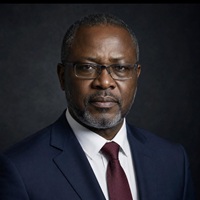
Adriano S. Kansala"
I read carefully and with the respect that all serious opposing viewpoints deserve, the article by Rui Alberto Pinto Pereira, “Sovereignty, Facts and Responsibility”, dated September 15, 2026, written in response to my text.
I'll start precisely there: I welcome the debate. Guinea-Bissau needs opposing viewpoints, uncomfortable questions, and the confrontation of arguments. It's preferable to discuss the facts publicly than to replace them with silence.
But, precisely because my interlocutor is appealing to the facts, let us return to them.
Arithmetic is simple — and politically important.
Rui Alberto Pinto Pereira rightly writes that we cannot automatically transform abstention into a "No" vote.
I agree.
Those who abstained did not vote "No." But they also did not vote "Yes."
And this second part of the equation cannot disappear.
Let's take a basic example.
If, in a universe of 100 voters, all 100 vote, the participation rate will be 100%.
If, in that same universe of 100 voters, only 30 show up at the polls, the turnout will be 30% and the abstention rate 70%.
If, out of those 30 participants, 21 vote "Yes," we can correctly state that "Yes" obtained 70% of the votes cast in this example. But we cannot say that 70% of the 100 voters approved the proposal.
These are mathematically different things.
That is precisely why, in the referendum of August 30th, we must distinguish between registered voters, voter turnout, and valid votes.
According to figures released by the CNE itself, there were 914,428 registered voters, 572,714 participated, and the "Yes" vote received 383,117 votes. The CNE therefore presented a turnout of approximately 62.6% and attributed 70% of the valid votes to the "Yes" vote.
But 383,117 votes represent approximately 41.9% of the 914,428 registered voters.
This does not transform those who abstained into "No" voters. It only prevents 70% of valid votes from being presented as if they represented 70% of the entire Guinean electorate.
BUT THERE IS A FIRST QUESTION: CAN WE VERIFY PARTICIPATION?
It is precisely here that we return to one of the central issues of my article.
The CNE announced a turnout of 62.63%. This is the official figure and should be recognized as such.
But in such a politically contested process, the democratic response should not be to demand that anyone believe Adriano Kansala, the opposition, or, conversely, that a simple announcement closes all questions.
The answer should be much simpler:
PUBLISH THE MINUTES.
Table by table. Region by region.
Number of registered voters, ballots received, voters, "Yes" votes, "No" votes, blank votes, invalid votes, and unused ballots.
Perform the national arithmetic reconciliation and allow for its independent verification.
If the official figures withstand this scrutiny in its entirety, the facts will speak for themselves.
That is precisely what it means to demand proof.
Abstention is not an imaginary vote — but a boycott is a political act.
Rui Alberto Pinto Pereira states that we should not transform abstention into a kind of "imaginary vote".
I agree.
I do not attribute to those who abstained a vote they did not cast.
But when parties, movements, and civil society organizations publicly call for a boycott of a consultation they consider illegitimate, that boycott constitutes a political fact that must also be included in the analysis.
Naturally, we cannot know or attribute a single reason to each citizen who did not attend.
Rigorousness therefore demands two simultaneous precautions: not automatically converting abstentions into "No" votes, but also not automatically converting "Yes" votes into approval by the entire Guinean people.
The problem did not start on August 30th.
There is still a fundamental question that Rui Alberto Pinto Pereira's answer does not resolve.
The referendum took place after the breakdown of the constitutional order on November 26, 2025.
That is precisely why I classify it as a post-facto popular consultation.
A subsequent consultation does not automatically answer the question of the legitimacy of the authority that initiated the process, established the transitional institutions, and submitted a new Constitution to a referendum.
The legal and political problem is not just about knowing how many people checked the "Yes" box.
It's equally a question:
Who had the constitutional authority to initiate this process?
Under what conditions was the new text drafted?
What role did political forces, civil society, and constitutional institutions play?
What effective guarantees of pluralism existed?
And, above all: can a rupture of the constitutional order acquire retroactive legitimacy simply through a consultation organized by the institutions born from that very rupture?
A vote produces numbers. But numbers, by themselves, do not resolve all questions regarding the origin, legality, and legitimacy of the process that led to the vote.
"There was no winner because the National Electoral Commission did not proclaim it": Beware of this reasoning.
We then arrive at the elections of November 2025.
Rui Alberto Pinto Pereira points out that the CNE (National Elections Commission) did not officially proclaim a winner.
And truth.
But the crucial question remains unanswered: why didn't the CNE do it?
The elections took place on November 23. The African Union Election Observation Mission considered that the process, in its preliminary assessment, complied with the principles and guidelines applicable to democratic elections, and the joint declaration of the AU, ECOWAS and Forum of Wise Men recorded the orderly and peaceful conclusion of the voting. On November 26, while the country awaited the announcement of the results, the military took power and the electoral process was interrupted.
Therefore, we are not dealing with an election that ended normally and in which the electoral authority, after completing the count, declared that there was no winner.
We are facing a process whose institutional completion has been interrupted.
And this is where two testimonies come in that cannot be treated as partisan Guinean opinions.
FILIPE NYUSI: “THERE IS A WINNER”
Filipe Nyusi was not a candidate, a leader of a Guinean party, or a political commentator.
He was the Head of the African Union's Election Observation Mission.
And it was unequivocal after the elections:
"The elections went well and there is a winner."
He added that, even if a more cautious formulation was preferred, results existed and those results should be published.
This substantially alters the debate.
Because we are no longer faced with Adriano Kansala saying that there is a winner.
We are witnessing the head of the African Union's observation mission publicly stating that there is a winner and that the results should be announced.
GOODLUCK JONATHAN: THE RESULTS FROM THE NINE REGIONS WERE IN.
Goodluck Jonathan, former President of Nigeria and President of the West African Elders Forum, was equally explicit.
Jonathan stated that the African Union and ECOWAS had access to the authentic results, that the results from the nine regions had been collected, and that they should total the numbers and announce the winner.
It is in light of these facts that we must exercise extreme caution regarding the doctrine according to which:
"Since the CNE did not declare a winner, there is no winner."
Because there is a fundamental difference between an election that produced no result and an election where the proclamation of the result was prevented by force.
Confusing the two situations could create a devastating precedent.
Woe to African democracy if this model takes hold.
Consider the precedent.
Elections are held. The people vote. The polls close. The votes are counted. The regional results are tallied. The process approaches the national proclamation.
Then force intervenes.
The electoral authority is unable to formally conclude the process.
And then this very absence of proclamation—caused by the Mano militari interruption—is used to support:
"There is no winner because no one has been officially declared."
Woe to African democracy if this model takes hold.
Because, taken to its ultimate consequences, we would have created a veritable manual for neutralizing inconvenient elections: let the people vote, wait for the count, and, before the formal proclamation, interrupt the process. Then invoke the non-existence of that very proclamation to politically erase the result.
This goes beyond Fernando Dias, Sissoco Embaló, PAIGC, MADEM, API, or any other political force.
It's a matter of democratic principle.
Today it could be used against one candidate. Tomorrow it could be used against another. And, the day after tomorrow, it could become an exportable method for any African country or institutionally vulnerable democracy.
That is precisely why the words of Filipe Nyusi and Goodluck Jonathan are so important.
We don't need to invent a winner.
We need to publish and verify the existing results.
Gather the available minutes from the electoral structures, candidates, parties, and observers. Compare them. Authenticate them. Totalize them.
And let it be announced what the people of Guinea-Bissau have actually decided at the ballot box.
France, Senegal, and ECOWAS: Asking is not condemning.
Regarding the so-called "Franco-African maneuvers," Rui Alberto Pinto Pereira asks where the evidence is of an agreement between Paris, Dakar, and ECOWAS.
That is precisely why I asked questions.
I did not claim to possess a secret document from Paris or a written order from Dakar.
What exists are decisions, omissions, convergences of interests, and political behaviors that justify scrutiny.
And one very simple question remains:
What exactly was the mandate of the ECOWAS force present in Guinea-Bissau on November 26, 2025, what were its rules of engagement, and what did it concretely do when the constitutional and electoral process was interrupted?
Rui Alberto Pinto Pereira himself acknowledges the legitimacy of this question.
ECOWAS published a statement on Guinea-Bissau on June 29, 2026. I note this institutional position.
But institutional statements do not eliminate the right — nor the need — to confront words, actions, omissions, and consequences.
If there was no undue influence, transparency can only strengthen the credibility of ECOWAS itself.
Sovereignty also demands accountability.
I am pleased to note that Rui Alberto Pinto Pereira fully endorses one of the central assertions in my article:
"Guinea-Bissau belongs to the Guinean people."
It's an important point of convergence — perhaps even the most important one in this entire debate.
And I also agree when you add that Guinea-Bissau does not belong to any political party, candidacy, the Armed Forces, the CNT, the Government, the opposition, or any individual personality.
Precisely.
Guinea-Bissau does not belong to France. It does not belong to Senegal. It does not belong to ECOWAS.
But it also doesn't belong to the Armed Forces, the CNT, the Government, the opposition, any party, or any individual personality.
It belongs to the citizens of Guinea-Bissau.
That is precisely why we must be particularly demanding when invoking popular sovereignty.
Sovereignty means that neither Paris, nor Dakar, nor Abuja, nor Lisbon can decide for the people of Guinea-Bissau.
But it also means that no general, government, transitional council, party, candidate, or any other authority can replace the sovereign people or erase what they have expressed through their vote.
And here perhaps lies our true convergence: because/if “Guinea-Bissau belongs to the Guineans,” then the best way to resolve the controversies that divide us today is not to ask for blind trust in one narrative or another.
It's about returning the word to the facts.
To the ballot boxes. To the minutes. To the numbers. To verifiable electoral truth.
Because, in the end, that is precisely where the sovereignty that we both claim to defend must reside.
PUBLISH THE MINUTES
Rui Alberto Pinto Pereira concludes by arguing that we must distinguish between what we know and what we suspect.
I agree.
Let's do it to the very end.
Let's not turn abstention into a "No" vote.
But let's also not transform 70% of valid votes into an imaginary 70% of the entire Guinean people.
Let's not confuse an official proclamation with independent verification.
Let's not confuse the absence of a proclamation of the November 2025 elections with the non-existence of results — especially when the Head of the African Union's Election Observation Mission himself publicly stated that "there is a winner" and that the results should be published.
And above all, let us not accept the dangerous idea that forcibly preventing an electoral authority from completing its work could then become the legal or political basis for erasing what the people have put in the ballot box.
If we want to definitively move beyond opinions and into the realm of facts, the solution is extraordinarily simple:
The minutes of the November 2025 elections should be published in full.
The minutes of the referendum of August 30, 2026, shall be published in full, table by table.
And, so that this verification does not depend on blind trust in either party, the United Nations, in collaboration with the African Union, should promote or oversee an independent, transparent, and verifiable electoral reconciliation of both processes.
Given the nature of his own contradiction—and the demand for facts, evidence, and transparency that he rightly calls for—I want to believe that consistency will lead Rui Alberto Pinto Pereira to publicly add his voice to the demand for the full publication of the minutes, both from the November 2025 elections and the August 30, 2026 referendum.
If so, we will have transformed a difference of opinion into a concrete point of democratic convergence: letting the documents, the numbers, and the votes speak for themselves.
As for the rest, rest of my case.
Because popular sovereignty is not presumed.
It is counted. It is verified. It is demonstrated.
Force can prevent the announcement of a result. It cannot rewrite the vote that the people cast in the ballot box.
Woe to African democracy if we accept otherwise.
Only the truth will set us all free.
The people are, and always will be, the ultimate authority!
Nô terra i di nô povo.
DOCUMENTARY SOURCES CONSULTED
Results of the referendum of August 30, 2026: Reuters, September 1, 2026; Euronews, September 1, 2026.
Elections of 23 November 2025 and interruption of the process: African Union, Preliminary Declaration of the Electoral Observation Mission, 25 November 2025; Joint Declaration AU/ECOWAS/West African Elders Forum, 26 November 2025.
Statements by Filipe Nyusi: RTP/Lusa, December 4, 2025.
Statements by Goodluck Jonathan: Channels Television, November 29, 2025.
ECOWAS Position: ECOWAS Declaration on Guinea-Bissau, June 29, 2026.
Adriano S. Kansala — From opinion to opinion
2025/12/3
Copyright Jornal Preto e Branco All rights reserved . 2025
Copyright Jornal Preto e Branco Todos Direitos Resevados . 2025
Website Feito Por Déleo Cambula