
A new party does not erase the interrupted vote
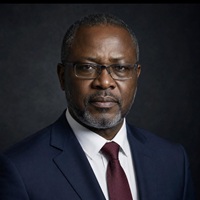
Adriano S. Kansala"
Political Analyst and Researcher in African Geopolitics
The presentation of the Guinean People's Party demands a debate that goes beyond the name, the symbol, and the promises of renewal. The central issue is the continuity between the interests that supported Umaro Sissoco Embaló, the power installed after the electoral interruption, and the structures that are now preparing to contest new elections. A political party can be born in a day. The political history of its protagonists accompanies it.
In September 2025, Ilídio Vieira Té was appointed national director of the campaign for the Nô Kumpu Guiné platform, which supported Sissoco. After the coup, he became prime minister. In September 2026, Capital News identified him as a driving force behind the PPG, citing a source linked to the formation. This latter link requires public documentary confirmation, but his previous trajectory is documented and warrants scrutiny. (odemocratagb.com), capitalnews.gw, rtp.pt)
It is not necessary to state, without a complete nominal comparison, that all members of the old alliance have moved to the new party. It is enough to demand a verifiable answer: who is transitioning, what functions are they retaining, what resources do they control, and to whom do they report? The change in name does not demonstrate a break with the political networks that supported the previous power structure.
The predictable argument—that every citizen has the freedom to form a political party—is correct, but insufficient. This right does not dispense with transparency nor resolve conflicts of interest. It also does not transform control of the government, public resources, or electoral mechanisms into a legitimate democratic advantage.
Another possible argument is that the PPG did not exist when the coup occurred. The chronology of the acronym does not resolve the responsibility of individuals. A new party does not automatically inherit blame, but its leaders also do not receive a blank biography.
This is where the debate must return to the question that no transition can legitimately erase: what happened to the November 2025 vote?
Filipe Nyusi, former President of Mozambique and head of the African Union observer mission, stated: “In Guinea-Bissau, the elections went well and there is a winner.” He added: “And these results must be published.” Nyusi did not identify the winner in this statement. He demanded precisely what the military intervention prevented: the disclosure of the results. (rtp.pt))
The absence of a proclamation prevents us from presenting a claimed victory as a certified result. But it does not authorize those who benefited from the disruption to use this absence to bury the election. The lack of announcement is the problem to be solved; it cannot become the justification for eliminating the vote.
Goodluck Jonathan was equally incisive. In an interview published on November 28, 2025, he described the event as a "ceremonial coup"—an expression that conveys the idea of a "protocol coup." He found it strange that Sissoco announced the coup and communicated with the press while allegedly detained. He asked ECOWAS and the African Union to ensure the dissemination of the results. This was Jonathan's assessment, not a judicial conclusion about the authorship of a staged coup. But it was an assessment from someone present in the country, and it cannot be dismissed for diplomatic reasons. (channelstv.com))
The close relationship between the military hierarchy and Sissoco also predates the coup. DW documented the presence of military leaders alongside him during the campaign, while other candidates demanded neutrality from the Armed Forces. The oath owed by the military is to the Constitution and the country. No personal loyalty can replace this obligation. (amp.dw.com))
Given these continuities, five requirements allow us to distinguish political renewal from the reorganization of existing power.
The first is constitutional and financial transparency. The PPG (Postgraduate Program) must publish its registration, statutes, leaders, founders, and sources of funding. The same standards should apply to other formations. Documentary publicity protects the right of association and allows for the identification of who effectively wields power. Indignation in the face of legitimate questions does not replace answers.
The second is the identification of party affiliations and conflicts of interest within the government. Simply stating that a minister does not formally represent a party in the Executive branch does not clarify whether they are working politically in that party's best interest. It is necessary to declare party functions and relevant interests, establish impediments, and ensure independent oversight. The right to political activism does not include the right to transform public authority into a campaign tool.
The third is the oversight of state resources. Vehicles, fuel, employees, facilities, funds, institutional communication, and security devices must serve the public interest. Verification requires documentation, independent access, and protection for those who report irregularities. Invoking past abuses only reinforces the need to stop a practice that survives changes in leadership.
The fourth is effective equality of participation. This equality requires freedom of assembly, functioning of headquarters, organization of congresses, access to the media, and a real possibility of contesting electoral decisions. The PPG should benefit from these guarantees, just as its opponents should. Those who invoke pluralism to justify their creation must also defend it when the freedom of their competitors threatens their victory.
The fifth is an independent international observation mission, led and composed of observers from outside West Africa, with clear and rigorously defined public terms of reference. Trust requires distance from regional networks and commitments whose actions are being challenged. Geographic origin alone does not guarantee independence; it must be accompanied by transparent selection, declaration of conflicts of interest, and operational autonomy.
This mission must oversee the entire electoral cycle: candidacies, financing, use of public resources, media coverage, neutrality of security forces, voting, counting, publication, and litigation. It must have access to minutes, freedom of movement, protected channels for complaints, and an obligation to publish well-founded conclusions. Its reports cannot depend on the authorization of those being audited.
Election observation should also not be confused with a security force. If international guarantees of protection are necessary, these require their own mandate, a defined chain of command, and unequivocal responsibilities. Vague promises of monitoring do not protect voters, journalists, or election documents.
The experience of the regional stabilization force in Guinea-Bissau, the ESSMGB, necessitates this examination. ECOWAS tasked it with continuing to help protect institutions after the coup. However, the regional presence did not prevent the rupture, and the electoral process was interrupted. According to the CNE (National Electoral Commission), the seizure of minutes and the destruction of systems made it impossible to complete the vote count. (op.gov.gm)idea.int)
These are successive failures in protecting what mattered most: first, institutional continuity; then, the possibility of exercising the right to vote. It is not presumed that the regional military forces had authorization for any intervention. What is required, precisely, is clarification of the mandate, the orders received, the resources available, and the decisions taken. If a mission cannot protect institutions or ensure conditions to preserve electoral expression, what concrete democratic utility does its presence offer?
None of these requirements amounts to preemptively declaring the PPG guilty of fraud. They are safeguards intended to prevent any party from benefiting from coercion or institutional capture. Requiring evidence to formulate accusations cannot become a prohibition on monitoring risks.
This is where ECOWAS's responsibility becomes unavoidable. It is true that, on paper and in rhetoric, it condemned the rupture and, in December 2025, formally rejected the transition program announced by the military, demanding a return to constitutional order. (ecowas.int))
So what? What was the result?
What effect did this condemnation have on the interruption of the election? What accountability did it ensure? What guarantees did it create against a repeat? Diplomacy cannot be judged by the strength of its statements when the accomplished facts continue to solidify.
So-called "soft diplomacy" must answer for its results. When the transition proceeds according to the timetable and structures imposed by those in power, while the interrupted election remains unresolved, diplomatic softness risks cementing the very program it claimed to reject. For citizens deprived of the consequences of their vote, this gap between words and effects seems like ECOWAS turning a blind eye.
This is not about inventing a formal approval of the coup. It is about denouncing the possibility of a practical acceptance of its effects. Condemning the seizure of power and then accommodating the order it produced allows force to obtain what the condemnation declared unacceptable.
The CPLP, the African Union, and the United Nations must not inherit this complacency. They need to demand clarification of the interrupted vote, accountability, and verifiable guarantees before treating a new election as a sufficient solution.
The danger of the model associated with Sissoco lies in its repeatability: interrupting the outcome, managing the crisis, reorganizing alliances, and returning to the polls while retaining the instruments capable of preventing defeat. A mediation that accommodates this outcome transforms the military veto into a reusable political tool.
If they lose again, what guarantee is there that the same generals won't resort to the same script, preventing the announcement of the results, making the electoral material disappear or destroy it, and repeating the déjà vu until the candidate of the military and ECOWAS wins, and then, yes, accept the result?
The presentation of the Guinean People's Party demands a debate that goes beyond the name, the symbol, and the promises of renewal. The central issue is the continuity between the interests that supported Umaro Sissoco Embaló, the power installed after the electoral interruption, and the structures that are now preparing to contest new elections. A political party can be born in a day. The political history of its protagonists accompanies it.
In September 2025, Ilídio Vieira Té was appointed national director of the campaign for the Nô Kumpu Guiné platform, which supported Sissoco. After the coup, he became prime minister. In September 2026, Capital News identified him as a driving force behind the PPG, citing a source linked to the formation. This latter link requires public documentary confirmation, but his previous trajectory is documented and warrants scrutiny. (odemocratagb.com), capitalnews.gw, rtp.pt)
It is not necessary to state, without a complete nominal comparison, that all members of the old alliance have moved to the new party. It is enough to demand a verifiable answer: who is transitioning, what functions are they retaining, what resources do they control, and to whom do they report? The change in name does not demonstrate a break with the political networks that supported the previous power structure.
The predictable argument—that every citizen has the freedom to form a political party—is correct, but insufficient. This right does not dispense with transparency nor resolve conflicts of interest. It also does not transform control of the government, public resources, or electoral mechanisms into a legitimate democratic advantage.
Another possible argument is that the PPG did not exist when the coup occurred. The chronology of the acronym does not resolve the responsibility of individuals. A new party does not automatically inherit blame, but its leaders also do not receive a blank biography.
This is where the debate must return to the question that no transition can legitimately erase: what happened to the November 2025 vote?
Filipe Nyusi, former President of Mozambique and head of the African Union observer mission, stated: “In Guinea-Bissau, the elections went well and there is a winner.” He added: “And these results must be published.” Nyusi did not identify the winner in this statement. He demanded precisely what the military intervention prevented: the disclosure of the results. (rtp.pt))
The absence of a proclamation prevents us from presenting a claimed victory as a certified result. But it does not authorize those who benefited from the disruption to use this absence to bury the election. The lack of announcement is the problem to be solved; it cannot become the justification for eliminating the vote.
Goodluck Jonathan was equally incisive. In an interview published on November 28, 2025, he described the event as a "ceremonial coup"—an expression that conveys the idea of a "protocol coup." He found it strange that Sissoco announced the coup and communicated with the press while allegedly detained. He asked ECOWAS and the African Union to ensure the dissemination of the results. This was Jonathan's assessment, not a judicial conclusion about the authorship of a staged coup. But it was an assessment from someone present in the country, and it cannot be dismissed for diplomatic reasons. (channelstv.com))
The close relationship between the military hierarchy and Sissoco also predates the coup. DW documented the presence of military leaders alongside him during the campaign, while other candidates demanded neutrality from the Armed Forces. The oath owed by the military is to the Constitution and the country. No personal loyalty can replace this obligation. (amp.dw.com))
Given these continuities, five requirements allow us to distinguish political renewal from the reorganization of existing power.
The first is constitutional and financial transparency. The PPG (Postgraduate Program) must publish its registration, statutes, leaders, founders, and sources of funding. The same standards should apply to other formations. Documentary publicity protects the right of association and allows for the identification of who effectively wields power. Indignation in the face of legitimate questions does not replace answers.
The second is the identification of party affiliations and conflicts of interest within the government. Simply stating that a minister does not formally represent a party in the Executive branch does not clarify whether they are working politically in that party's best interest. It is necessary to declare party functions and relevant interests, establish impediments, and ensure independent oversight. The right to political activism does not include the right to transform public authority into a campaign tool.
The third is the oversight of state resources. Vehicles, fuel, employees, facilities, funds, institutional communication, and security devices must serve the public interest. Verification requires documentation, independent access, and protection for those who report irregularities. Invoking past abuses only reinforces the need to stop a practice that survives changes in leadership.
The fourth is effective equality of participation. This equality requires freedom of assembly, functioning of headquarters, organization of congresses, access to the media, and a real possibility of contesting electoral decisions. The PPG should benefit from these guarantees, just as its opponents should. Those who invoke pluralism to justify their creation must also defend it when the freedom of their competitors threatens their victory.
The fifth is an independent international observation mission, led and composed of observers from outside West Africa, with clear and rigorously defined public terms of reference. Trust requires distance from regional networks and commitments whose actions are being challenged. Geographic origin alone does not guarantee independence; it must be accompanied by transparent selection, declaration of conflicts of interest, and operational autonomy.
This mission must oversee the entire electoral cycle: candidacies, financing, use of public resources, media coverage, neutrality of security forces, voting, counting, publication, and litigation. It must have access to minutes, freedom of movement, protected channels for complaints, and an obligation to publish well-founded conclusions. Its reports cannot depend on the authorization of those being audited.
Election observation should also not be confused with a security force. If international guarantees of protection are necessary, these require their own mandate, a defined chain of command, and unequivocal responsibilities. Vague promises of monitoring do not protect voters, journalists, or election documents.
The experience of the regional stabilization force in Guinea-Bissau, the ESSMGB, necessitates this examination. ECOWAS tasked it with continuing to help protect institutions after the coup. However, the regional presence did not prevent the rupture, and the electoral process was interrupted. According to the CNE (National Electoral Commission), the seizure of minutes and the destruction of systems made it impossible to complete the vote count. (op.gov.gm)idea.int)
These are successive failures in protecting what mattered most: first, institutional continuity; then, the possibility of exercising the right to vote. It is not presumed that the regional military forces had authorization for any intervention. What is required, precisely, is clarification of the mandate, the orders received, the resources available, and the decisions taken. If a mission cannot protect institutions or ensure conditions to preserve electoral expression, what concrete democratic utility does its presence offer?
None of these requirements amounts to preemptively declaring the PPG guilty of fraud. They are safeguards intended to prevent any party from benefiting from coercion or institutional capture. Requiring evidence to formulate accusations cannot become a prohibition on monitoring risks.
This is where ECOWAS's responsibility becomes unavoidable. It is true that, on paper and in rhetoric, it condemned the rupture and, in December 2025, formally rejected the transition program announced by the military, demanding a return to constitutional order. (ecowas.int))
So what? What was the result?
What effect did this condemnation have on the interruption of the election? What accountability did it ensure? What guarantees did it create against a repeat? Diplomacy cannot be judged by the strength of its statements when the accomplished facts continue to solidify.
So-called "soft diplomacy" must answer for its results. When the transition proceeds according to the timetable and structures imposed by those in power, while the interrupted election remains unresolved, diplomatic softness risks cementing the very program it claimed to reject. For citizens deprived of the consequences of their vote, this gap between words and effects seems like ECOWAS turning a blind eye.
This is not about inventing a formal approval of the coup. It is about denouncing the possibility of a practical acceptance of its effects. Condemning the seizure of power and then accommodating the order it produced allows force to obtain what the condemnation declared unacceptable.
The CPLP, the African Union, and the United Nations must not inherit this complacency. They need to demand clarification of the interrupted vote, accountability, and verifiable guarantees before treating a new election as a sufficient solution.
The danger of the model associated with Sissoco lies in its repeatability: interrupting the outcome, managing the crisis, reorganizing alliances, and returning to the polls while retaining the instruments capable of preventing defeat. A mediation that accommodates this outcome transforms the military veto into a reusable political tool.
If they lose again, what guarantee is there that the same generals won't resort to the same script, preventing the announcement of the results, making the electoral material disappear or destroy it, and repeating the déjà vu until the candidate of the military and ECOWAS wins, and then, yes, accept the result?
2025/12/3
Copyright Jornal Preto e Branco All rights reserved . 2025
Copyright Jornal Preto e Branco Todos Direitos Resevados . 2025
Website Feito Por Déleo Cambula