
ECOWAS mediation became the main support bloc for the coup plotters in Bissau
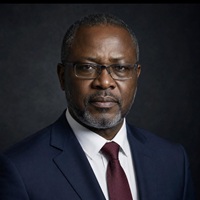
Adriano M. Kansala"
The predictable response from the gentleman of "diplomacy en douceur" does not erase the contradiction between the discourse and the execution of regional decisions.
The central point is no longer whether ECOWAS mediation might favor the coup plotters in Bissau. In our view, it is already doing so and, with each passing day, is more clearly assuming the role of the main political bloc supporting the coup plotters and exacerbating instability in West Africa.
The word "mediation" does not neutralize an action that, in practice, protects those responsible for the rupture, restores political space to them, and delays the restoration of institutions and fundamental freedoms. When the coup plotters continue to benefit from time and political legitimacy, while elected representatives, political prisoners, and democratic forces remain marginalized, mediation ceases to be impartial. It becomes part of the problem.
This loss of confidence is not limited to Guinea-Bissau. In our view, the Guinean people—both those living in the country and those in the diaspora—and the citizens of West Africa in general, no longer have faith in ECOWAS. This distrust is even shared by some Heads of State in the sub-region, who see the organization less and less as an impartial community institution and more and more as a private club of certain leaders, representing the interests of France. This perception is serious: when the people and even some of their own leaders cease to recognize the organization as a credible defender of democracy and regional sovereignty, the crisis is no longer just one of confidence; it is also a crisis of legitimacy.
Hence the importance of the UN constituting the essential international axis of support for the preparation of elections in Guinea-Bissau. In a context of profound distrust of regional mediation, the United Nations can contribute to ensuring that the electoral process is inclusive, transparent, and credible, providing technical assistance and supporting guarantees that allow for the effective participation of parties, members of parliament, civil society, and citizens. This support must serve the sovereign will of the Guinean people and help create conditions for free elections, without the preparation of the vote being used to legitimize repression or consolidate the effects of the institutional rupture.
The actions and signals coming from the organization convey an increasingly strong impression that its actions are under the political influence of Senegal's President Bassirou Diomaye Faye and Minister Cheikh Niang. This is our interpretation of events, based on our observation and study as free citizens of Africa and the ECOWAS region. For us, this perception is increasingly approaching a political conviction.
But Senegal is not defined solely by its current leaders. Ousmane Sonko is not Diomaye Faye. For us, Sonko represents a pillar of goodness, dignity, and African affirmation, a reference point that contrasts sharply with the direction we associate with Faye and Niang in this crisis. We will repeat this distinction ad nauseam: Sonko cannot be invoked to cover up or justify Faye's decisions. Nor do we confuse the brotherly people of Senegal with the choices of their leaders.
We cannot ignore the political shadow cast by Macky Sall. In our view, the former President was a political agent of French interests and a partner and political accomplice of Sissoco Embaló, whose government was marked by repression and political violence. We also believe that the orientation associated with Macky Sall and Faye favors the interests of Paris and paves the way for Macron to expand French influence in the region. This is our political interpretation of the alignments and their effects.
Macky Sall, identified in the image released by WADR Français.
When we speak of forces beyond West Africa, we are not blaming entire peoples or regions. We are referring to transnational criminal networks, cartels, and drug lords operating in different parts of the world, including Latin America and Europe, whose interests may intersect with the Guinean crisis. The seriousness of these suspicions demands serious scrutiny and independent investigation; it should not be diluted by a vague reference to external allies.
Cheikh Niang's predictable response
If Cheikh Niang were to respond to these criticisms in his dual capacity as Senegal's Foreign Minister and ECOWAS mediator, he would likely invoke dialogue, prudence, and impartiality. He would say that talking to different actors does not mean legitimizing them; that the mediation has a regional mandate; that Senegal and ECOWAS have distinct responsibilities; and that the accusations against Macky Sall, France, and criminal networks are serious and require proof.
One could also argue that stability should not be built at the expense of the freedoms of the Guinean people and that ECOWAS intends to support a solution led by the Guineans themselves. This would be a predictable diplomatic response. But the litany of dialogue does not address the essential point: the actions we attribute to it are in opposition to the implementation of the directives approved by the Heads of State and officially made public.
A mediation process cannot claim regional authority while simultaneously failing to implement the decisions that mandate it. Invoking prudence does not explain the lack of execution. Repeating that the mediator is impartial does not demonstrate impartiality. And stating that dialogue is not legitimization does not change the concrete effects of an action that, in our view, grants the coup plotters time, political space, and room for maneuver.
From our perspective, Cheikh Niang can no longer be presented as an impartial mediator. Based on the pattern of his actions and the effects of his performance, we consider him one of the political agents of the coup plotters in Bissau. Calling it "diplomacy en douceur" does not change what we see: a diplomacy that softens the pressure on the coup plotters and distances itself from the execution of decisions officially adopted by the Heads of State.
Demanding proof from critics cannot replace the duty to explain one's own decisions. Declarations that ECOWAS is impartial, that it does not legitimize coup plotters, and that it wishes to restore democracy also need to be confirmed by results. Those who invoke their own impartiality but do not present verifiable measures to demonstrate it are offering verbal guarantees, not answers.
The statement from the Military Command and the next move in the mediation process.
The Military Command declared that, at the moment, there are no conditions for Umaro Sissoco Embaló's return to the country. It remains to be seen whether this declaration corresponds to an effective decision or if it is merely a ceremonial statement, made for show and for show, and part of a new scheme, like the one that, in our view, was the ceremonial coup orchestrated by Sissoco himself.
Based on the pattern we have observed, we can state with almost 100% political certainty that, now that the Military Command has declared that there are no conditions for Sissoco's return, Cheikh Niang and the ECOWAS "gang" will multiply the initiatives they call mediation. In our view, the objective will be to pressure for his return and for the political accommodation of his agent, Sissoco Embaló. This is not secret information nor an official statement from Niang: it is the political prediction we draw from the pattern of action already described in this article.
If this prediction comes true, the gap between diplomatic language and practice will become even more evident. The mediation will not be about executing the decisions announced by the Heads of State, but about trying to circumvent them for the benefit of the coup plotters. The Military Command's declaration will then be treated as an obstacle to be neutralized, and not as a position that demands respect and a coherent regional response.
What a credible solution requires
A credible solution for Guinea-Bissau requires, at a minimum:
1. The release of all political prisoners;
2. Restoring the freedoms of assembly and demonstration;
3. The formation of an inclusive transitional government;
4. The resumption of activities by national deputies;
5. The reopening of party headquarters and the full resumption of political activity throughout the national territory.
Without these guarantees, dialogue will continue to mask repression and offer political respectability to those who dismantled institutions. Regional instability does not only arise from coups; it is also fueled when the regional response normalizes them, protects their perpetrators, and weakens the forces that defend democratic legality.
It's not just Guinea-Bissau, nor just Senegal. It's the continent and the political autonomy of West Africa that are at stake. In our view, the alignments of Macky Sall and Faye favor the interests of Paris and leave the region dangerously exposed to Macron's influence.
We will repeat ad nauseam: Ousmane Sonko is not Diomaye Faye. The Senegalese people should not be confused with the decisions of their leaders; and African dignity cannot be invoked as mere ornament while democratic demands are postponed.
Guinea-Bissau deserves to have its will respected. West Africa deserves a regional organization that defends democracy without sacrificing it in the name of false stability.
2025/12/3
Copyright Jornal Preto e Branco All rights reserved . 2025
Copyright Jornal Preto e Branco Todos Direitos Resevados . 2025
Website Feito Por Déleo Cambula