
YELLOW CARD for Bernardino Rafael: When the former Commander-General of the Police prefers to study academics instead of security, who is responsible for explaining the conflict?
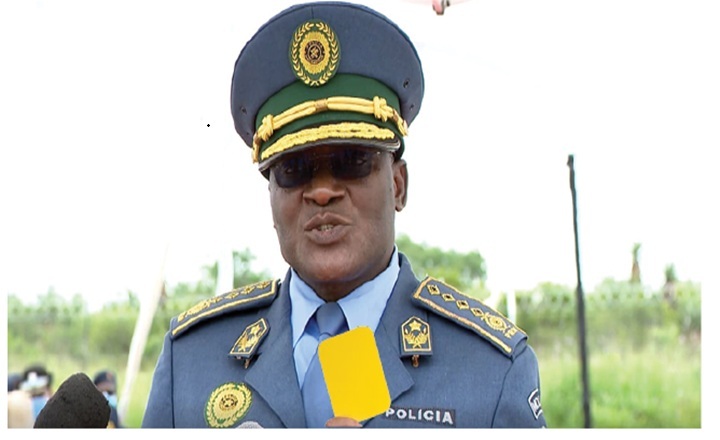
There are issues that, by their very nature, transcend the boundaries of academic research and become part of a nation's political and historical heritage. The conflict in Cabo Delgado is one such case. It is not merely a security problem, nor simply a humanitarian crisis; it is a phenomenon that has called into question the State's ability to protect its citizens, challenged institutions, profoundly altered the lives of hundreds of thousands of Mozambicans, and continues to raise questions for which the country is still seeking answers. This is why any research produced by those who held central responsibilities in the architecture of national security raises expectations far greater than those normally directed at academic work.
Bernardino Rafael arrives at the university after a long career as Commander-General of the Police of the Republic of Mozambique. This circumstance inevitably means that his dissertation must also be read in light of his accumulated experience in exercising power. The chosen theme—the social reintegration of displaced populations and the contribution of academics—is legitimate and relevant. However, it is also legitimate to ask why one of the main protagonists since the outbreak of the conflict in 2017 decided to focus his attention on the displacement of populations, when his experience could offer a particularly valuable contribution to understanding prevention policies, intelligence, institutional coordination and operational response, and above all, the origin of the conflict and its ramifications.
In scientific research, the choice of subject is never completely neutral. The questions asked condition the type of answers that can be found. When the focus falls predominantly on the reintegration of displaced persons, there is a risk of giving less centrality to the discussion about the structural causes of violence and the institutional capacities necessary to prevent new communities from suffering the same fate, but it also reignites the debate about what this type of approach can tell us between the lines, especially when we see a large operation shirking an opportunity to demystify the nuances of the poorly understood conflict, opting instead to turn its attention to a field that would belong to other sciences, in a clear escape from the main path.
For years, public discourse has prioritized resettlement, humanitarian assistance, and the reconstruction of affected communities. These policies are essential and should not be undervalued. However, a balanced public policy requires that the same energy be applied to prevention, strengthening security institutions, protecting populations, and critically evaluating the strategies adopted. Managing the consequences can never replace addressing the root causes.
It is equally impossible to ignore that Cabo Delgado concentrates important natural resources and strategic investments. This reality increases the State's responsibility to ensure transparency, accountability, and clear communication about the policies adopted. The existence of resources does not prove any specific motivation for the conflict, but it makes it even more important that public institutions cultivate trust through democratic scrutiny and openness to informed debate.
Another aspect that deserves reflection is international military cooperation. The presence of foreign forces has been presented as an instrument of stabilization, and several observers acknowledge operational advances. Even so, in a mature democracy, it remains legitimate to discuss the strategic objectives of this cooperation, its results, its limits, and the mechanisms of accountability. Questioning public policies does not mean rejecting them; it means seeking to improve them.
It is precisely here that the role of academia becomes crucial. The university exists to formulate difficult questions, confront narratives, produce evidence, and propose solutions. However, when a former top police officer chooses to study primarily the contribution of academics, the reader may legitimately ask whether a more in-depth reflection on the very institutions that were at the forefront of the response to the conflict would not have been equally useful.
This is not to deny the importance of social reintegration. On the contrary, without it there will be no sustainable peace. The central point is another: the reconstruction of communities will always be incomplete if it is not accompanied by an equally profound debate on prevention, governance, institutional coordination and strengthening the capacities of the State.
In political science, it is often stated that public policies should be evaluated not only by their immediate results, but also by the priorities they establish. Similarly, academic research reveals analytical priorities. When certain topics receive more attention than others, this influences public debate and collective memory about events.
Mozambique needs more critical research, greater transparency, and increased dialogue between academia, public institutions, and civil society. It is from this convergence that stronger solutions can emerge to prevent new cycles of violence, strengthen trust in institutions, and consolidate lasting peace.
This reflection does not intend to replace official investigations nor to formulate definitive conclusions. Rather, it seeks to argue that public scrutiny, critical evaluation of security policies, the strengthening of institutions, and the production of rigorous knowledge are indispensable components for a democratic response to complex conflicts. Academic analysis gains greater relevance when it articulates social, political, economic, and institutional dimensions, allowing for a simultaneous understanding of the causes, effects, and lessons that can be learned for the future.
A yellow card for an analytical approach that prioritizes the effects of conflict over a broader reflection on security policies and the institutional capacities of the State. Academic freedom fully protects this choice; however, the same freedom also allows society to question whether a former top police officer might not be in a unique position to offer the country a more direct analysis of the challenges to national security. The true legacy of research of this nature is measured by its ability to stimulate relevant questions, broaden knowledge, and contribute to more effective public policies.
Outras noticias

Culture
Launched at BCI, a book that immortalizes memories and humor of Zambézia
2026-10-02

Society
International Coffee Day
2026-10-02
Society
Minister Mathlombe squanders his term on empty promises
2026-10-02
policy
Constitutional Council Awards Purchase of Luxury Vehicles for 49.5 Million Meticais
2026-10-01

Culture
International Coffee Day: Aroma, Flavor, and History
2026-09-30
Copyright Jornal Preto e Branco All rights reserved . 2025