
Xenophobia in South Africa continues to affect Mozambicans and hinders their return to the country
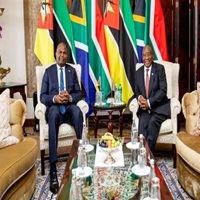
The wave of xenophobic violence that has been ongoing for more than two months in South Africa continues to affect hundreds of Mozambican citizens, jeopardizing their safety and livelihoods and hindering their return home. The Mozambican government acknowledges that significant challenges persist in both the repatriation and reintegration of compatriots who decide to leave the neighboring country to return to Mozambique.
The situation was analyzed during the 18th Ordinary Session of the Council of Ministers, held this Tuesday, where the Report of the Multisectoral Mission sent to South Africa to assess the conditions of national citizens affected by violence against African immigrants was reviewed.
Speaking at a press conference after the meeting, the Minister of Planning and Development, Salim Valá, explained that the mission closely monitored the assistance, reception, and repatriation operations for affected Mozambicans, and also gathered concerns and expectations from the resident community in that country.
According to the governor, the South African provinces of KwaZulu-Natal and the Western Cape continue to be the main hotspots for episodes of violence and hostility against African foreigners. Many Mozambicans have lost their jobs, seen their businesses destroyed, or been forced to leave the areas where they lived for fear of attacks.
"We are facing a situation that not only affects the physical integrity of citizens, but also compromises their economic and social stability," said Salim Valá.
Data presented by the Executive indicates that, to date, 738 Mozambican citizens have been repatriated. Of these, 573 are men and 165 are women.
Most of those returning are from Gaza province, with 393 citizens, followed by Maputo province with 162, and Inhambane with 119. There were also 33 citizens registered from Maputo City, 30 from Manica province, and one from Sofala province.
Despite these figures, the Government admits that logistical and administrative obstacles continue to exist, hindering the return process for other citizens who express interest in returning to the country.
Among the main constraints identified are the lack of personal documentation, difficulties in transporting goods accumulated over years of work in South Africa, and financial limitations to ensure a dignified reintegration into their communities of origin.
For many of those returning, going back to Mozambique represents the beginning of a new battle. Without jobs, without income, and in some cases, without their own homes, many citizens face difficulties in rebuilding their lives.
The report reviewed by the Council of Ministers highlights the need to create economic and social support mechanisms that allow those affected to resume productive activities and ensure the livelihood of their families.
Given this scenario, the Government has directed the continued ongoing monitoring of the situation in South Africa and has strengthened coordination between the Ministries of Foreign Affairs and Cooperation and of Labor, Gender and Social Action to follow up on reported cases.
At the same time, the National Institute for Disaster Risk Management and Reduction (INGD) is conducting a detailed assessment of the needs of affected citizens, with a view to providing immediate assistance.
The measures include support in terms of security, transportation, food, and the provision of essential goods for families returning to the country in vulnerable conditions.
During the update on the situation, the Executive also reported that all the bodies of Mozambican citizens who lost their lives in Mossel Bay, in the South African province of Western Cape, have already been transferred to Mozambique.
The victims were from Gaza province, specifically from the districts of Mabalane, Chókwè, Chibuto and Limpopo, where funeral arrangements are being held with their respective families.
The Government reaffirmed its commitment to continue providing assistance to affected families and to monitor developments related to cases of violence against Mozambican citizens in South Africa.
In the same session, the Council of Ministers also analyzed the situation of 14 Mozambican citizens allegedly victims of labor exploitation in the Central African Republic.
According to the Executive, efforts are currently underway, conducted by the Mozambican diplomatic representation in Pretoria, in coordination with Central African authorities and international organizations, including United Nations agencies.
The objective is to locate the citizens, ensure their safety, proceed with their rescue, and organize their repatriation to Mozambique.
The situation has generated concern among family members and human rights organizations, who are calling for the strengthening of protection mechanisms for Mozambican workers seeking employment opportunities outside the country.
While authorities search for answers to immediate challenges, hundreds of families continue to live between uncertainty and the hope of a safe return, in a context where xenophobia remains a real threat to thousands of African migrants in South Africa.
Outras noticias
Culture
Launched at BCI, a book that immortalizes memories and humor of Zambézia
2026-10-02
Society
International Coffee Day
2026-10-02

Society
Minister Mathlombe squanders his term on empty promises
2026-10-02
policy
Constitutional Council Awards Purchase of Luxury Vehicles for 49.5 Million Meticais
2026-10-01

Culture
International Coffee Day: Aroma, Flavor, and History
2026-09-30
Copyright Jornal Preto e Branco All rights reserved . 2025