
Urban expansion threatens "bird nursery" in Maputo and violates international treaty
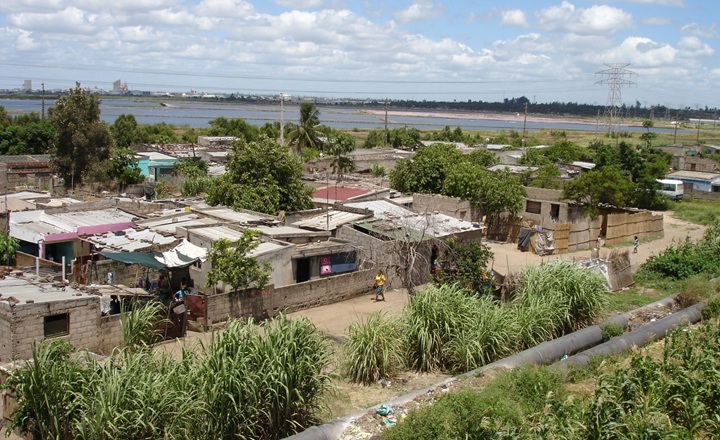
What was once a biodiversity sanctuary on the outskirts of the Mozambican capital is visibly transforming into a construction site. Legal and illegal constructions are devouring the wetlands surrounding Maputo City, in clear violation of the Ramsar Convention, an international treaty to which Mozambique has been a signatory since 2004.
According to our report, which covered the areas of Vale do Infulene, the Luís Cabral neighborhood, and the surroundings of the railway line, we observed a scenario of accelerated occupation. In these locations, the arrival of basic infrastructure—such as electricity, drinking water, and administrative services—has acted as an attraction for new families, drawn by the promise of urbanity, but ultimately sealing the ecological fate of the region. "Urbanization" advances without order, with constructions rising on land that, by law and treaty, should be preserved.
But the environmental drama reaches its most critical point in the Costa do Sol and Mapulene areas. In these locations, unlike the surrounding areas, construction is no longer just illegal; it's a legal development that, nevertheless, proceeds without proper impact studies on the fragile mangrove ecosystem. The result is devastating: the natural habitat of aquatic birds is being swallowed up by concrete.
Once abundant and noisy, the birds that made these wetlands their "home" and "nursery" for reproduction are now a rarity. Anyone walking along the Costa do Sol can see with their own eyes the sad image of ecological depletion: the sky, which was once teeming with flocks, is now strangely silent, with few species flying over a territory that has been usurped from them.
Faced with real estate pressure and a lack of oversight, aquatic birds are being forced into a "forced migration," abandoning the privileged locations where they have always found shelter and food to survive in increasingly restricted areas. This scenario of marginalization of wildlife contradicts the principles of the Ramsar Convention, signed on February 2, 1971, in Iran, and which entered into force in 1975.
By acceding to the treaty in 2003, Mozambique committed to promoting the conservation and wise use of wetlands, ensuring that they continue to perform essential ecological functions. However, urban pressure on Maputo's ecosystems reveals a glaring gap between environmental discourse and land-use planning practices, jeopardizing not only birdlife but also the city's resilience to climate change.
The question that remains is: for how long will real estate development be allowed at the cost of the irreversible destruction of our "lungs" and natural reserves?
Outras noticias

Culture
Launched at BCI, a book that immortalizes memories and humor of Zambézia
2026-10-02

Society
International Coffee Day
2026-10-02

Society
Minister Mathlombe squanders his term on empty promises
2026-10-02

policy
Constitutional Council Awards Purchase of Luxury Vehicles for 49.5 Million Meticais
2026-10-01

Culture
International Coffee Day: Aroma, Flavor, and History
2026-09-30
Copyright Jornal Preto e Branco All rights reserved . 2025