
Nelson Saúte launches "If You Want to Know Me," a tribute to the 100th anniversary of the poet who marked Mozambican literature
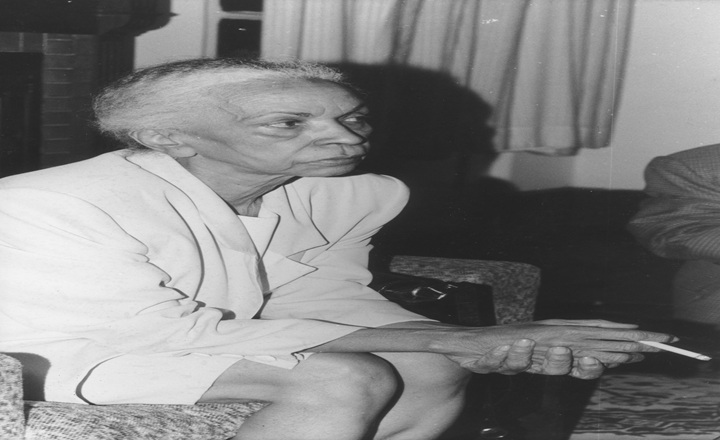
The work and legacy of Noémia de Sousa, considered the founding voice of Mozambican poetry, will be celebrated on September 30th at 5:30 PM in the Nedbank Business Lounge, located at Avenida Julius Nyerere, 562, in Maputo. The event marks the launch of the book "If You Want to Know Me: Noémia de Sousa – A Literary Biography," authored by writer and curator Nelson Saúte and published by Marimbique.
In this work, Nelson Saúte adopts the stance of a memoirist and pays tribute to what he considers to be the "primordial voice" of Mozambican literature. "I believe I have a duty to share the little I know and have known of Noémia de Sousa and the privilege I had of spending years with her and her generation," says the author. "My memorialistic effort stems from the awareness of this responsibility and the irremediable debt I owe to these literary ancestors of mine."
Noémia de Sousa is described by Saúte as "our primordial voice"—a voice "indignant, angry, or furious, against resignation and against social injustices." In the author's words, she is "the conscience of being Mozambican and of one's condition," an "unsubmissive and intrepid voice," the "black, mixed-race, solitary, and united cry."
Between 1948 and 1951, at only 22 and 25 years old, Noémia de Sousa produced the poetry that today constitutes her literary legacy — "the legacy of Mozambican identity, the legacy of African identity." A brief but incisive body of work that founded Mozambican lyric poetry.
"If You Want to Know Me" is more than a conventional biography. As the author describes it, it is "an affective and literary memoir, a brief poetic biography" that aims to "elevate the name of Noémia de Sousa on her 100th birthday." The title is a tribute to one of her beautiful poems.
Carolina Noémia Abranches de Sousa was born in Catembe, Maputo, on September 20, 1926, and died in Lisbon, Portugal, on December 4, 2002. A journalist by training, she distinguished herself through her collaboration with the newspaper O Brado Africano.
Considered the first manifestation of poetry with distinctly Mozambican roots, Noémia de Sousa was persecuted by the PIDE (Portuguese secret police) in the early 1950s, which forced her into exile in Portugal. Her indignant poems, her cry of revolt, and her call for emancipation, coupled with her acts of political subversion, made her remaining in Mozambique impossible.
In exile, she associated with figures such as Agostinho Neto, Amílcar Cabral, Francisco José Tenreiro, Lúcio Lara, Marcelino dos Santos, and Mário de Andrade—companions "on the journey in exile and in the libertarian dream." In the 1960s, she was forced to leave Lisbon, living in Paris until the eve of April 25, 1974. In 1984, thirty-three years after her departure, she revisited Mozambique, where young people had already claimed her, reading and reciting her poems.
His texts circulated in newspapers, magazines, and anthologies for five decades, influencing generations of Mozambican and African poets. His only book, Sangue Negro (Black Blood), remained unpublished for 50 years, being published by the Mozambican Writers Association in 2001. In 2011, Marimbique reissued the work, and in 2016, the Brazilian publisher Kapulana published an illustrated edition. There is also a French translation (Sang Noir), by Elisabeth Monteiro Rodrigues, published by Project-Iles Editions in 2024.
Nelson Saúte was born on February 26, 1967, in Maputo. He holds a degree in Communication Sciences from the Universidade Nova de Lisboa and a master's degree in Sociology from USP. He is a journalist, poet, writer, memoirist, and curator. He founded and directs the Museum of Ports and Railways of Mozambique (CFM). He presents the weekly segment "Livros de África" (Books of Africa) on RTP-África. He is the author and editor of anthologies on Mozambican literature and editor of Marimbique in Maputo.
Outras noticias
Culture
Launched at BCI, a book that immortalizes memories and humor of Zambézia
2026-10-02
Society
International Coffee Day
2026-10-02

Society
Minister Mathlombe squanders his term on empty promises
2026-10-02
policy
Constitutional Council Awards Purchase of Luxury Vehicles for 49.5 Million Meticais
2026-10-01
Culture
International Coffee Day: Aroma, Flavor, and History
2026-09-30
Copyright Jornal Preto e Branco All rights reserved . 2025