
Mozambique's government reaches historic milestone in community-led marine conservation
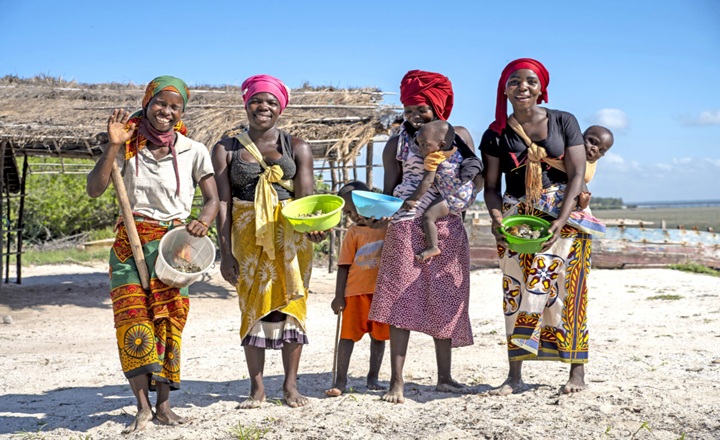
The first community-based fisheries management plan outside of marine protected areas, covering Mozambique Island and Mossuril, has been approved.
The international conservation organization Rare today celebrated the official approval by the Government of Mozambique of the first community-led fisheries management plan outside of an already established marine protected area. The plan is led by local communities and Community Fisheries Councils (CFCs) in the districts of Ilha de Moçambique and Mossuril, and was approved by the Ministry of Agriculture, Environment and Fisheries.
The initiative covers a total area of 51,530 hectares (515.3 km²) under fisheries management, including 3,164 hectares (31.64 km²) designated for seven no-fishing reserves. The plan directly benefits approximately 11,000 artisanal fishermen in the region, as well as roughly 1,000 women who are dedicated to collecting waste in the no-fishing zones.
“This announcement is the culmination of a 10-year effort led by local communities, which Rare has been proud to support,” said Dr. Atanasio Brito, Vice President of Rare Mozambique. “Community-led coastal fisheries management is a proven way to protect vital coastal waters and ecosystems. By granting clear rights to communities, we can simultaneously sustain livelihoods and restore fish populations, creating a virtuous cycle.”
In Mozambique, Rare partners with coastal communities and governments to strengthen fisheries management and local leadership. The organization and its partners help facilitate Community-Based Fisheries Partnerships (CBPs) and design community-managed fishing zones, exclusively accessible to local fishermen, as well as no-fish reserves where fishing and other invasive human activities are prohibited, allowing fish populations to recover. Rare works to strengthen governance, expand rights, and secure livelihoods, ensuring that policies, funding, and other systems support these efforts over time.
“The communities in our district were already committed and implementing management measures at their level. The approval of the plan legitimizes these efforts and reinforces sustainable fishing and the protection of marine resources for future generations,” said Jubeta Mamudo Namaneque, District Director of Economic Services for Mozambique Island and member of the Coastal 500 network.
With the support of the Blue Action Fund and in partnership with the Wildlife Conservation Society, Rare collaborated with the Government of Mozambique, the provincial authorities of Nampula, partners and local district administrations of Mozambique Island and Mossuril, as well as with local fishing communities and Community Fishing Councils (CCPs) of Insular Island, Sanculo, Quissanga, Muanangome, São João and Cabaceira Pequena to achieve this milestone.
“If the right people come together around the same goal, we can achieve remarkable progress,” said Markus Knigge, Executive Director of the Blue Action Fund. “The Blue Action Fund applauds the hard work and collaboration of all partners who contributed to this milestone, as well as the leadership that local communities are demonstrating in the conservation of marine ecosystems, essential for food security, livelihoods and climate resilience.”
Obtaining legal recognition from the national government is possible thanks to the REPMAR framework, implemented by the government in 2020. REPMAR officially recognizes communities as co-managers of local fisheries and allows them to create locally managed marine reserves where fishing and any other invasive activities are prohibited, allowing fish populations to recover. Mozambique's coastline is the fourth longest in Africa, and its waters harbor some of the greatest biodiversity on the planet, including more than 1% of the world's coral reefs and 2% of the world's mangrove forests.
Outras noticias

Society
CIM challenges the legality of the suspension announced by ICM
2026-10-15

Society
CoWork Lab celebrates 14 years in Mozambique and inaugurates its seventh business center in Maputo
2026-10-15

Society
BCI reinforces support for female entrepreneurship in Beira
2026-10-15

policy
Edson Macuácua is the new Minister of Education and Culture
2026-10-15

policy
Morocco: King Mohammed VI demands mobilization and responsibility in the formation of the new government
2026-10-14
Copyright Jornal Preto e Branco All rights reserved . 2025