
Mozambique Distributes Millions Without Disclosing Poverty Indicators
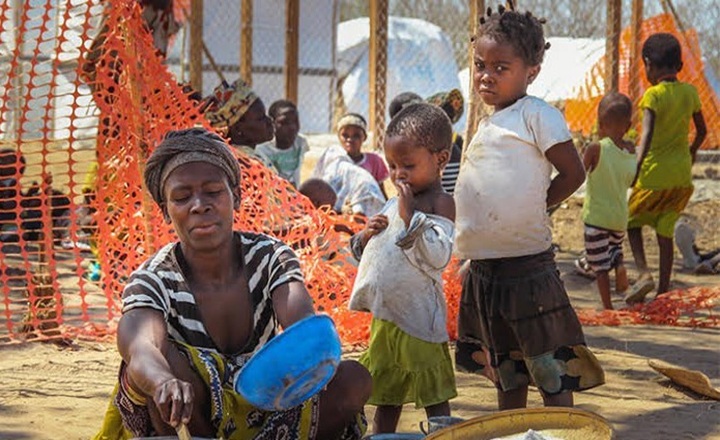
At a time when poverty and well-being in Mozambique are a visibly evident situation, the government is managing the country's main development strategy and distributing budgetary resources across all ten (10) provinces based on poverty data that it keeps secret. Despite citing 2022 figures in its official documents, the fifth and sixth rounds of national poverty assessments, which would provide transparency to these figures, have never been published. This information gap, denounced in a new document, weakens the monitoring of public policies and prevents independent verification of one of the pillars of state resource allocation.
According to the latest report from the Center for Public Integrity (CIP), entitled “Assessment of Poverty and Well-being”, the National Development Strategy (ENDE) 2025–2044, the country's main long-term planning instrument, cites results from the fifth national poverty assessment and presents data on its incidence in 2022.
However, a careful analysis reveals a contradiction: neither the fifth nor the sixth assessment is available for public consultation, as I was quoting. This is the main conclusion of a document that exposes a serious lack of transparency in the poverty measurement process in Mozambique.
In this context, Mozambique has measured poverty based on household surveys since 1996. Between that year and 2022, six rounds of surveys were conducted. The first four allowed for the production and publication of four assessments, between 1998 and 2014, which informed public policies and allowed for monitoring the evolution of the population's living conditions.
This virtuous cycle of evidence production and dissemination was, however, interrupted precisely during the period in which available data points to a deterioration in the well-being of a significant portion of Mozambicans.
It is important to note that the microdata from the Household Budget Surveys (IOF) of 2019/20 and 2022, which are the basis for the missing assessments, can be consulted, upon formal request, from September 2021 and December 2023, respectively.
However, the corresponding reports, which interpret this data and present the official conclusions, remain unpublished. This discrepancy between the official use of the results and the public absence of reports creates a critical problem: it prevents the independent verification of the estimates, methodological assumptions, and conclusions that underpin the country's main development instrument.
It is important to note that the absence of these assessments is not merely a bureaucratic matter. It has profound practical consequences. The incidence of poverty is one of the main criteria for allocating resources to provinces and districts within the Medium-Term Fiscal Scenario (MFFS), where this indicator has a weight of 25%.
In the absence of recent and publicly verifiable data, the government risks continuing to rely on outdated estimates to distribute millions of meticais. This situation, in addition to limiting the ability to adjust the budget to the real needs of each region, creates room for distortions and reinforces the perception that distribution criteria are applied inconsistently.
The question that remains unanswered, and the continued non-publication, raises the hypothesis that the results could be considered politically sensitive or unfavorable.
However, this suspicion cannot be confirmed without additional information about the reasons that have prevented the release of the reports. What is known is that the lack of transparency weakens the monitoring of public policies, hinders the definition of investment priorities, and prevents the results of government action from being evaluated based on official, up-to-date, and methodologically verifiable evidence.
Finally, CIP makes an appeal: the publication of the fifth and sixth national poverty assessments is not an option, but an essential condition. It is the necessary step to restore transparency in the poverty measurement process and ensure that public policies are formulated, implemented, and evaluated based on credible empirical evidence. Until this happens, the country will continue to plan its future and distribute its financial resources based on data that, for the average citizen, are a state secret.
Outras noticias
Culture
Launched at BCI, a book that immortalizes memories and humor of Zambézia
2026-10-02

Society
International Coffee Day
2026-10-02

Society
Minister Mathlombe squanders his term on empty promises
2026-10-02
policy
Constitutional Council Awards Purchase of Luxury Vehicles for 49.5 Million Meticais
2026-10-01

Culture
International Coffee Day: Aroma, Flavor, and History
2026-09-30
Copyright Jornal Preto e Branco All rights reserved . 2025