
Mozambique asserts cultural and creative leadership at the 8th edition of the LUJU festival
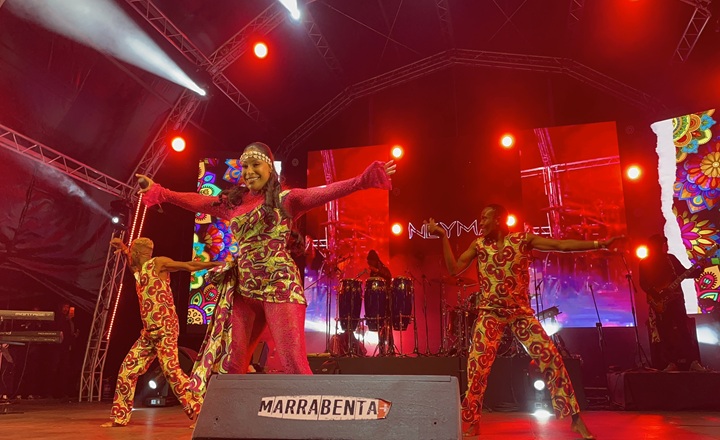
Mozambique's presence at the 8th edition of the Standard Bank Luju Food & Lifestyle Festival, held on August 1st and 2nd at the iconic House On Fire venue in Malkerns, Eswatini, once again demonstrated that the relationship between the two countries transcends geographical proximity and historical ties, establishing itself today as a strategic partnership for strengthening the culture, tourism, and creative industries of Southern Africa.
Under the motto "A Return to the African Future," the festival brought together more than ten thousand visitors from all corners of the world, in a celebration that used African gastronomy, fashion, music, and traditions as instruments to rethink the continent's future based on its cultural heritage.
The 2026 edition proposed a reflection on the recovery of pre-colonial knowledge, valuing African ways of producing, dressing, feeding, and creating. Over two days, the public was invited to revisit ancestral practices as inspiration for a contemporary, innovative, and culturally sovereign Africa.
The festival was officially opened by the Prime Minister of the Kingdom of Eswatini, Russell Mmiso Dlamini, in a ceremony that brought together government representatives, sponsors, international partners and leaders of cultural institutions from Mozambique, South Africa, Botswana and Zimbabwe.
The opening included a guided tour of the venue led by the Festival's Director-General, Jiggs Thorne, during which the different spaces that make Luju one of the largest "food & lifestyle" festivals on the African continent were presented.
More than just an entertainment festival, Luju has established itself as a platform for cultural diplomacy, economic development, and the promotion of regional tourism.
Mozambique's participation proved to be one of the most comprehensive in the entire program.
From fashion and music to technical production, public institutions, and cultural operators, Mozambique was present in virtually all strategic sectors of the event.
On the stage dedicated to fashion, designers King Levy and Lizete Chirime inaugurated the presentations with collections inspired by the edition's theme, highlighting the Ndomba proposal, designed by King Levy, which reinterpreted African identity elements through a contemporary language, demonstrating how fashion can function as a vehicle for preserving collective memory.
Throughout the venue, hundreds of exhibitors participated in the gastronomic fair, craft market, wine areas, culinary demonstrations, children's programs, and experiences related to African food heritage, in a program that sought to integrate different dimensions of culture.
One of the most symbolic moments of the musical program was presented by Ka-tembe connexion, a project that brings together Mozambican and Swazi artists in an artistic proposal that blends traditional sounds from both countries.
The fusion of Marrabenta, Xigubo, choral harmonies, body percussion, and ancestral rhythms transformed the performance into a celebration of the shared roots of the region's peoples.
More than just a musical performance, the concert represented the continuation of historical ties between Mozambique and Eswatini, marked by family, commercial, linguistic, and cultural relationships that span generations.
One of the festival's highlights was the performance by Mozambican singer Neyma, who took to the main stage waving the national flag to the sound of "Xitilu Xa Neyma," a gesture that was received with enthusiasm by thousands of spectators.
Throughout the show he performed some of his greatest hits, including "A Hi Dzimene", "Lirandzu" and other compositions that concluded in a celebration of Marrabenta.
In an interview given during the festival, the artist explained that preserving African identity is one of the pillars of her work.
"I celebrate this African heritage through my compositions. One of the greatest examples is 'A Hi Dzimene' and so many other songs. I sing in Xangana precisely to preserve our heritage."
Neyma also highlighted the strong reception from the international audience. "I realized that our country is known internationally. During the performance, I saw a huge crowd of people singing and dancing, including many who had never seen me perform before."
The singer also made a point of highlighting another aspect often invisible to the general public: the role played by the Mozambican professionals responsible for the technical aspects of the festival.
While artists brought Mozambique to the stage, it was behind the scenes that the country also reaffirmed its technical capabilities.
Much of the main stage infrastructure was provided by a Mozambican company and technicians, including sound systems, lighting, generators, LED screens, stage assembly, and operational support teams.
This work was carried out by the company Logarithmo, also known in the sector by the brand Marrabenta, which has been responsible for the technical aspects of the festival for several years.
According to Paulo Sitoe, known in the sector as Litho, this partnership represents a relationship built since the first editions.
"Luju has become a school for all of us. Every experience gained here is later applied in Mozambique, particularly in the organization of the Marrabenta Festival and other major events. Quality remains our greatest commitment."
The consistency of this collaboration demonstrates that Mozambique no longer exports only artists, but also specialized technical knowledge capable of meeting international standards for the production of large-scale shows.
The second day began with a networking session that brought together cultural programmers, festival organizers, and government representatives from Mozambique, Eswatini, South Africa, Botswana, Lesotho, and Zimbabwe.
During the meeting, opportunities for artistic circulation, cultural exchange, and the creation of permanent networks between festivals in Southern Africa were discussed.
Representing Mozambique, the National Director of Arts and Culture, Ivan Bonde, presented an overview of the main national festivals, highlighting their role as instruments for cultural enhancement and tourism promotion.
In his speech, he highlighted initiatives carried out in different provinces of the country, including the Wimbe festival in Cabo Delgado; Xigubo in Matutuíne; Timbila and Tofo in Inhambane; Zalale in Zambézia, culminating in the National Biennial of Culture.
The presentation positioned Mozambique as one of the countries in the region with the greatest diversity of cultural festivals distributed throughout the national territory.
Among the most memorable moments were the tribute shows to Abdullah Ibrahim, through the project The Kyle Shepherd Xahuri Trio Plays the Music of Abdullah Ibrahim, and to Hugh Masekela, performed by the Masekela Band.
The program also included performances by Ka-tembe connexion, Neyma, Fela Kuru, Liquideep and Zakes Bantwini, closing the festival with a strong celebration of African musical diversity.
Mozambique's participation in the 2026 edition demonstrated that the relationship between Mozambique and Eswatini remains deeply rooted in the shared history of the two peoples.
The connections built over decades — through the movement of people, trade, music, languages, and traditions — continue to translate into new forms of economic and cultural cooperation today.
At Luju, this relationship became visible not only through the presence of Mozambican artists, but also through the contribution of public institutions, cultural operators, technical companies, and professionals who ensured the smooth running of one of the most prestigious festivals in Southern Africa.
At a time when the continent seeks to build a future based on the appreciation of its heritage, Mozambique has once again asserted itself as an indispensable partner in regional cultural integration, demonstrating that the export of talent, technical knowledge and creativity can be one of the most solid instruments of cultural diplomacy and economic development. More than just participating in the Standard Bank Luju Food & Lifestyle Festival, Mozambique once again helped to build the festival itself.
Outras noticias
Culture
Launched at BCI, a book that immortalizes memories and humor of Zambézia
2026-10-02
Society
International Coffee Day
2026-10-02
Society
Minister Mathlombe squanders his term on empty promises
2026-10-02
policy
Constitutional Council Awards Purchase of Luxury Vehicles for 49.5 Million Meticais
2026-10-01
Culture
International Coffee Day: Aroma, Flavor, and History
2026-09-30
Copyright Jornal Preto e Branco All rights reserved . 2025