
Morocco: King Mohammed VI demands mobilization and responsibility in the formation of the new government
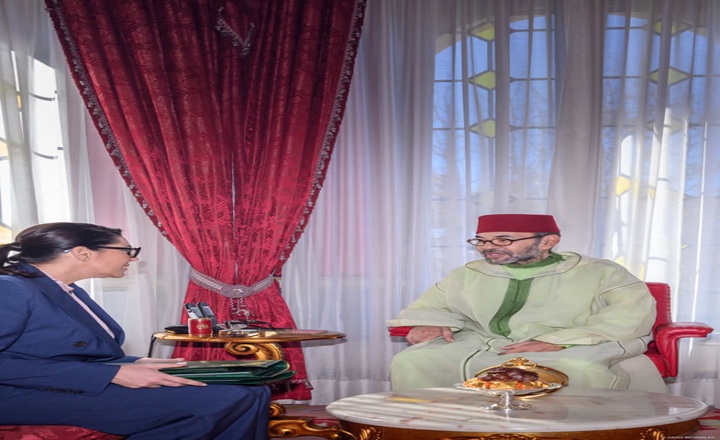
Fatima Ezzahra El Mansouri is preparing the composition of the Executive branch after the formation of a four-party parliamentary majority. Youth employment, social justice, and economic growth are among the main challenges of this new political phase.
Rabat - October 14, 2026 -King Mohammed VI received Fatima Ezzahra El Mansouri, the Head of Government in charge of forming the new Moroccan Executive, at the Royal Palace in Rabat this Wednesday. She briefed him on the different stages of the government formation process.
During the audience, the sovereign wished El Mansouri success in his mission and stressed the need for comprehensive mobilization and serious and responsible government action, taking into account the scale of the challenges and expectations existing in different sectors.
According to a statement from the Royal Cabinet, released by the Moroccan News Agency (MAP), Mohammed VI emphasized that the next stage requires a political and institutional response commensurate with the issues facing the country, placing the future government's ability to implement its plans at the heart of its priorities.
Parliamentary majority paves the way for the new Executive.
The hearing takes place after the formation of a governing majority made up of four parties: the Party of Authenticity and Modernity (PAM), the Independence Party (Istiqlal), the Socialist Union of Popular Forces (USFP), and the Party of Progress and Socialism (PPS).
The agreement, announced on October 12th, brings together 207 of the 395 seats in the House of Representatives, exceeding the 198 required for an absolute majority. The coalition is expected to propose the names of future ministers, with the aim of forming a cohesive government capable of implementing its governance program.
El Mansouri was appointed Head of Government by King Mohammed VI on September 29, following the WFP's electoral victory in the legislative elections of September 23. Her appointment is a historic milestone, as she is the first woman to assume the leadership of the Moroccan government.
Employment, public services and growth are among the challenges.
The formation of the new Executive branch occurs within a context of high social expectations, particularly regarding youth employment, the quality of education, access to healthcare, and improved living conditions.
The Government will also have to reconcile social reforms with strengthening the national economy and preparing major infrastructure projects associated with hosting the 2030 FIFA World Cup, which Morocco will co-host with Portugal and Spain.
The governing coalition announced social justice, territorial equity, the strengthening of rights and freedoms, and the promotion of economic prosperity as its priorities. The achievement of these objectives will depend, to a large extent, on the future government's ability to transform political commitments into public policies with concrete results.
Next institutional steps
Under the Moroccan Constitution, the King appoints the members of the Government upon the proposal of the Head of Government. After the ministers are appointed, the government program must be presented to both chambers of Parliament, with the investiture contingent upon approval by the Chamber of Representatives by an absolute majority of its members.
This Wednesday's hearing thus represents another step in the process of forming the new Executive. The sovereign's message points to the need for governance oriented towards responsibility, institutional coordination, and responding to citizens' expectations, at a time when the new majority is preparing to take on the country's political, economic, and social challenges.
Outras noticias
Society
CoWork Lab celebrates 14 years in Mozambique and inaugurates its seventh business center in Maputo
2026-10-15
Society
BCI reinforces support for female entrepreneurship in Beira
2026-10-15
policy
Edson Macuácua is the new Minister of Education and Culture
2026-10-15
policy
Morocco: King Mohammed VI demands mobilization and responsibility in the formation of the new government
2026-10-14
Culture
"There are more devices than people in the world," warns Eng. Eugénio Jeremias.
2026-10-13
Copyright Jornal Preto e Branco All rights reserved . 2025