
Morocco condemns Houthi attacks against Saudi Arabia. and reaffirms solidarity with the Gulf countries
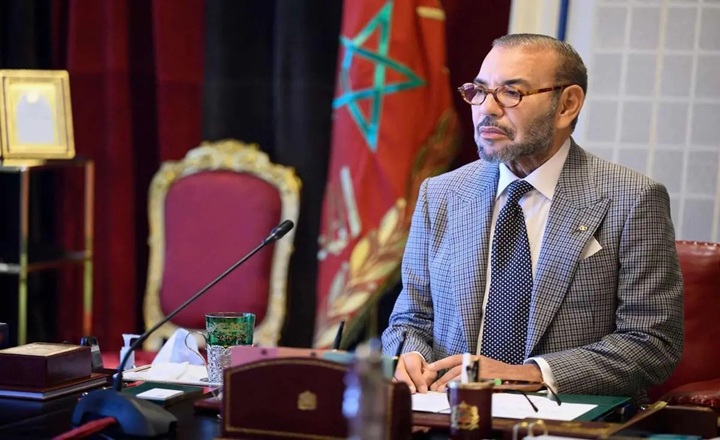
King Mohammed VI of Morocco expressed his solidarity with King Salman bin Abdulaziz Al Saud and Crown Prince Mohammed bin Salman, following what the Moroccan Royal Cabinet describes as repeated attacks attributed to the Houthi militias against Saudi Arabia.
The position was conveyed through two messages sent by the Moroccan monarch to the Saudi sovereign and the Crown Prince, who also serves as prime minister, according to a statement released by the Royal Cabinet in Rabat last Saturday, September 26.
In the message, Mohammed VI states that Morocco considers the security and stability of Saudi Arabia to be closely linked to the security of the other countries in the Gulf Cooperation Council and to its own strategic interests.
The Moroccan monarch condemned, in particular, the attacks which, according to the statement, target Saudi civilian and economic facilities, infrastructure, cities and residential areas. The document also mentions alleged attempts to hit Mecca and Medina, the two main holy sites of Islam.
“Any aggression against Saudi Arabia is aggression against Morocco,” Mohammed VI stated, according to the communiqué, while reiterating Rabat’s solidarity with Riyadh and the other Arab Gulf countries.
Regional security and international navigation
The Moroccan monarch's statement frames the Houthi attacks within a broader context of instability in the Middle East and the Red Sea.
According to Mohammed VI, the actions of armed groups and the regional powers that support them represent a threat not only to the countries directly involved, but also to the security of maritime routes considered strategic for international trade.
Concern about the safety of navigation in the Red Sea has also been expressed by the United Nations Security Council.
In January 2024, the Council adopted Resolution 2722, which demanded that the Houthi immediately cease attacks against merchant and commercial vessels in the Red Sea and recognized the importance of freedom of navigation under international law. The resolution also called for the release of the ship Galaxy Leader and its crew.
Months later, in June 2024, the Security Council adopted Resolution 2739, reiterating the demand for a cessation of attacks against merchant and commercial ships and extending the situation monitoring mechanism.
The United Nations has warned that instability in the Red Sea could affect global supply chains, international trade, and the humanitarian situation, while also calling for restraint to avoid a regional escalation.
Reference to Resolution 2216
In his message, Mohammed VI also cited Security Council Resolution 2216, adopted in 2015 in the context of the conflict in Yemen.
The Moroccan statement presents this resolution, along with Resolution 2722, as part of the international legal framework applicable to attacks and regional security.
Resolution 2722 of 2024 effectively refers to Resolution 2216 and the obligations related to the arms embargo on the Houthis. The Security Council also condemned the supply of weapons and related material to the movement, in violation of the applicable provisions.
In a statement released by the Royal Cabinet, Mohammed VI directly blames the Houthis and those who, according to the Moroccan position, support, finance, or supply weapons to the “terrorist militias.” The monarch states that such acts must be evaluated in light of international law and applicable international norms.
Riyadh's security is strategic for Rabat.
Mohammed VI's message goes beyond condemning the attacks and reaffirms the strategic nature of relations between Morocco and Saudi Arabia.
The Moroccan sovereign maintains that the two countries are linked by historical, religious, and political ties, and that the security of the Gulf States has direct implications for Moroccan strategic interests.
The position announced by Rabat comes at a time when the security of the Red Sea continues to be an international concern due to the impact of attacks against commercial shipping and the possibility of tensions expanding beyond Yemeni territory.
For the United Nations, preserving freedom of navigation in the Red Sea is relevant not only for international trade, but also for humanitarian operations and for the populations that depend on the region's shipping lanes.
Outras noticias
Culture
Launched at BCI, a book that immortalizes memories and humor of Zambézia
2026-10-02

Society
International Coffee Day
2026-10-02

Society
Minister Mathlombe squanders his term on empty promises
2026-10-02

policy
Constitutional Council Awards Purchase of Luxury Vehicles for 49.5 Million Meticais
2026-10-01

Culture
International Coffee Day: Aroma, Flavor, and History
2026-09-30
Copyright Jornal Preto e Branco All rights reserved . 2025