
Maputo's Urban Planning in Collapse
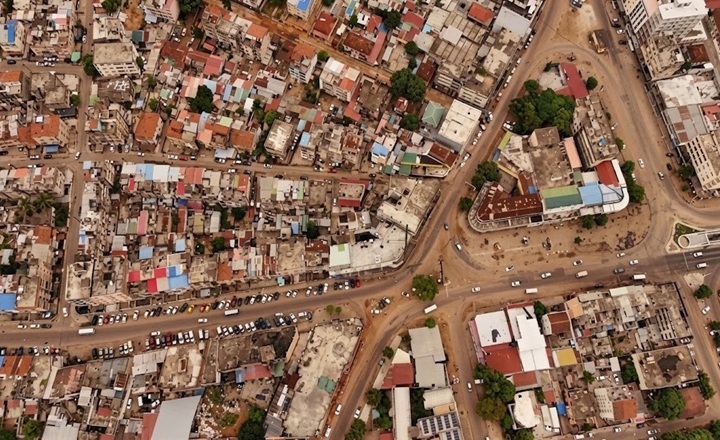
Excavations, chaotic traffic, and towed vehicles mark the daily life of the Mozambican capital, while experts point to a lack of strategic vision and advocate for quality public transportation.
Maputo is facing an increasingly visible urbanization crisis. With excavations underway on almost every avenue in the city for the installation of the drainage system, parking has become one of the biggest problems for drivers. Many are caught by the Municipal Police with illegally parked vehicles, which end up being towed to the police impound lot. To recover their vehicles, owners are forced to pay hefty sums.
For over a decade, the Maputo City Council has been unable to control or regulate parking. As a result, many drivers use sidewalks as a preferred parking spot, hindering pedestrian circulation, forcing them to compete for space with vehicles along the roadway.
According to Professor Rogério Uthi, the central area of the city, the Central Business District (CBD), is quite limited for the demand it receives. “When people say 'I'm going to Maputo,' everyone heads to the same place,” he explains. The city was designed for approximately 250,000 inhabitants, but it is currently estimated that Maputo has just over 1.4 million residents, in addition to more than 1.5 million people who arrive daily from various locations, such as Matola, Marracuene, or even from abroad.
Adding residents and visitors, the capital can accommodate around three million people a day. Similarly, approximately one and a half million vehicles circulate nationwide, of which 57% are in Maputo. "It's not possible to park 750,000 vehicles in a place that should accommodate at least 250,000," warns the professor.
Uthi emphasizes that parking on sidewalks has never been allowed. However, the city is constantly growing and currently supports around three million people. According to the academic, there should be more humane urban planning. “Either people, when they are in Maputo, shouldn't all go to the same place. The condominiums housing the ministries should be built, for example, in Marracuene. That way, the employees wouldn't go to the city center, but in the opposite direction. That's what urban planning is all about. We weren't good at that planning and, at this moment, we are paying for what we did,” he laments.
As a solution, he advocates the construction of parking silos in order to minimize the problem, since there is not enough space to accommodate the current car population.
Another problem highlighted is the transformation of residential neighborhoods into offices and restaurants. “Imagine a house that used to park two cars and now has thirty. That space doesn't exist anymore,” he exemplifies. Along Kenneth Kaunda Avenue, for example, cars are parked on the grass and sidewalks. For Uthi, all this reflects a lack of urban planning, so the Municipality will have to sit down and assess the planning, he laments.
The professor also believes that Mozambican cities have been victims of a rapid ruralization process, with permanent congestion. Just observe the sidewalks near the Xipamanine and Xiquelene markets, or on Avenida 24 de Julho, at the corner of Avenida Guerra Popular, which have become territories for informal vendors. Walking becomes difficult, even worse in the company of someone with reduced mobility. "We are ruralizing these spaces," he states.
For the professor, without harming anyone, he sees no other way out. He believes, however, that even so, in a short time, the same people will return to the city, because they rely on informal work as their livelihood. These are people without formal employment who survive on informal work, forcing them to sell on roadsides and sidewalks. The unemployment rate in Mozambique is around 35%.
Finally, Uthi suggests that the Move Maputo project, with the implementation of Bus Rapid Transit (BRT), could be the right solution. “To start having reliable, clean, attractive public transport in the city center, with strict schedules, and not bring cars into the city. If there was an awareness that, by stopping here, the bus will arrive on time and I won't be late, I would be the first person to use this public transport,” he concludes.
Outras noticias

Society
CIM challenges the legality of the suspension announced by ICM
2026-10-15
Society
CoWork Lab celebrates 14 years in Mozambique and inaugurates its seventh business center in Maputo
2026-10-15
Society
BCI reinforces support for female entrepreneurship in Beira
2026-10-15
policy
Edson Macuácua is the new Minister of Education and Culture
2026-10-15
policy
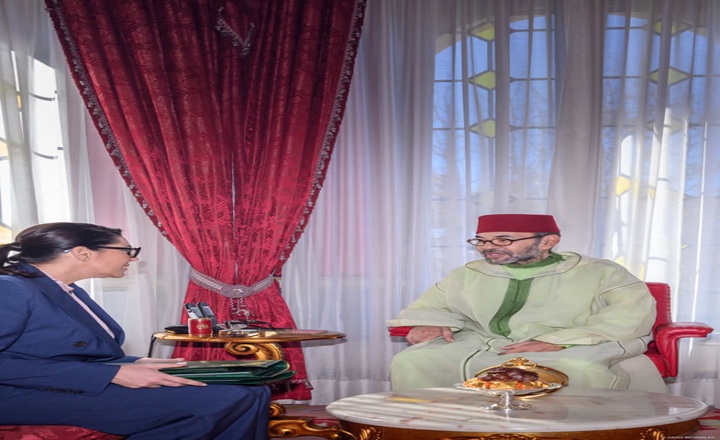
Morocco: King Mohammed VI demands mobilization and responsibility in the formation of the new government
2026-10-14
Copyright Jornal Preto e Branco All rights reserved . 2025